Caring for a bariatric patient often requires specialized equipment, safe caregiving practices, and a compassionate approach. This guide explains what bariatric care involves, the purpose of bariatric equipment, and practical tips for supporting individuals with higher body-weight needs at home. Learn about commonly used products such as bariatric wheelchairs, hospital beds, patient lifts, walkers, commodes, and pressure redistribution mattresses. The article also covers safe patient handling, fall prevention, skin care considerations, and ways to promote comfort, dignity, and independence. Whether you are a family caregiver or care partner, these insights can help support safer daily care routines.
According to the CDC, obesity affects millions of adults in the United States, increasing the need for safe mobility and home caregiving support. Caring for a bariatric patient often involves specialized mobility assistance and equipment designed to support patient comfort, dignity, and caregiver safety. As the demand for home-based care continues to grow, many families are seeking reliable information about bariatric care, rehabilitation equipment, and safe caregiving practices.
Whether you are caring for a parent, spouse, or loved one, understanding what bariatric means and how equipment helps can make daily caregiving safer and less stressful.
Medical Disclaimer: This article is for educational purposes only and should not be considered medical advice, diagnosis, or treatment. Always consult a licensed healthcare provider, physical therapist, or rehabilitation specialist before selecting medical equipment or starting a patient care routine.
The term bariatric refers to the medical field focused on the treatment, care, and management of individuals with obesity or higher body-weight needs.
A bariatric patient may require:
In healthcare and rehabilitation settings, the term commonly describes equipment or care designed for individuals who need higher weight capacities and enhanced support.
Products that fall under bariatric equipment include various medical devices and aids for those who need it with more weight capacity and stability. These products are designed to improve stability, patient comfort, and caregiver assistance during daily care activities. Commonly used in home care, rehabilitation, and healthcare settings, equipment may help reduce physical strain on caregivers while promoting safer mobility, positioning, and greater independence for patients.
Common Types of Equipment are the following:
1. Wheelchairs - provide wider seating and higher weight support
2. Hospital beds - improve positioning, pressure relief, and transfers
3. Patient lifts – help caregivers safely move patients
4. Bariatric walkers – improve stability during mobility
5. Shower chairs & commodes – enhance bathroom safety
6. Pressure redistribution mattresses - help reduce skin breakdown risks
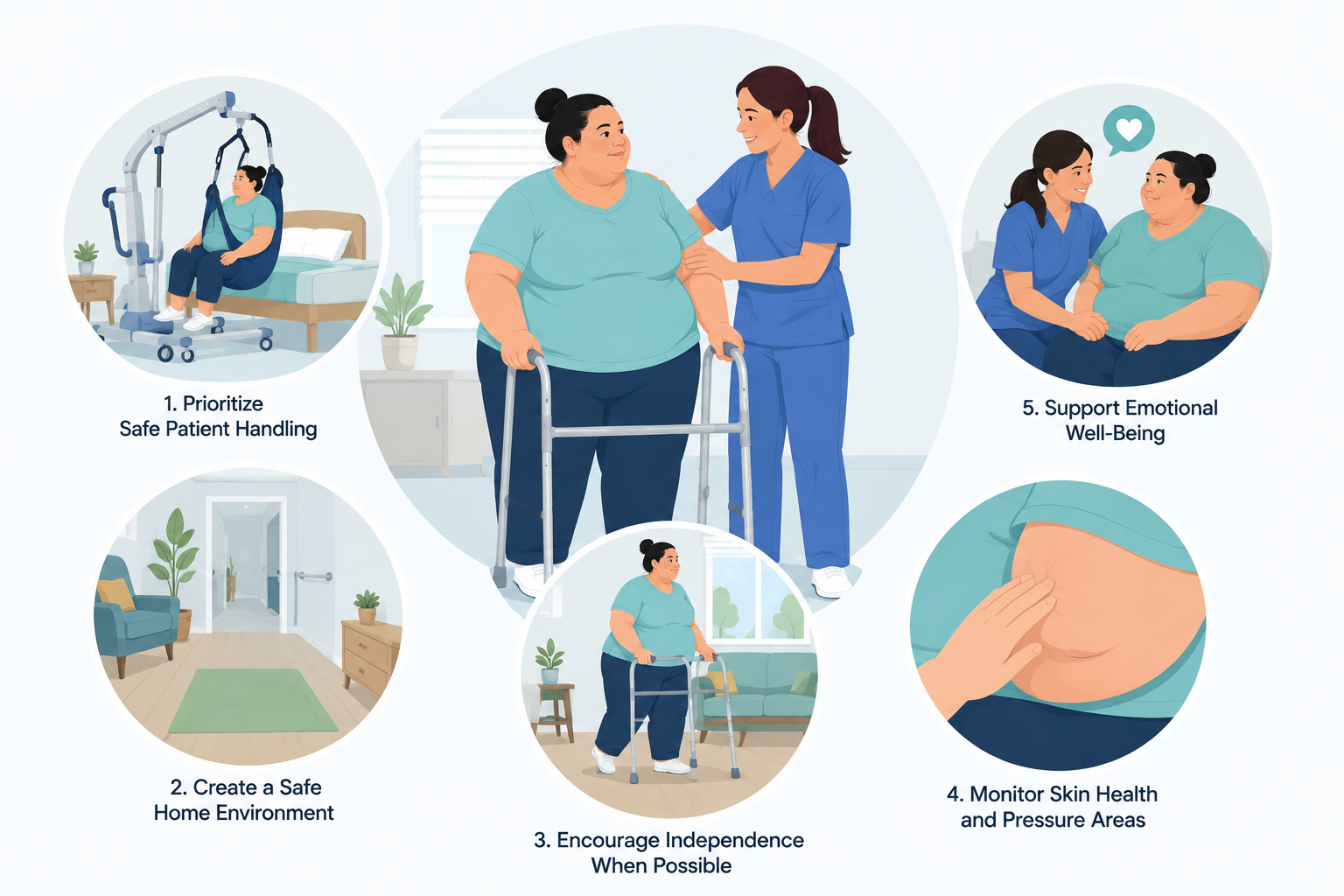
Proper equipment can support both patient safety and caregiver well-being.
Key benefits may include:
1. Safer Patient Transfers - Equipment such as patient lifts and transfer aids may help reduce caregiver strain and lower the risk of injury during repositioning.
2. Improved Patient Comfort - Wider seating surfaces, reinforced mattresses, and adjustable beds can improve comfort for bariatric patients.
3. Better Mobility Support - Mobility aids designed for higher weight capacities may improve confidence and daily movement.
4. Reduced Fall Risks - Bathroom safety equipment and mobility support products is designed to improve stability and reduce slips or falls.
Important Consideration: Outcomes vary by individual condition, mobility level, and home environment. Equipment should always be selected based on professional medical recommendations.
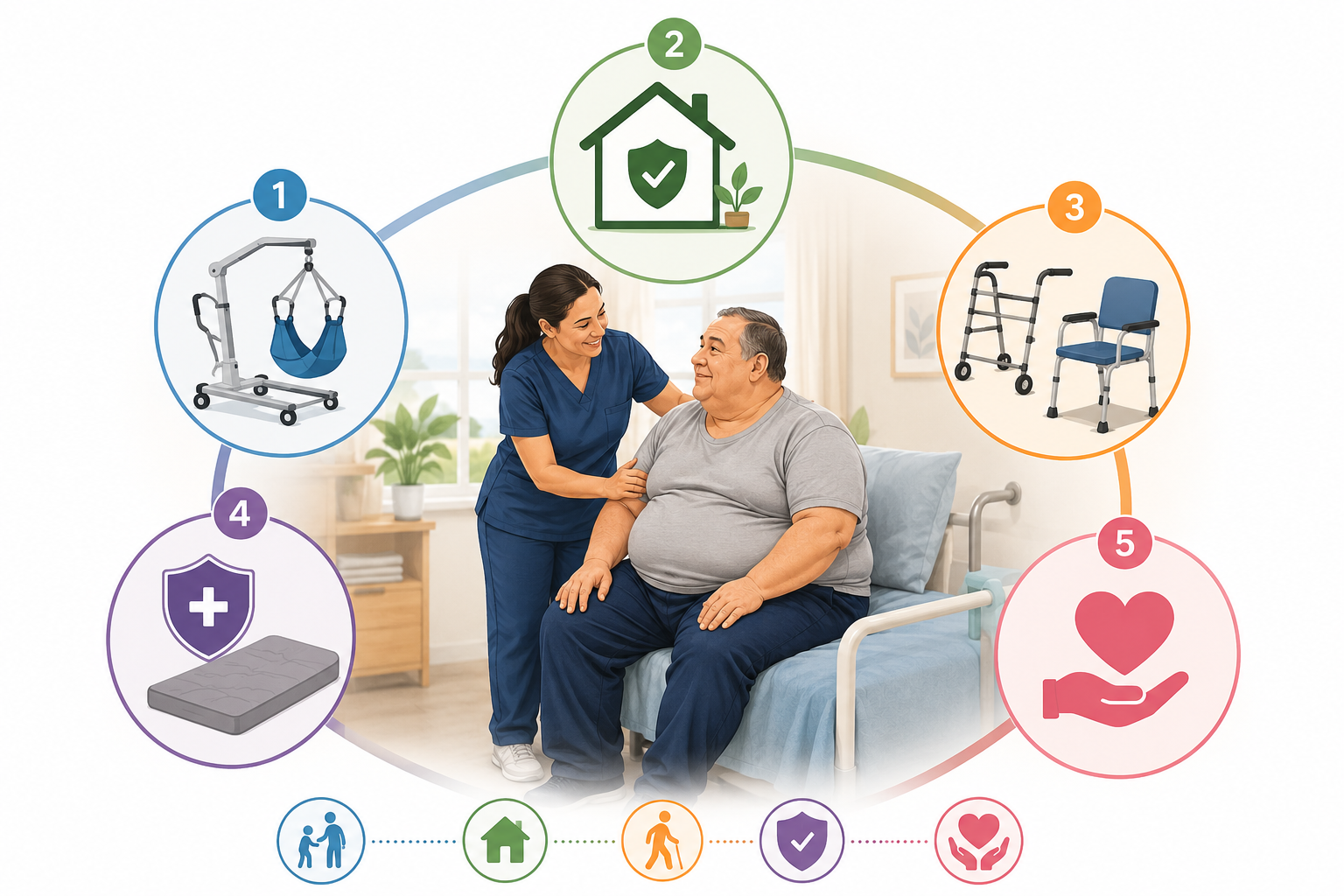
Providing compassionate bariatric care involves patience, preparation, communication, and safe caregiving practices.
Caregivers should avoid manual lifting whenever possible.
Helpful tools may include:
Improper lifting techniques can increase the risk of back injuries for caregivers and discomfort for patients.
A safe environment can improve mobility and reduce accidents.
Many bariatric patients benefit emotionally and physically from participating in daily activities independently if recommended by a healthcare provider.
Caregivers can:
Limited mobility may increase the risk of pressure injuries or skin irritation.
Caregivers should:
Important Consideration: Contact a healthcare professional if skin redness, wounds, swelling, or signs of infection appear.
Bariatric caregiving involves emotional support as much as physical assistance.
Helpful approaches include:
Compassionate caregiving can help patients feel more comfortable and supported.
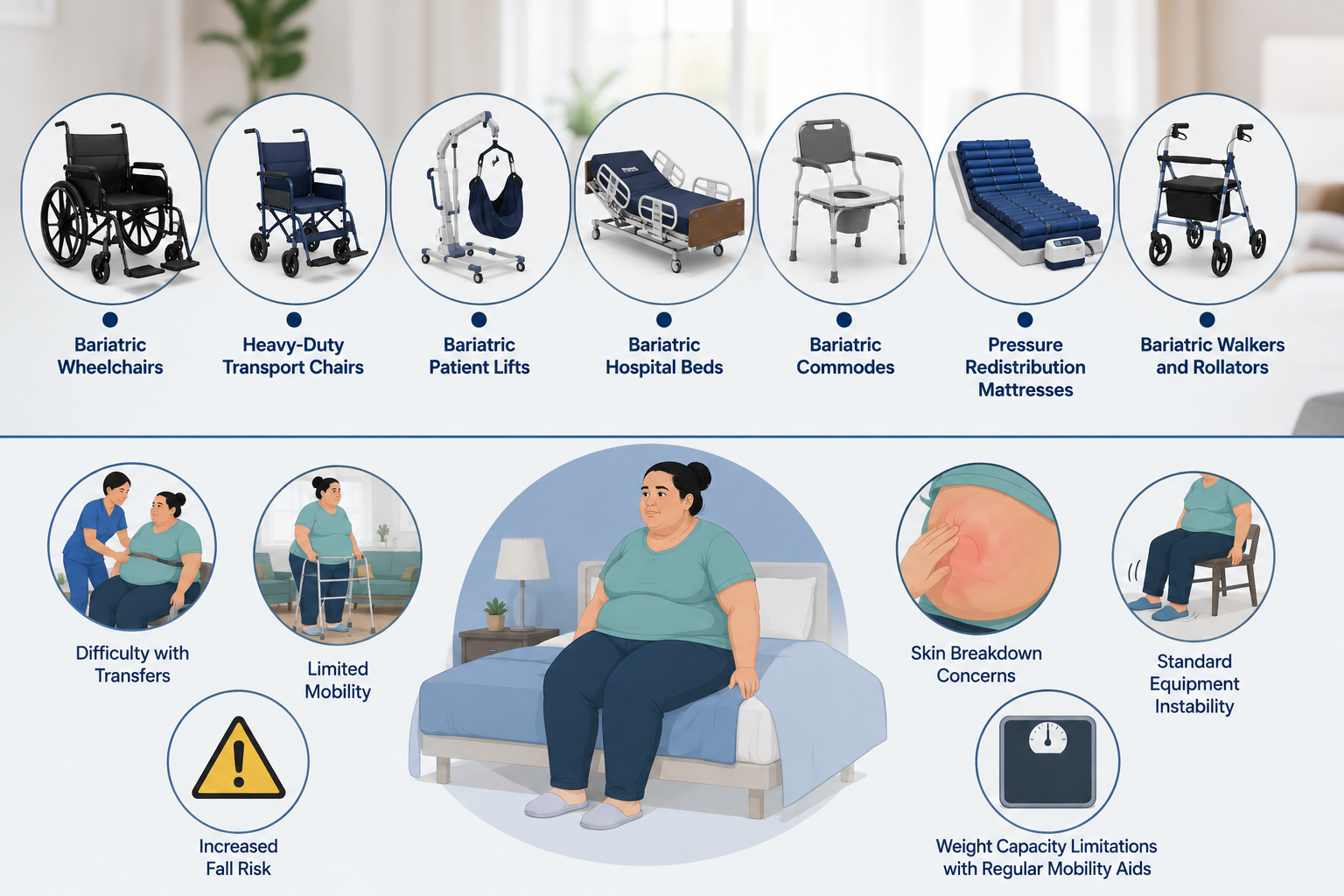
Medicaleshop provides access to a range of bariatric mobility and rehabilitation products commonly used in home care settings.
Medical Disclaimer: Product selection should be based on physician recommendations, patient measurements, mobility needs, and manufacturer guidelines.
A healthcare provider may recommend equipment when a patient experiences:
Providing care for a patient involves more than physical assistance - it requires patience, dignity-focused support, and the right tools to create a safer and more comfortable environment for both patients and caregivers. From improving mobility and reducing fall risks to supporting daily comfort and independence, equipment plays an important role in home care and rehabilitation settings. Caregivers who use proper transfer techniques, maintain a safe home environment, and prioritize compassionate communication can help improve overall quality of life while reducing physical strain and caregiving challenges.
At Medicaleshop, we are committed to helping families and caregivers access reliable equipment and home medical solutions designed to support safer and more comfortable care at home. Explore our range of bariatric mobility aids, patient lifts, hospital beds, and rehabilitation products to find solutions that fit your caregiving needs.
Medical Disclaimer: Always consult a licensed healthcare professional before selecting medical equipment or making changes to a patient’s care plan.
Frequently Asked Questions
Ans. Bariatric care refers to the medical support, mobility assistance, and daily care provided to individuals with higher body-weight needs.
Ans. Bariatric equipment is generally used to improve patient safety, mobility, comfort, and caregiver support during daily care activities.
Ans. Individuals who require higher weight-capacity medical or mobility products for safer movement, positioning, or daily support may need bariatric equipment.
Ans. Caregivers can safely assist bariatric patients by using proper transfer techniques, mobility aids, patient lifts, and maintaining a safe home environment.
.avif&w=3840&q=75)
.avif&w=3840&q=75)