Learn about the essential IV therapy equipment commonly used in home care, including infusion pumps, IV poles, IV stands, IV drip supplies, monitoring devices, and IV fluid warmers. This guide explains the purpose of each device, key factors to consider when selecting equipment, and practical tips for cleaning, maintenance, and storage. Whether you're a caregiver or supporting a home healthcare environment, understanding these products can help improve organization and treatment efficiency. Explore the range of IV therapy equipment, rehabilitation products, and home healthcare solutions available at Medicaleshop. Always follow your healthcare provider's recommendations for equipment selection and use.
1. What Equipment Is Commonly Used for Home IV Therapy?
2. Why IV Therapy Equipment Matters in Home Care
3. Comparison Table: Best IV Therapy Equipment for Home Care
4. IV Infusion Pumps: The Foundation of Modern Home Therapy
5. IV Poles and IV Stands: Essential Support Equipment
6. IV Drip Supplies: The Everyday Essentials
7. Monitoring Devices: Supporting Observation During Infusion Therapy
9. How to Choose IV Therapy Equipment for Home Care
10. Cleaning, Maintenance & Storage Tips for Home IV Equipment
11. IV Therapy Equipment Available at Medicaleshop
12. Building a Reliable Home IV Therapy Setup Starts With the Right Equipment
According to the National Home Infusion Association (NHIA), home infusion therapy continues to grow as more patients receive prescribed treatments outside traditional healthcare settings. Home IV therapy typically involves infusion pumps, IV poles, IV drip supplies, monitoring devices, and other equipment prescribed by healthcare professionals.
Home healthcare continues to expand across the United States, allowing many patients to receive treatment in the comfort of their homes under the supervision of qualified healthcare professionals. One area that has seen significant growth is home IV therapy, which may be prescribed for hydration, nutrition support, medication administration, or other medical needs.
As home-based care becomes more common, understanding the equipment used during IV therapy is increasingly important for patients, caregivers, and healthcare organizations. From infusion pumps and IV poles to monitoring devices and IV drip supplies, using appropriate, healthcare-provider-recommended equipment can help support safe and efficient care delivery.
This guide explains the most commonly used IV therapy equipment for home care, explains their purpose, and highlights factors to consider when selecting equipment for a home healthcare environment.
Important Medical Compliance Notice: This article is intended for educational purposes only. Medicaleshop is a medical supply and rehabilitation equipment provider and does not provide medical advice, diagnosis, treatment recommendations, or clinical services. Any IV therapy treatment plan, equipment selection, or infusion protocol should be determined by qualified healthcare professionals.
The most commonly used IV therapy equipment for home care includes:
The exact equipment depends on the type of infusion prescribed, treatment duration, and healthcare provider recommendations.
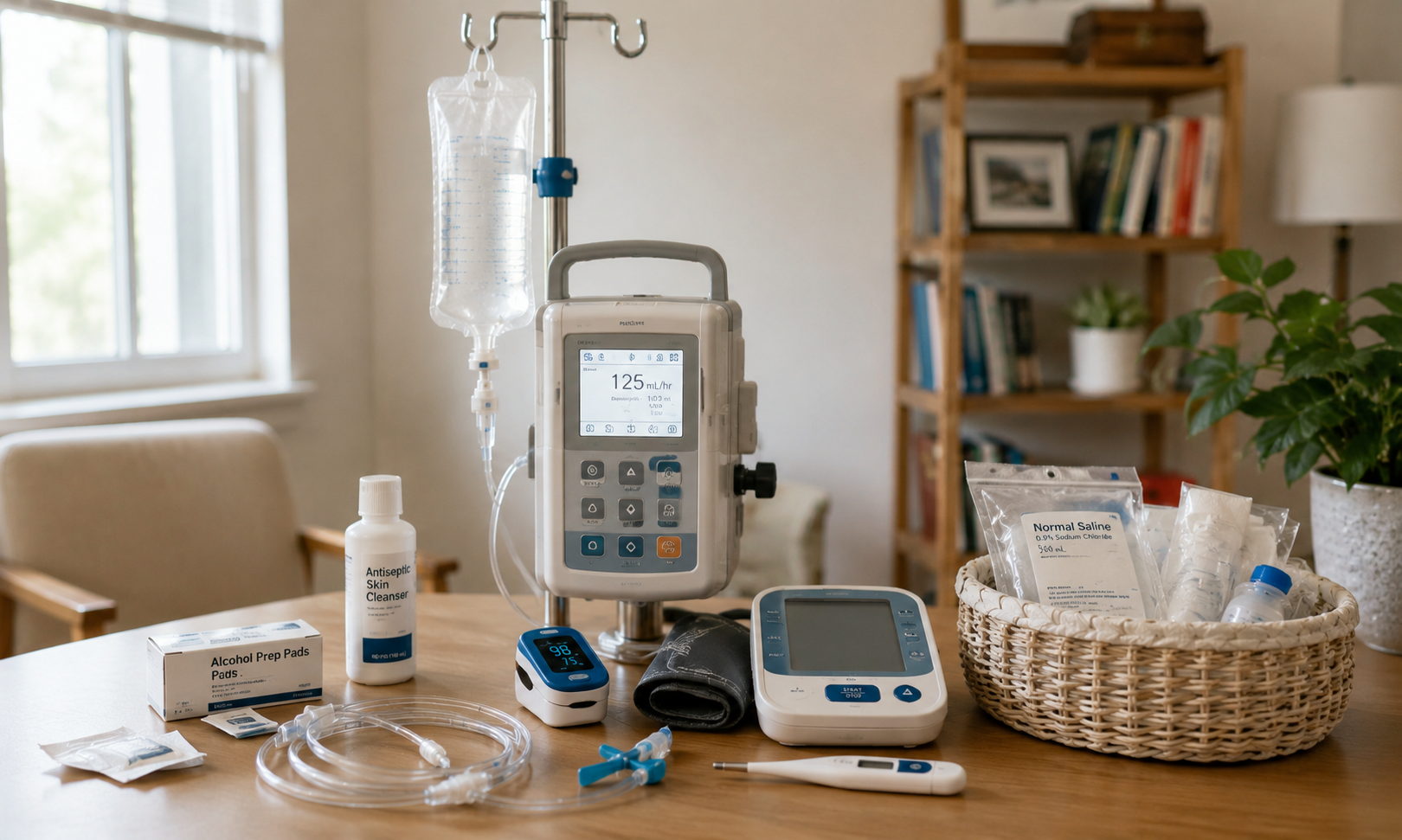
IV therapy involves delivering fluids, medications, or nutrients directly into the bloodstream through a vein. In home settings, specialized equipment helps healthcare professionals manage infusion rates, maintain equipment stability, and support monitoring throughout treatment.
Properly selected equipment may facilitates
Because home environments differ significantly from clinical settings, portability, ease of use, and reliability are often important considerations.
| Equipment Type | Primary Purpose | Common Home Care Use |
| Infusion Pumps | Control fluid delivery rates | Medication and infusion administration |
| IV Infusion Pumps | Automated infusion management | Long-term infusion therapy |
| IV Poles | Support IV bags and equipment | Home infusion setups |
| Portable IV Poles | Improve mobility during treatment | Active home care environments |
| IV Stands | Secure infusion equipment | Fixed treatment areas |
| Monitoring Devices | Observe patient status | Ongoing treatment monitoring |
| IV Fluid Warmers | Warm fluids before infusion | Specific infusion protocols |
| IV Drip Supplies | Support fluid administration | Daily infusion management |
Among all IV therapy equipment, infusion pumps are often considered one of the most important components of home infusion care.
These devices are designed to deliver fluids, medications, or nutrients at programmed rates determined by healthcare professionals.
Why Infusion Pumps Are Commonly Used
Many home healthcare providers rely on infusion pumps when treatments require controlled administration over extended periods.
Common Applications
These systems may include advanced safety features such as:
For many home healthcare programs, IV infusion pumps help support continuity of care outside traditional healthcare facilities.
Medical Compliance Note: Infusion pump programming and use should always follow manufacturer instructions and healthcare provider guidance.
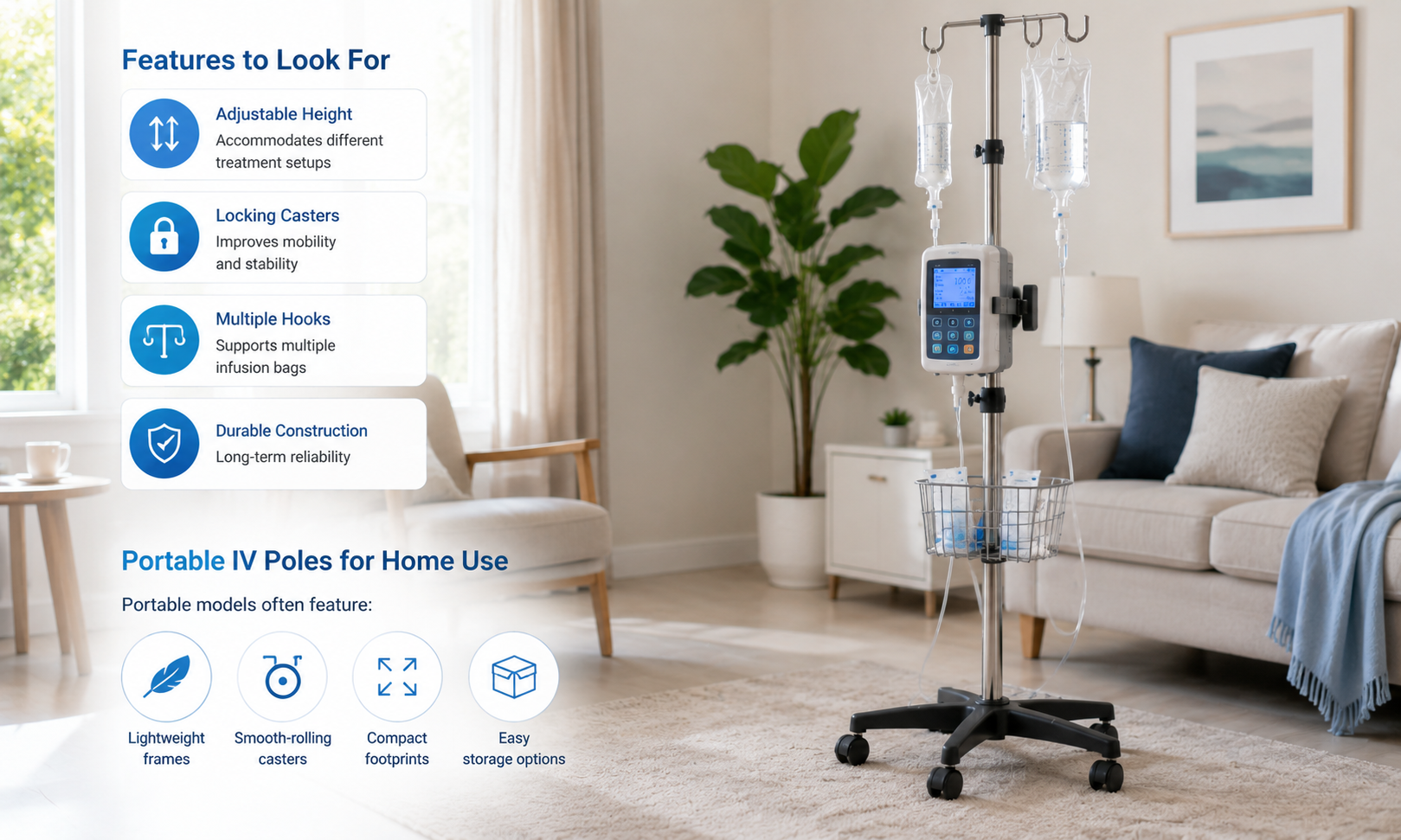
A reliable IV pole or IV stand remains one of the most essential pieces of infusion equipment.
These devices provide a stable structure for:
Features to Look For
| Feature | Benefit |
| Adjustable height | Accommodates different treatment setups |
| Locking casters | Improves mobility and stability |
| Multiple hooks | Supports multiple infusion bags |
| Durable construction | Long-term reliability |
A portable IV pole can be especially beneficial in home settings where patients may need to move between rooms while remaining connected to infusion equipment.
Portable models often feature:
The term IV drip supplies covers a broad range of products used during infusion therapy.
Examples include:
These supplies are often replaced regularly according to healthcare provider instructions and manufacturer recommendations.
Because IV therapy protocols vary significantly, the specific supplies required may differ from one patient to another.
Monitoring is a commonly recommended of many home healthcare programs.
Common monitoring devices may include:
Healthcare providers may recommend monitoring based on individual treatment plans and medical needs.
Monitoring devices can help caregivers and healthcare professionals track information that may be relevant during ongoing treatment.
Medical Compliance Notice: Monitoring devices do not replace professional medical evaluation or emergency medical care.
Certain infusion protocols may involve the use of IV fluid warmers designed to warm fluids before administration.
Potential benefits may include:
Not every infusion therapy program requires fluid warming, which is why healthcare provider guidance remains essential.
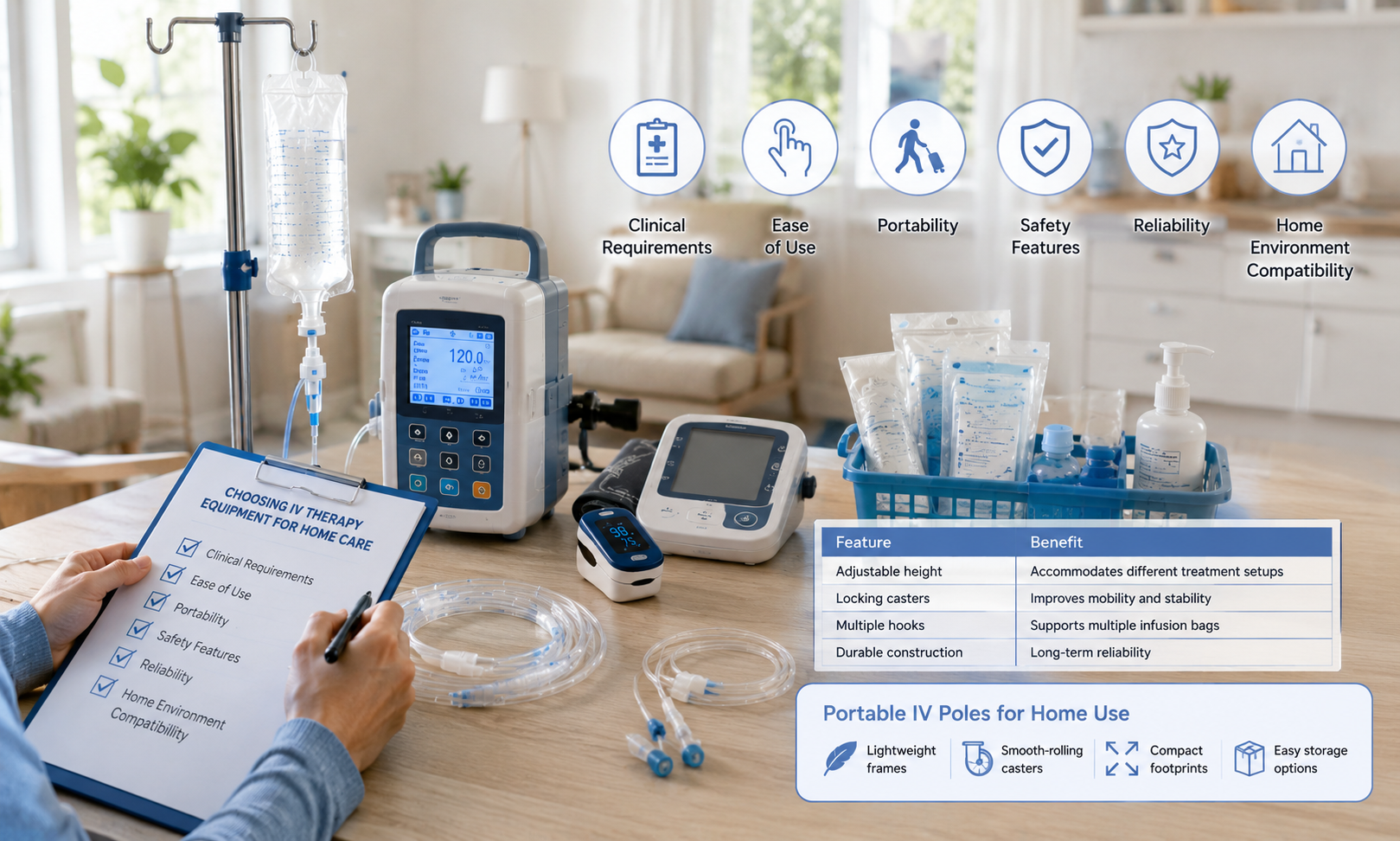
Selecting equipment for home infusion settings involves several considerations.
Equipment should align with the treatment plan established by healthcare professionals.
User-friendly equipment may help support caregivers and patients managing treatment at home.
Portable infusion equipment can improve flexibility and mobility.
Look for products that include manufacturer-recommended safety mechanisms.
Established manufacturers often provide equipment designed for consistent performance.
Consider available space, power requirements, storage needs, and mobility concerns.
Proper cleaning, routine maintenance, and appropriate storage may help support the performance and longevity of home IV equipment. Always follow the manufacturer's instructions and your healthcare provider's guidance when caring for infusion equipment.
Medical Compliance Notice: Cleaning procedures, maintenance schedules, and storage requirements vary by manufacturer. Always follow the product's Instructions for Use (IFU) and healthcare provider recommendations.
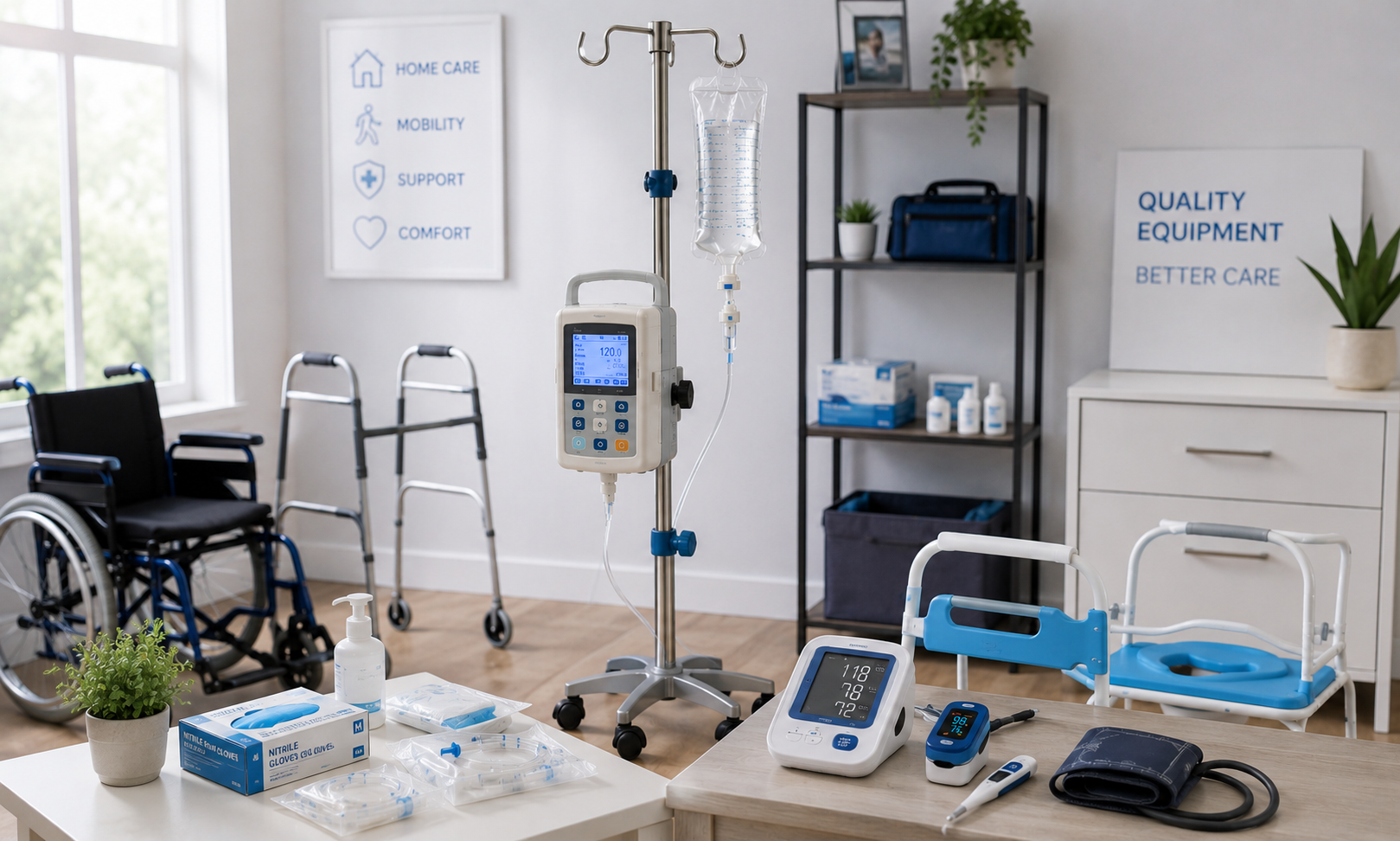
As a U.S.-based provider of medical supplies, rehabilitation products, and home healthcare equipment, Medicaleshop offers a variety of products that may support home care environments.
Categories commonly available include:
Medicaleshop works with established manufacturers and healthcare equipment brands to provide products used in professional and home care settings.
Compliance Notice: Medicaleshop is a dealer and supplier of medical equipment and rehabilitation products. We do not manufacture IV therapy devices, prescribe treatments, or provide clinical services. Product selection should be based on healthcare provider recommendations and individual care requirements.
When evaluating IV therapy equipment, consider avoiding these common mistakes:
Proper planning can help create a safer and more efficient home care environment.
Home IV therapy often involves equipment such as infusion pumps, IV poles, portable IV stands, monitoring devices, and IV supplies to help support treatment delivery and home care organization. Understanding the role of each device can help patients and caregivers make informed equipment choices. Explore Medicaleshop's selection of IV theraphy, patient monitoring products, rehabilitation equipment, and home care solutions to help create a safe, organized, and efficient care environment.
Medical Disclaimer: This content is for informational purposes only. Medicaleshop does not provide medical advice, diagnosis, or treatment recommendations. Always consult a qualified healthcare professional regarding IV therapy and equipment decisions.
The information in this article was developed using educational resources and guidance from respected healthcare organizations and manufacturers, including:
Frequently Asked Questions
Ans. Home IV therapy may involve infusion pumps, IV poles, IV drip supplies, monitoring devices, tubing sets, and other equipment depending on the prescribed treatment plan.
Ans. An infusion pump is designed to deliver fluids, medications, or nutrients at controlled rates determined by healthcare professionals.
Ans. Portable IV poles are commonly used in home healthcare environments because they can improve mobility and flexibility during treatment.
Ans. IV drip supplies include products such as administration sets, tubing, connectors, and accessories used during infusion therapy.
Ans. The terms are often used interchangeably, although IV infusion pumps specifically refer to devices designed for intravenous administration.
Ans. Healthcare providers may recommend monitoring devices such as blood pressure monitors and pulse oximeters depending on the patient's treatment plan.
Ans. IV therapy should only be performed under the direction and supervision of qualified healthcare professionals.
Ans. Key considerations include clinical requirements, portability, safety features, ease of use, reliability, and healthcare provider recommendations.
.avif&w=3840&q=75)
.avif&w=3840&q=75)