A knee scooter, also called a knee walker, can provide a mobility option for people with temporary lower-leg mobility restrictions who have been advised to avoid or limit weight on an injured leg. Unlike traditional crutches, knee scooters support one lower leg on a padded platform while the user propels and steers with the other leg. This guide compares five knee scooters available through MedicalEshop, including options for different surfaces, transport needs, and seated mobility. Learn what to consider when choosing a knee scooter, including knee pad height, weight capacity, wheel design, balance, braking, portability, and intended environment.
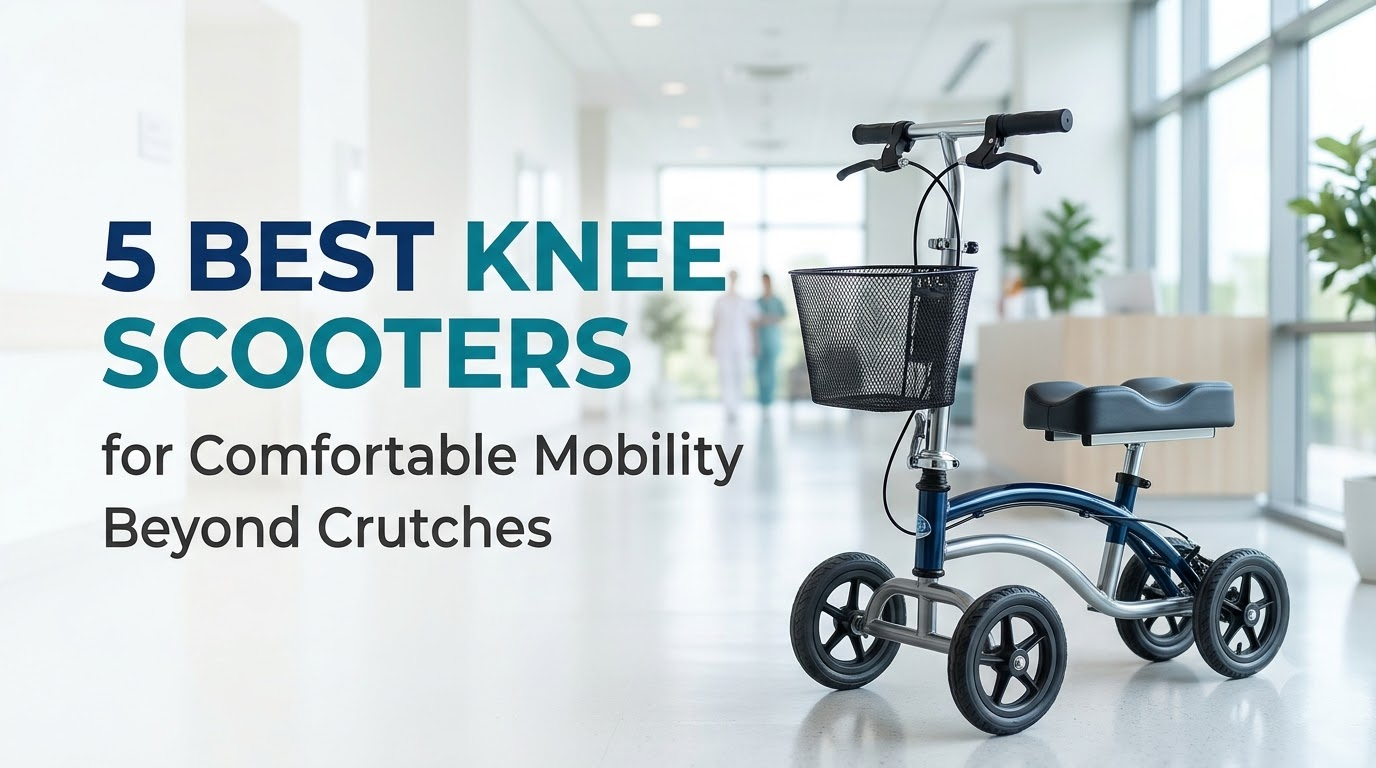
A knee scooter, also known as a knee walker or orthopedic scooter, is a wheeled mobility aid designed to support one leg while allowing the user to move with the other leg.
Unlike crutches, which require the user to support themselves through their hands and arms, a knee scooter typically has a padded platform where the affected lower leg or knee can rest. The user stands or kneels on the platform, holds the handlebars, and propels the scooter with the unaffected leg.
Knee scooters are commonly associated with mobility following certain foot, ankle, or lower-leg injuries and procedures where weight-bearing restrictions may apply. However, whether a knee scooter is appropriate depends on the individual's mobility, balance, strength, restrictions, and environment.
The U.S. National Library of Medicine's MedlinePlus notes that mobility aids can help people move around following an injury or when they have difficulty walking. It also emphasizes that some mobility aids require sufficient upper-body strength or balance and that healthcare professionals may help determine which device is appropriate.
Research has also examined knee scooters among people recovering from foot and ankle procedures. One study published in Foot & Ankle Orthopaedics found that knee scooters were commonly recommended for patients with postoperative weight-bearing restrictions, while also reporting that scooter-related falls and injuries can occur.
This means a knee scooter should be viewed as a mobility option-not automatically as the right choice for every person or every type of injury.
Both knee scooters and crutches can be used as mobility aids when a person has temporary restrictions involving the lower extremity. The main difference is how the body is supported during movement.
| Feature | Knee Scooter | Crutches |
| Primary support | Padded knee/lower-leg platform | Hands and upper body |
| Propulsion | Usually the unaffected leg | Arms and legs |
| Steering | Handlebars and front steering mechanism | User controls movement directly |
| Balance requirement | Requires balance and coordination | Requires balance, coordination, and upper-body strength |
| Weight-bearing | Designed around supporting the affected leg on the device, depending on instructions | Can be used to keep weight off the affected leg |
| Portability | Some models fold for transport | Many models are relatively portable |
| Seating | Some models include a seat | Generally not designed as a seat |
| Surface considerations | Wheel size and design can affect intended surfaces | Different technique is required across surfaces |
MedlinePlus notes that crutches may be used to keep weight off the foot, ankle, or knee, while different mobility aids may be appropriate depending on a person's needs and physical abilities.
Research comparing knee scooters and crutches has reported differences in patient satisfaction, but the evidence does not mean that one device is universally preferable. A study of patients following foot and ankle surgery found higher satisfaction among knee scooter users, while both devices were considered viable mobility aids. The practical choice may depend on factors such as
The right knee scooter is not necessarily the one with the most features. It should match the user's physical requirements, environment, and intended use.
The knee platform should be positioned appropriately for the user. An adjustable knee pad can make it easier to achieve a suitable position.
The Protekt Gazelle manual specifically instructs users to center the injured leg on the pad and adjust the knee walker's height while maintaining an appropriate standing position.
Adjustable handlebars can accommodate different user heights and may help users maintain a more appropriate position while operating the device.
Always follow the manufacturer's instructions for adjusting the handlebar and knee platform.
Weight capacity is one of the most important specifications to check before selecting a knee scooter.
Different models have different limits. Never exceed the manufacturer's stated weight capacity.
Wheel size and construction can influence how a knee scooter is intended to be used.
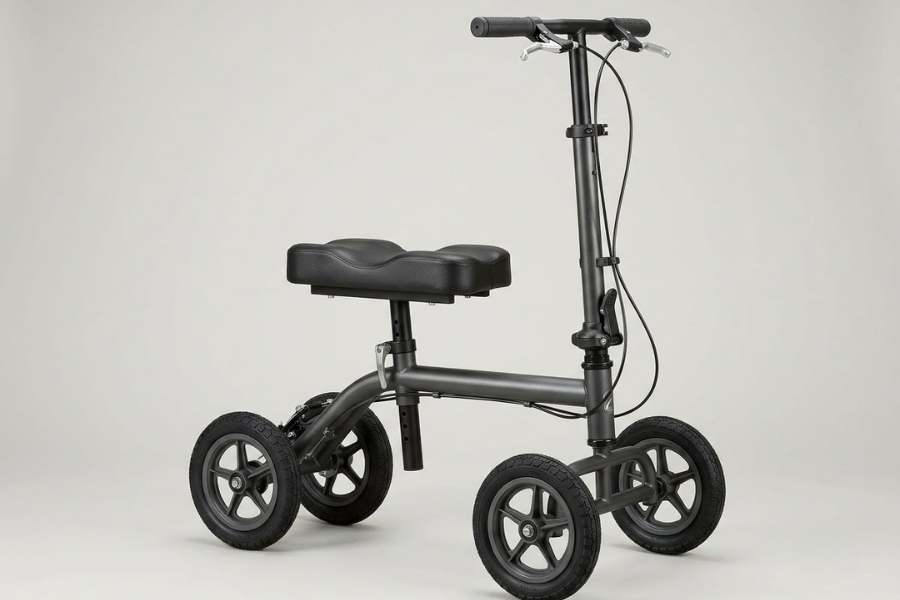
Some knee walkers have four 12-inch wheels and is designed for use across indoor surfaces such as carpet, hardwood, and tile as well as outdoor surfaces when the wheels are properly inflated.
Smaller-wheel models may be more appropriate when portability and indoor maneuverability are the primary considerations.
If the knee scooter needs to be transported in a vehicle or stored between uses, a folding design may be useful.
Some knee walkers feature folding mechanisms intended to make storage or transportation more convenient.
Hand brakes allow the user to control or stop the scooter. Before use, users should understand how the braking system works and verify that it functions properly.
A knee scooter still requires balance, coordination, steering ability, and the ability to control the device.
A prospective study of orthopedic knee scooter use reported falls and injuries among participants, reinforcing the importance of appropriate use and safety education.
Traditional knee scooters typically use a padded platform to support one lower leg. A seated model uses a different configuration and may be relevant for people looking specifically for a seated mobility design.
Some knee walkers include a padded seat, footrest, basket, adjustable seat and handle height, and an 8-inch wheel design.
The following five models represent different design considerations, including folding portability, all-terrain wheels, seated mobility, and general knee-scooter configurations.
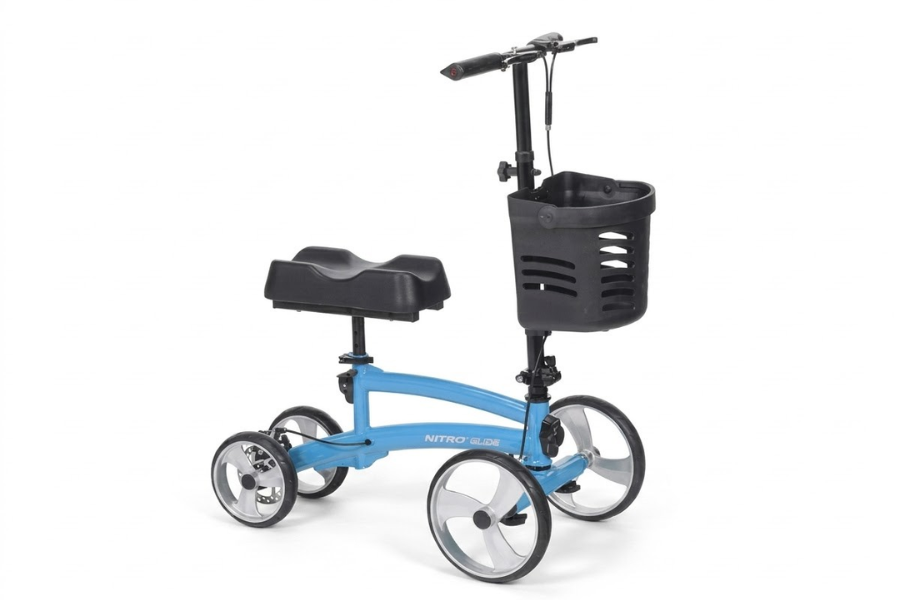
The Drive Nitro Glide Knee Walker is a foldable knee walker designed around adjustability and maneuverability.
Its manufacturer information lists:
The front axle width can be adjusted to change the turning radius, which may be useful when navigating different indoor and outdoor environments.
For users who are particularly interested in adjustability, folding storage, and transport, these specifications may be worth considering.
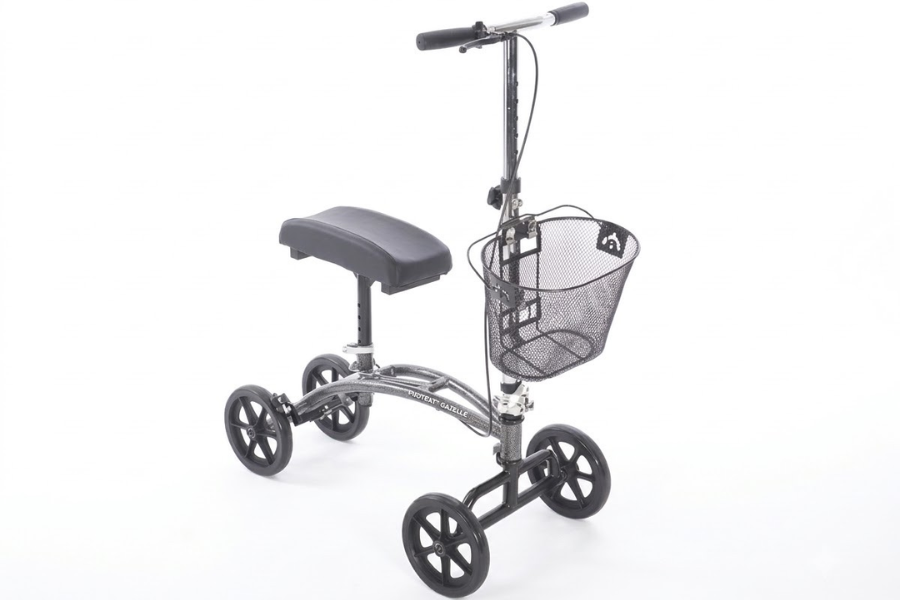
The Protekt Gazelle Knee Walker features a padded knee platform, steering and braking system, folding mechanism, and storage basket.
Manufacturer information lists:
The manufacturer manual also emphasizes training and practice before using the knee walker independently.
Its folding mechanism can make it a practical option to consider when storage and transportation are important factors.
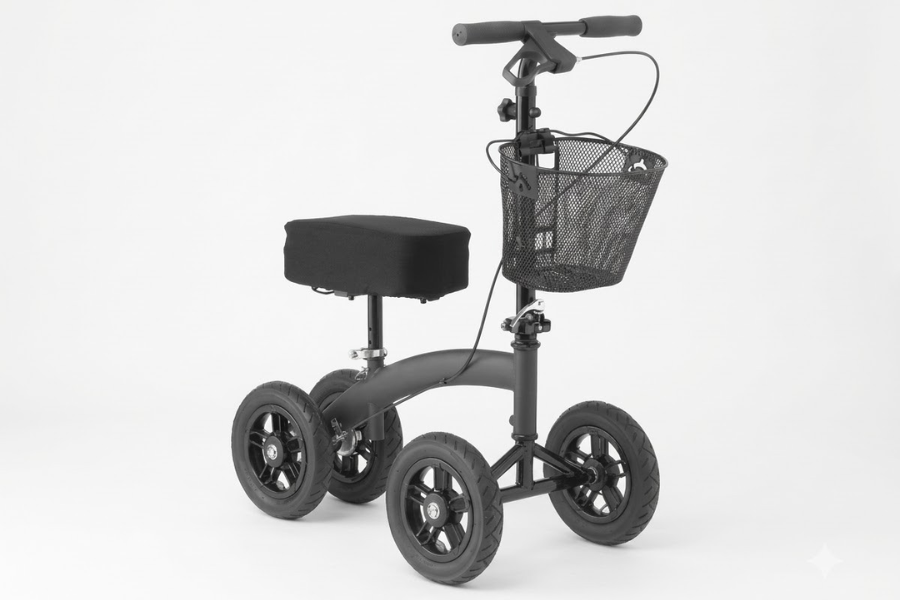
For people considering a knee scooter for mixed indoor and outdoor environments, the Medline All-Terrain Knee Walker has larger 12-inch wheels.
According to Medline, the ATKNEE model features:
The larger wheel design is the primary feature to consider when comparing this model with standard knee walkers.
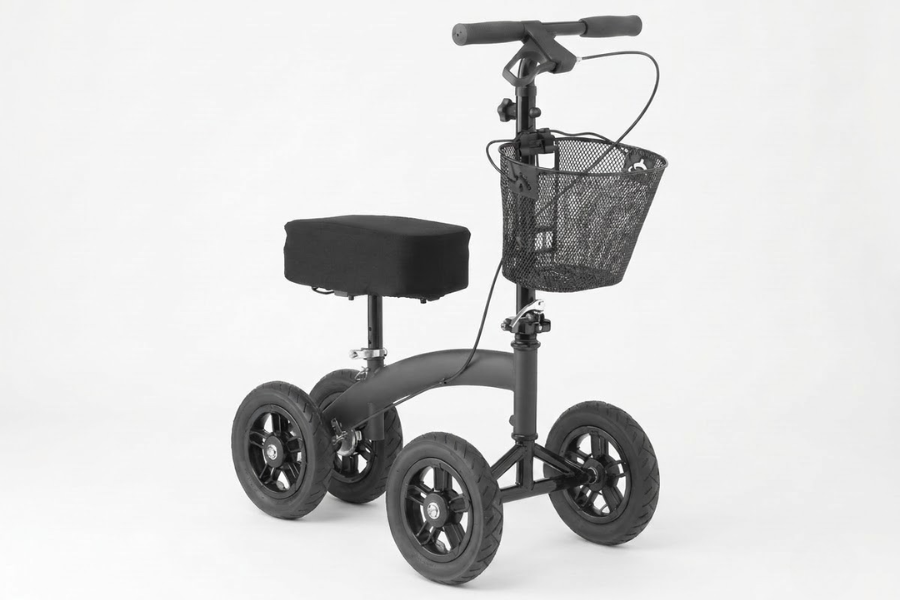
The Medline Manual Seated Knee Walker uses a seated configuration rather than the conventional knee-platform design.
Medline's specifications include:
This model may be worth considering for users specifically looking for a seated mobility configuration rather than a traditional knee walker.
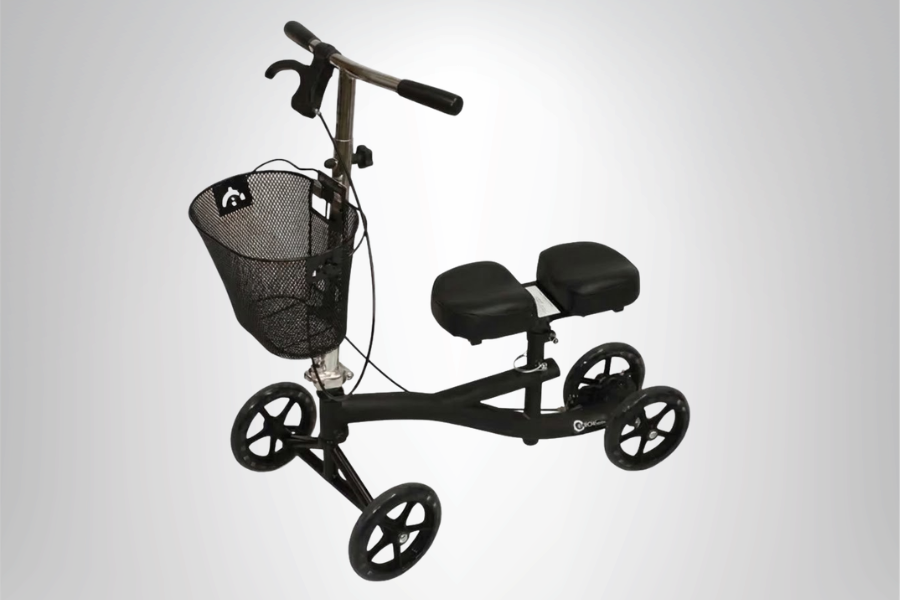
The Roscoe Knee Scooter combines a padded knee platform with four 8-inch wheels and a folding frame.
Its product brochure lists:
The knee platform can also be adjusted from right to left, allowing the configuration to accommodate either leg.
Its combination of an adjustable platform and folding design makes it another option to consider for everyday mobility, storage, and transport needs.
Rather than choosing a knee scooter simply because it appears on a “best” list, compare the features with your intended environment and mobility requirements.
| Knee Scooter | Key Design Consideration | Wheel Information | Folding/Transport | Weight Capacity |
| Drive Nitro Glide | Adjustable axle and knee pad | Manufacturer lists wheel design; verify current configuration | Foldable | 350 lbs |
| Protekt Gazelle | Folding design and adjustable knee platform | 8-inch PU wheels | Folding mechanism | 350 lbs |
| Medline All-Terrain | Larger wheels for mixed surfaces | 12-inch wheels | Check current configuration | 350 lbs |
| Medline Manual Seated | Seated mobility configuration | 8-inch wheels | Folding handlebar | 300 lbs |
| Roscoe Knee Scooter | Adjustable knee platform and folding design | 8-inch PU wheels | Folding mechanism | 350 lbs |
Product specifications can change by model, configuration, or manufacturer update, so review the current product information before making a purchase. MedicalEshop also notes that product images are for reference and actual configurations or included components may vary.
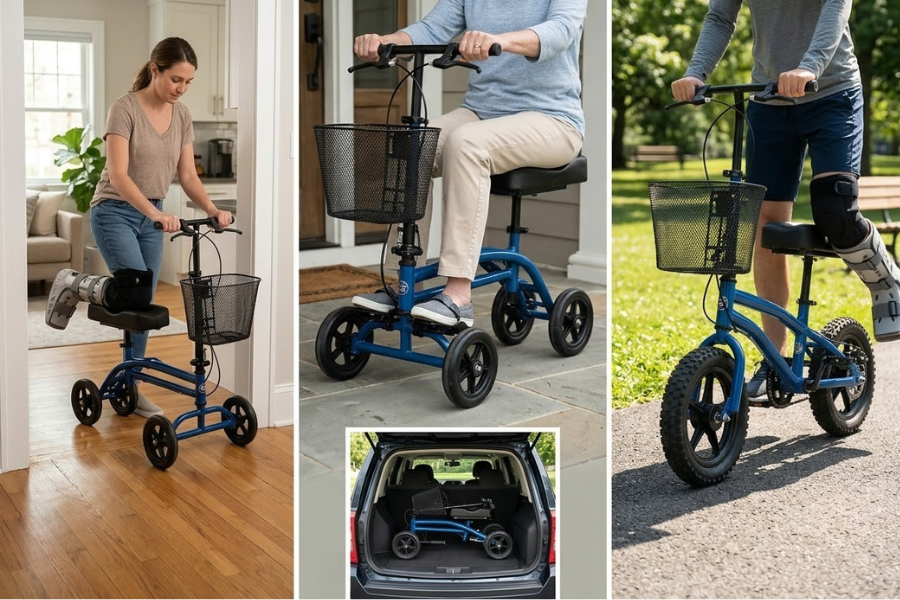
There is no single feature that makes a knee scooter appropriate for everyone. Instead, consider which specifications matter most for your situation.
For Indoor Mobility
If most movement will occur inside a home, office, or similar environment, consider:
A narrower or highly maneuverable design may be easier to navigate through doorways and tighter spaces, depending on the specific model.
For Outdoor or Mixed-Surface Use
If outdoor movement is part of your intended use, wheel design becomes particularly important. Always check the manufacturer's instructions regarding appropriate surfaces.
For Storage and Transportation
For frequent transportation in a vehicle or limited storage space, folding features may be especially relevant.
For Seated Mobility
If a user specifically needs a seated configuration, the Medline Manual Seated Knee Walker differs from conventional knee-platform models by providing a padded seat and footrest.
For Adjustability
Adjustable knee pads and handlebars can be important for achieving an appropriate setup.
Before using a knee scooter, check the manufacturer's instructions for proper adjustment and positioning.
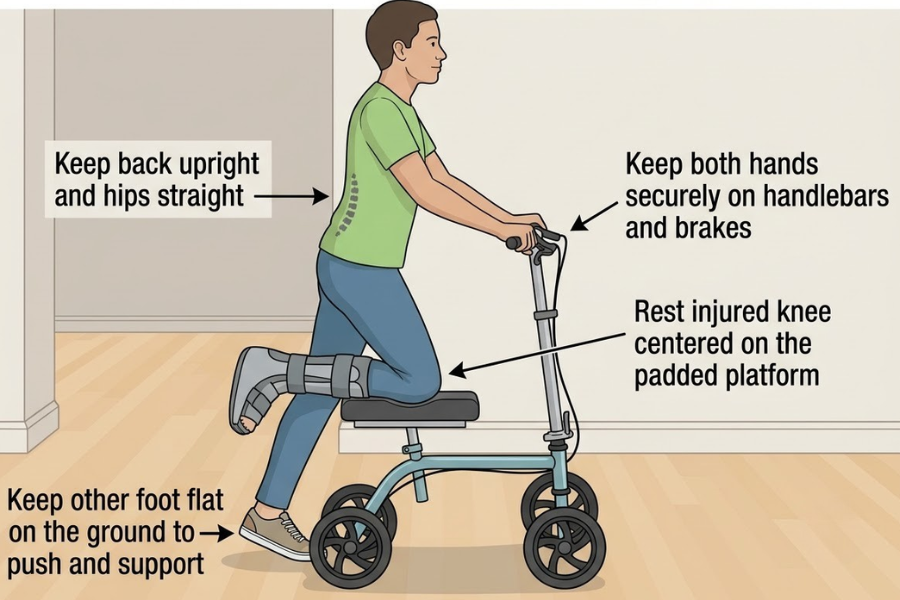
A knee scooter can provide mobility support, but it still requires appropriate technique and awareness of the surrounding environment.
Check the Fit Before Moving
Adjust the handlebar and knee platform according to the manufacturer's instructions. Your injured leg should be positioned appropriately on the platform, and the scooter should feel controlled before you begin moving.
The Protekt Gazelle manual recommends centering the injured leg on the pad and adjusting the height to achieve a comfortable position.
Practice Before Independent Use
New users should become familiar with:
The Protekt Gazelle instructions specifically recommend proper training and practice before unattended use.
Be Careful With Turns and Obstacles
Research has identified sharp turns, obstacles, excessive speed, and downhill movement among circumstances associated with knee scooter falls.
Move at a controlled pace and pay attention to changes in flooring, uneven surfaces, obstacles, and slopes.
Check the Brakes and Wheels
Before use, inspect:
Do not use a device if an important component appears damaged or does not operate as intended.
Follow Weight-Bearing Instructions
A knee scooter should not be used to override medical instructions.
If your healthcare professional has given you specific weight-bearing restrictions, mobility instructions, or activity limitations, follow those instructions when deciding whether and how to use a knee scooter.
A knee scooter may not be appropriate for every user.
Balance difficulties, limited strength, difficulty steering, problems controlling the brakes, or an environment with stairs and other obstacles may affect whether a knee scooter is suitable.
MedlinePlus notes that some mobility aids require adequate upper-body strength or balance and recommends professional guidance when selecting mobility equipment.
A wheelchair, walker, crutches, or another mobility aid may be considered depending on the individual's circumstances.
Knee scooters are generally intended for rolling movement and should not automatically be considered appropriate for stairs.
Do not attempt to use a knee scooter on stairs unless the manufacturer specifically provides instructions for that situation and a qualified professional has confirmed that the method is appropriate.
For homes or buildings with stairs, consider how the scooter will be transported between levels before selecting a model.
Balance is an important consideration because the user must control the scooter while propelling it with the unaffected leg.
People with significant balance concerns should discuss mobility-aid options with a qualified healthcare professional or physical therapist before using a knee scooter.
The right knee scooter isn't necessarily the one with the longest feature list. It is the model whose design, fit, weight capacity, wheel configuration, adjustability, and intended environment align with the user's needs.
The five models discussed here offer different considerations:
Before selecting a model, compare the manufacturer's specifications with your intended environment, user height, weight, mobility abilities, transportation needs, and healthcare professional's instructions.
Ready to compare your options? Explore these five knee scooters at MedicalEshop and review the specifications of each model to identify the design that best matches your intended use.
Always review the manufacturer's instructions, weight capacity, and safety information before using a mobility device.
Medical Disclaimer: MedicalEshop is a U.S.-based dealer and supplier of home medical equipment, rehabilitation products, mobility aids, special-needs products, and related medical supplies. MedicalEshop is not a manufacturer, physician, hospital, or licensed medical provider. This article is provided for general educational and informational purposes only and is not intended to diagnose, treat, cure, or prevent any medical condition.
Knee scooters and other mobility aids may not be appropriate for every individual or situation. Individual needs may vary. Equipment selection and use should be based on recommendations from qualified healthcare professionals and the manufacturer's instructions. Always review the product's weight capacity, operating instructions, safety information, and intended use before operating a mobility device.
The information in this article was reviewed against product information from the manufacturers and MedicalEshop, along with health and research resources from U.S. medical organizations and the U.S. National Library of Medicine.
Frequently Asked Questions
Ans. A knee scooter is a mobility aid that supports one lower leg on a padded platform while the user moves using the other leg. Knee scooters are commonly used by people with temporary lower-leg mobility restrictions, including some foot and ankle injuries or postoperative weight-bearing restrictions. The appropriate device depends on the individual's circumstances and healthcare professional's guidance.
Ans. Knee scooters are not universally better than crutches. Each mobility aid has different design and use requirements. Crutches require upper-body strength and balance, while knee scooters require the user to balance and control a wheeled device. Research has found differences in patient satisfaction between the two, but device selection should be based on individual needs and professional guidance.
Ans. Knee scooters are commonly used following certain foot and ankle injuries or procedures when a healthcare professional has advised limited or non-weight-bearing mobility. Whether a knee scooter is appropriate depends on the specific injury, mobility restrictions, balance, and other individual factors.
Ans. A knee scooter may be used for certain foot injuries when the user's healthcare professional recommends a mobility aid that limits weight-bearing through the affected foot. The device should be selected and adjusted according to the manufacturer's instructions and professional guidance.
Ans. Balance is an important consideration when using a knee scooter. Users must control steering, braking, and propulsion while maintaining their position on the device. People with significant balance difficulties should discuss mobility-aid options with a qualified healthcare professional or physical therapist before using one.
Ans. Knee scooters are designed primarily for rolling mobility and should not automatically be used on stairs. Check the manufacturer's instructions and seek professional guidance rather than attempting a method that has not been specifically approved or taught.
Ans. Weight capacity varies by model. The Drive Nitro Glide, Protekt Gazelle, Medline All-Terrain Knee Walker, and Roscoe Knee Scooter are listed at 350 lbs, while the Medline Manual Seated Knee Walker is listed at 300 lbs. Always verify the current manufacturer's specifications before use.
Ans. Consider weight capacity, user height, knee pad and handlebar adjustment, wheel size, intended surfaces, braking system, folding features, transportation needs, and whether a seated or traditional knee-platform configuration is required. Your healthcare professional or physical therapist can also help determine whether a knee scooter is appropriate for your situation.
Ans. Some knee scooters are designed for indoor and outdoor use, but the appropriate surface depends on the specific model. For example, Medline describes its All-Terrain Knee Walker as suitable for indoor surfaces such as carpet, hardwood, and tile as well as outdoor surfaces when the wheels are properly inflated.
Ans. A knee scooter is a self-propelled mobility aid that typically requires the user to stand on one leg and control the device using handlebars. A wheelchair provides seated mobility and may be propelled by the user or another person, depending on the type. The appropriate option depends on mobility ability, weight-bearing restrictions, balance, environment, and individual needs.

