Dry skin is a common concern for many people living with diabetes, and choosing the right moisturizer may help support healthier-looking skin and everyday comfort. From lightweight lotions for daily hydration to rich creams and protective ointments for very dry areas, there are many options available. This guide explains why diabetes may contribute to dry skin, what ingredients to look for in a moisturizer, and how to build an effective daily skin care routine. You'll also learn about commonly used moisturizing products and explore skin care solutions available at MedicalEshop to help support your home healthcare needs.

The best lotion for dry diabetic skin is one that helps lock in moisture, supports the skin's natural barrier, and is suitable for your skin type. Many dermatologists recommend choosing fragrance-free moisturizers that contain ingredients such as ceramides, glycerin, hyaluronic acid, petrolatum, or urea to help keep skin hydrated. The right product depends on how dry your skin is, whether you have sensitive skin, and your healthcare provider's recommendations.
There isn't a single moisturizer that works best for everyone. Some people prefer lightweight lotions for everyday use, while others may benefit from richer creams or ointments for very dry or cracked areas. Developing a daily moisturizing routine is just as important as selecting the product itself.
Quick Guide to Choosing a Moisturizer
| If You Have... | A Product That May Help |
| Mild dryness | Daily moisturizing lotion |
| Very dry skin | Rich moisturizing cream |
| Rough or flaky skin | Cream containing ceramides or urea |
| Dry, cracked heels | Foot cream |
| Severely dry patches | Protective ointment |
According to the American Academy of Dermatology (AAD), moisturizing immediately after bathing and washing your hands may help reduce moisture loss and support healthier-looking skin. People living with diabetes are also encouraged to inspect their skin regularly and discuss persistent dryness or skin changes with a qualified healthcare professional.
Medical Disclaimer: The information provided in this article is intended for educational purposes only and should not be considered medical advice. Always consult a qualified healthcare professional regarding skin concerns, diabetes management, or product selection.
Dry skin can affect anyone, but it is especially common among people living with diabetes. Several factors may contribute to skin dryness, making consistent skin care an important part of an overall diabetes management plan.
One reason is that high blood sugar levels may contribute to increased fluid loss through urination, which can leave the body and skin less hydrated over time. When the skin loses moisture, it may become rough, itchy, or feel tight.
In some individuals, diabetes may also affect the nerves that help regulate sweating. Because sweat helps keep the skin naturally moisturized, reduced sweating, particularly on the feet and lower legs, may increase the likelihood of dryness. The American Diabetes Association (ADA) notes that diabetes can affect the body's ability to maintain healthy skin, making regular skin care especially important.
Dry skin is more than just a cosmetic concern. If the skin becomes excessively dry, it may develop small cracks that can make it easier for bacteria or other microorganisms to enter. While not every case of dry skin leads to complications, maintaining healthy skin is an important part of daily self-care.
Common signs of dry diabetic skin may include:
If you notice persistent dryness, open cracks, redness, drainage, or signs of infection, seek advice from a qualified healthcare professional promptly.
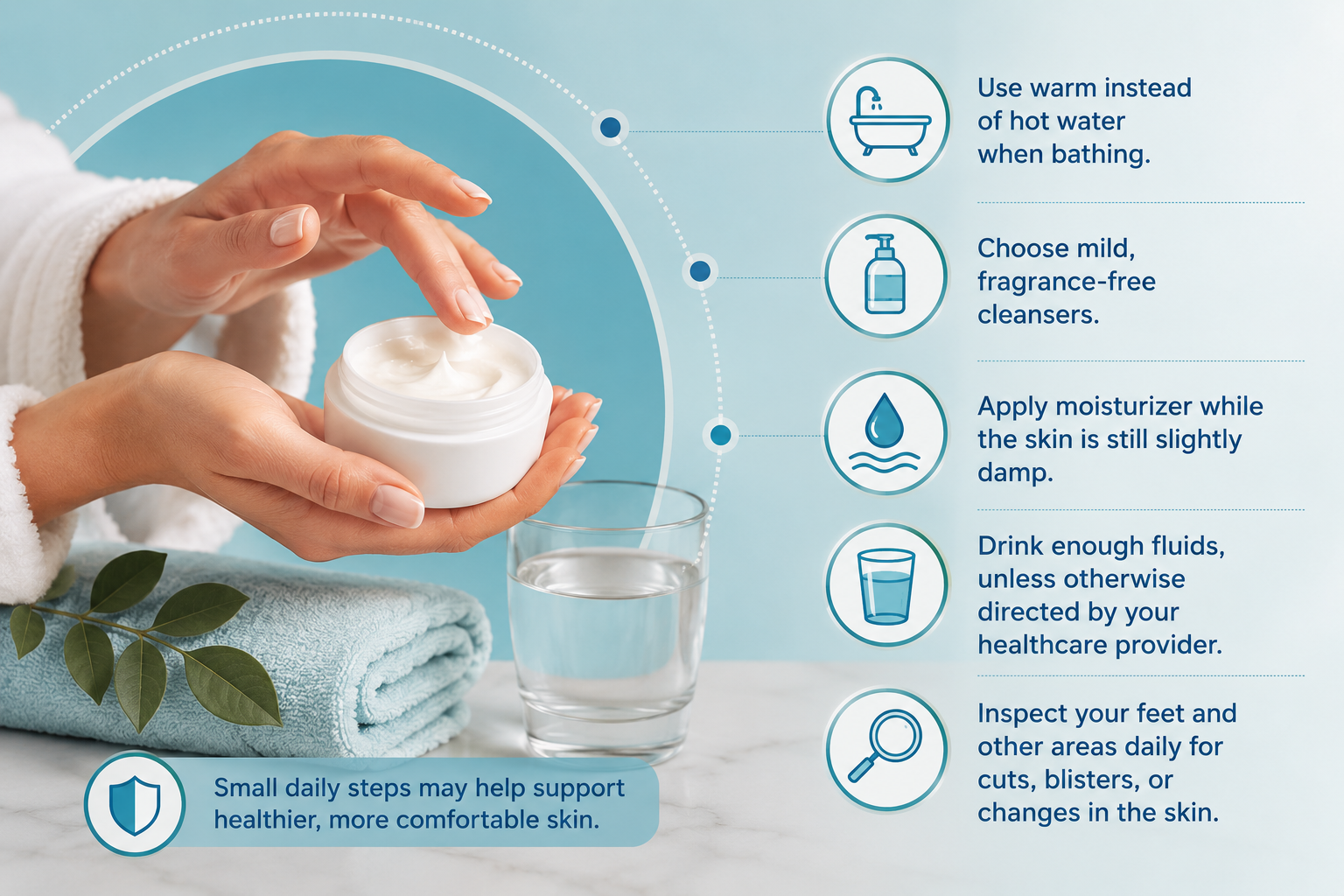
Moisturizing regularly may help support the skin's natural protective barrier by reducing moisture loss and improving skin hydration. A consistent routine can also make dry skin feel softer and more comfortable.
However, moisturizer alone is only one part of good skin care. The AAD also recommends:
These simple habits, combined with the right moisturizer, may help support healthier-looking skin over time.
With so many moisturizers available, choosing the right one can feel overwhelming. Rather than focusing only on brand names, it is helpful to understand which ingredients are commonly recommended for dry skin and why they are included in many moisturizing products.
Dermatologists often suggest selecting products that help attract moisture, strengthen the skin's barrier, and reduce water loss. Many lotions and creams designed for dry skin contain a combination of these ingredients.
| Ingredient | Why It's Commonly Used |
| Ceramides | Help support the skin's natural moisture barrier. |
| Glycerin | Draws moisture into the outer layer of the skin. |
| Hyaluronic Acid | Helps the skin retain moisture for a smoother appearance. |
| Urea | Helps soften rough, dry skin and improves hydration. |
| Petrolatum | Forms a protective layer that helps reduce moisture loss. |
| Shea Butter | Rich emollient that helps soften and smooth dry skin. |
| Dimethicone | Helps protect the skin while improving its feel and texture. |
Many high-quality moisturizers combine several of these ingredients to provide long-lasting hydration.
Ingredients Some People Prefer to Avoid
While individual skin needs vary, some people with dry or sensitive skin may prefer moisturizers that are free from the following:
Fragrance-free and hypoallergenic products are often a good option for people who experience skin sensitivity, although no product is suitable for everyone.
One of the most common questions people ask is whether a lotion, cream, or ointment is the better choice.
In general:
Medical Compliance Notice
MedicalEshop is a U.S.-based supplier of medical supplies, rehabilitation products, and home healthcare equipment. We do not manufacture skin care products or provide medical advice, diagnosis, or treatment recommendations. Product selection should always follow manufacturer instructions and the guidance of a qualified healthcare professional.
Choosing the best lotion for dry diabetic skin involves more than selecting a popular brand. The ideal moisturizer should help replenish moisture, support the skin's natural barrier, and fit comfortably into your daily skin care routine. Many dermatologists recommend fragrance-free moisturizers that contain ingredients such as emollients and humectants to help improve skin hydration. The right choice depends on your skin's condition, the areas affected, and your healthcare provider's recommendations.
Below are three well-known moisturizing products commonly chosen by individuals looking to manage dry diabetic skin. These products are also available through MedicalEshop.
Medical Compliance Notice: The products discussed below are intended to moisturize dry skin. MedicalEshop is a U.S.-based supplier of medical products and does not endorse one product as the best choice for every individual. Always read the product label and consult a qualified healthcare professional if you have questions about your skin care routine.
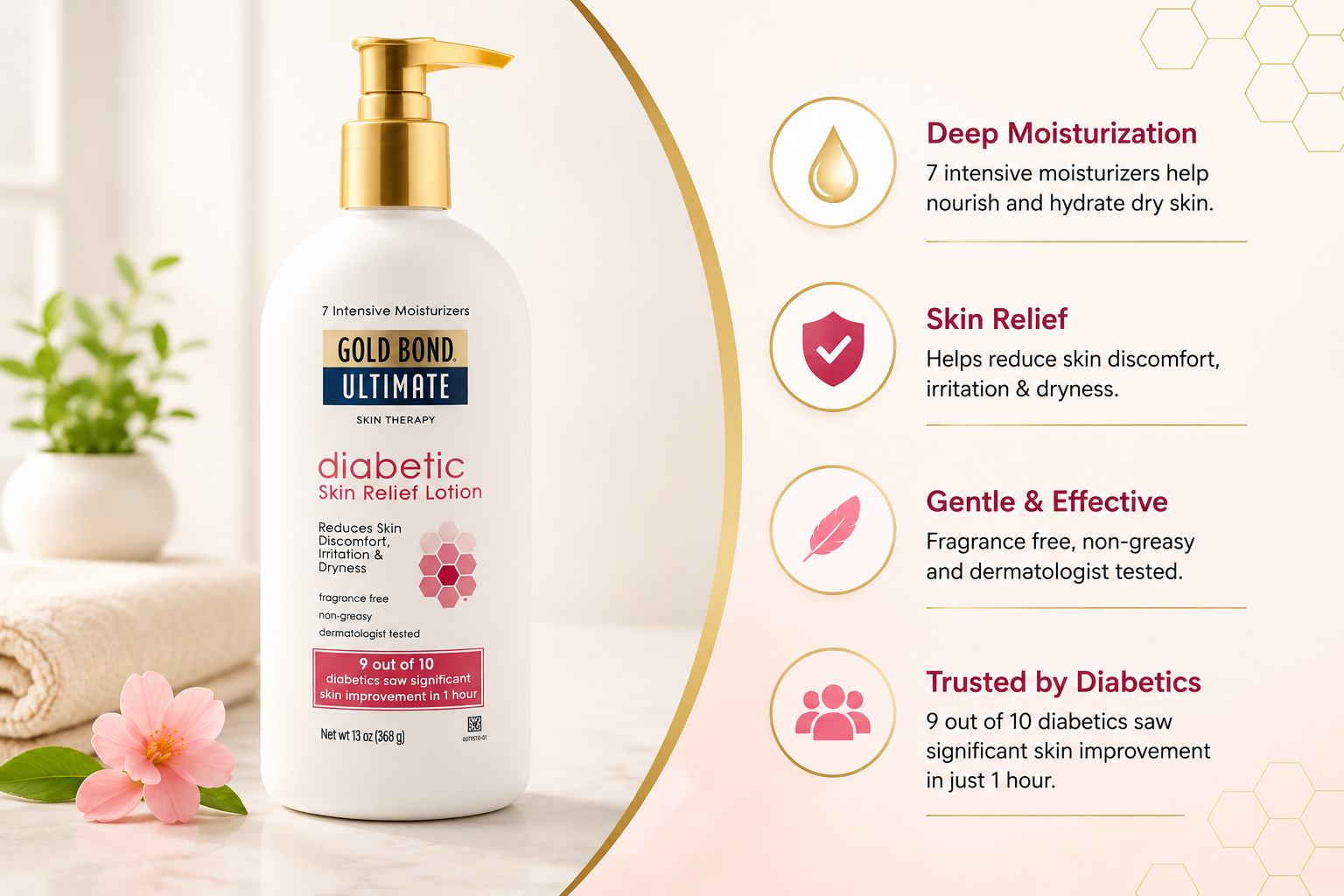
For many people living with diabetes, daily moisturizing is an important part of maintaining healthy-looking skin. Gold Bond Diabetics Dry Skin Relief Lotion is formulated to provide long-lasting hydration for dry, rough skin while remaining lightweight enough for everyday use.
Its non-greasy lotion texture absorbs quickly, making it suitable for application after bathing, hand washing, or whenever the skin feels dry. Regular use may help improve skin softness and support moisture retention as part of a consistent skin care routine.
Key Features
Best For
✔ Daily body moisturizing
✔ Mild to moderately dry skin
✔ Individuals who prefer a lightweight lotion
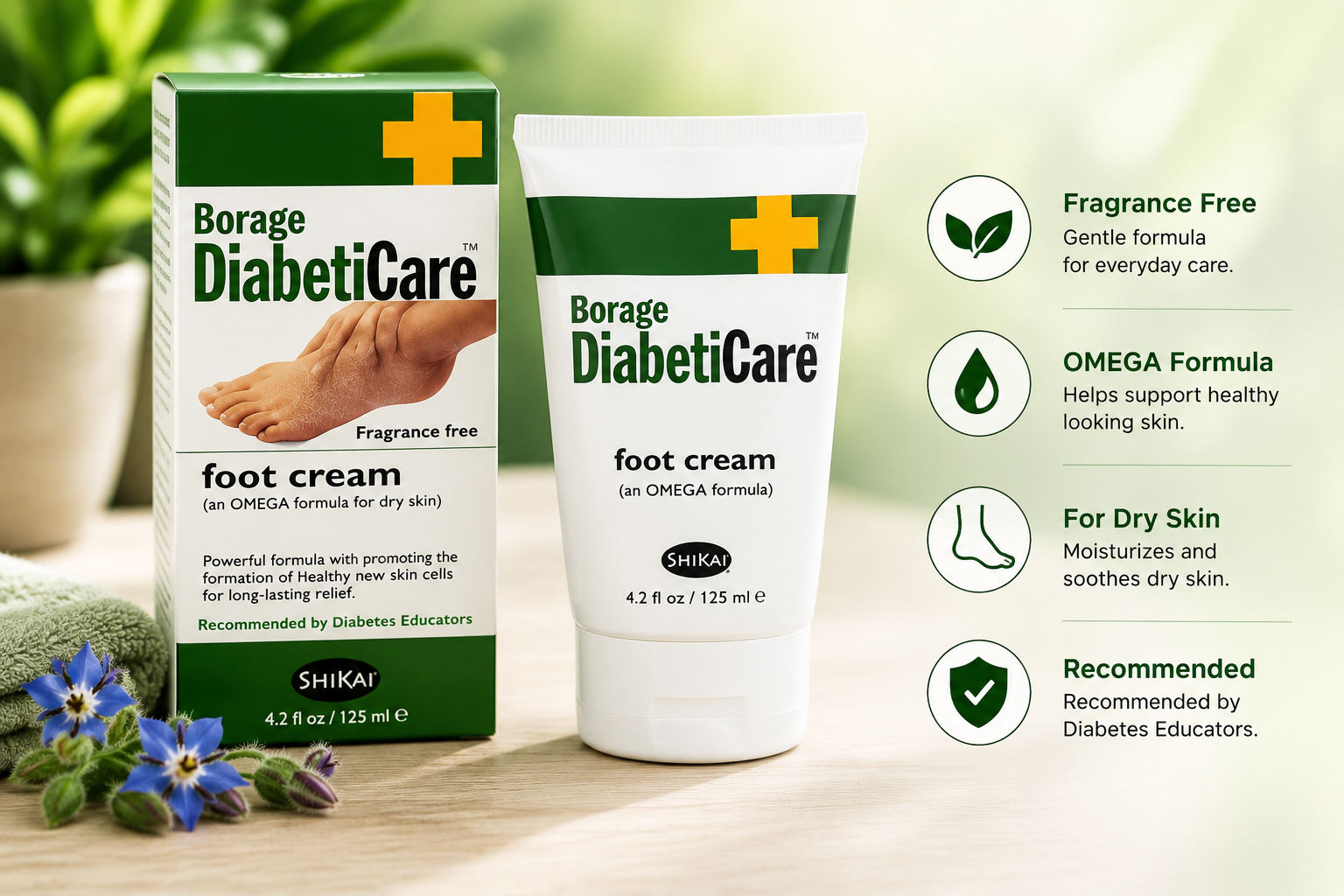
The feet are often one of the first areas affected by dry skin, making proper foot care an important part of diabetes self-care. Borage DiabetiCare Foot Cream is specifically developed for dry feet and contains moisturizing ingredients that help soften rough skin while providing lasting hydration.
Its latex-free formulation makes it an option for individuals who require latex-free personal care products. Because foot skin is generally thicker than skin on other parts of the body, using a dedicated foot cream may provide more intensive moisturization than a standard body lotion.
Key Features
Best For
✔ Dry feet
✔ Rough heels
✔ Daily foot moisturizing
✔ Individuals looking for a latex-free foot cream
Foot Care Tip: The American Diabetes Association recommends inspecting your feet every day for cuts, blisters, redness, or other skin changes. Moisturizing your feet regularly may help support healthy skin, but avoid applying cream between the toes unless advised by your healthcare provider.
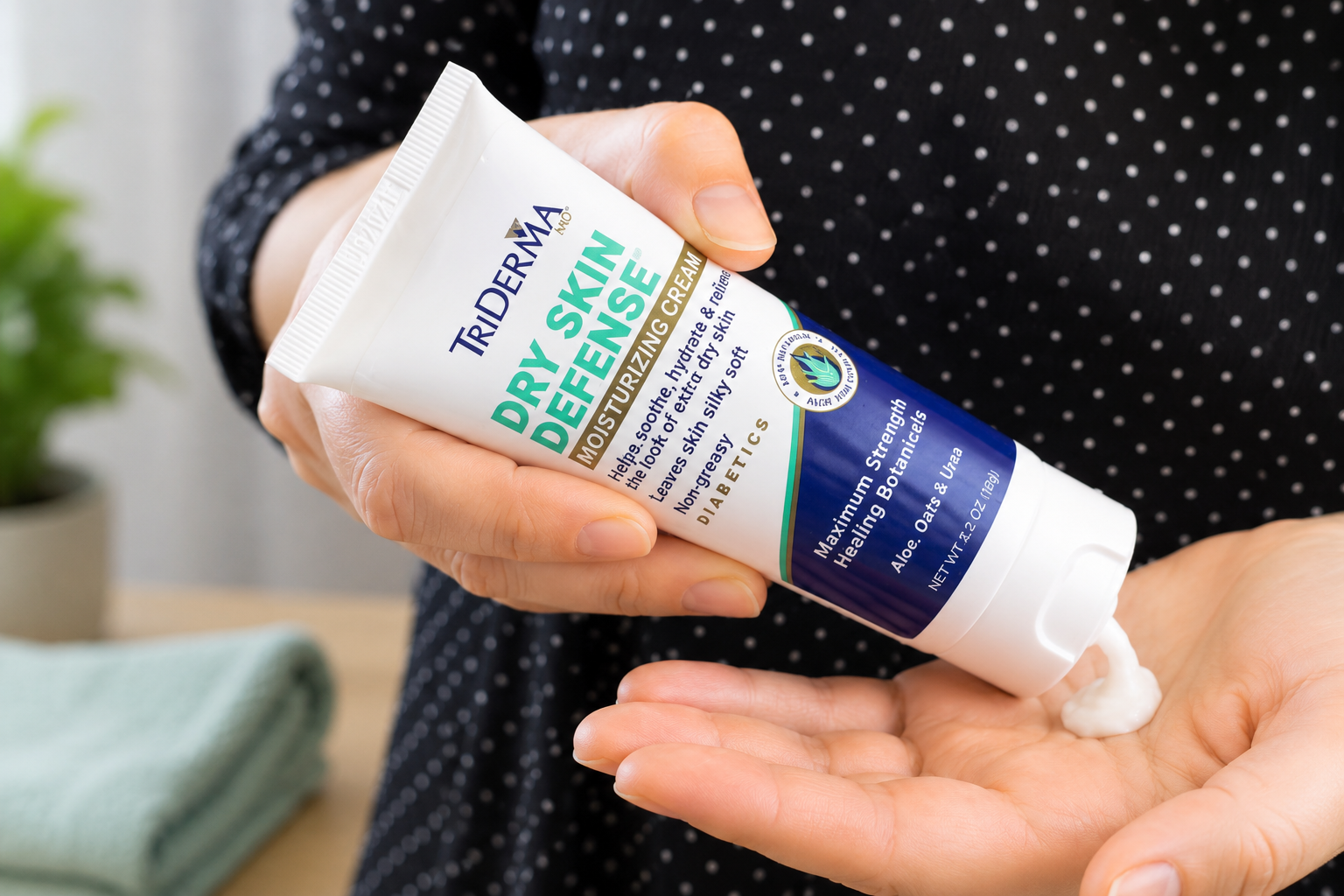
For skin that feels especially dry or rough, TriDerma MD Diabetic Dry Skin Defense Healing Cream offers a richer cream consistency than many everyday lotions. The cream is formulated to help moisturize very dry skin while supporting the skin's natural moisture barrier.
Its thicker texture makes it particularly suitable for areas that frequently experience dryness, such as the hands, elbows, knees, and lower legs. Many individuals include a richer cream like this in their evening skin care routine to provide longer-lasting hydration overnight.
Key Features
Best For
✔ Moderate to very dry skin
✔ Rough skin
✔ Overnight moisturizing
✔ Areas needing intensive hydration
While all three products are designed to help moisturize dry skin, they serve slightly different purposes.
Rather than asking which product is "best," consider which one best matches your skin care needs and daily routine.
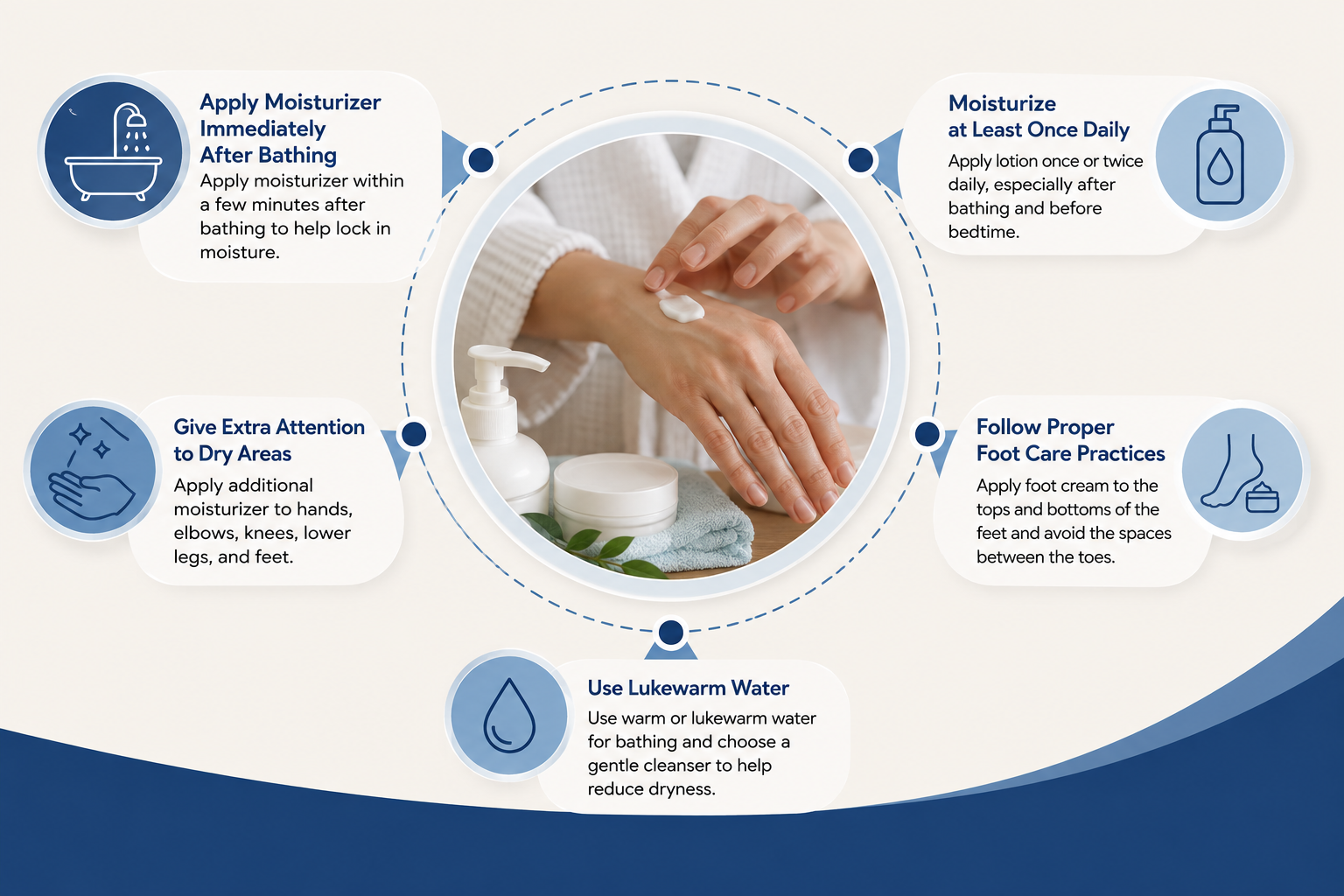
Even the best lotion for dry skin may not provide the desired results if it is not applied correctly. Developing a consistent skin care routine may help improve hydration and keep skin feeling softer throughout the day.
Apply Moisturizer Immediately After Bathing
After showering or washing your hands, gently pat your skin dry, leaving it slightly damp. Applying moisturizer within a few minutes may help lock in moisture before it evaporates.
Moisturize at Least Once Daily
Many people benefit from applying lotion once or twice a day, particularly after bathing and before bedtime. If your hands are washed frequently, reapplying moisturizer throughout the day may also help.
Give Extra Attention to Dry Areas
Hands, elbows, knees, lower legs, and feet often become drier than other parts of the body. Applying additional moisturizer to these areas may help improve skin hydration.
Follow Proper Foot Care Practices
When using a foot cream, apply it to the tops and bottoms of the feet while avoiding the spaces between the toes unless instructed otherwise by your healthcare provider. Excess moisture between the toes may increase the risk of skin problems.
Use Lukewarm Water
Hot water may strip the skin of its natural oils. Bathing with warm or lukewarm water and using a gentle cleanser may help reduce additional dryness.
A consistent skin care routine may help support healthier-looking skin and reduce everyday dryness. While every person's needs are different, the following habits are commonly recommended by organizations such as the American Diabetes Association (ADA) and the American Academy of Dermatology (AAD).
| Morning | Evening |
| Wash with a gentle cleanser | Cleanse skin gently |
| Apply moisturizer after bathing | Reapply moisturizer before bed |
| Wear comfortable, well-fitting footwear | Apply foot cream to dry heels if needed |
| Check your feet for cuts, blisters, or redness | Inspect skin for new dry or irritated areas |
| Stay hydrated throughout the day | Store moisturizers in a cool, dry place |
In addition to moisturizing, maintaining healthy blood sugar levels, staying hydrated, and following your healthcare provider's recommendations may also contribute to overall skin health.
Although dry skin is common, certain symptoms should not be ignored. Contact a qualified healthcare professional if you notice:
Early evaluation may help address underlying concerns and determine the most appropriate care plan.
Dry skin is a common concern for many people living with diabetes, but a consistent skin care routine and the right moisturizer may help support healthier-looking, more comfortable skin. Understanding the differences between lotions, creams, and foot creams—and choosing products that match your skin's needs—can make everyday moisturizing more effective.
Products such as Gold Bond® Diabetics Dry Skin Relief Lotion, Borage DiabetiCare® Foot Cream, and TriDerma® MD Diabetic Dry Skin Defense Healing Cream are commonly chosen to help moisturize dry skin and can be incorporated into a daily skin care routine when used according to the manufacturer's instructions.
At MedicalEshop, we offer these trusted moisturizing products along with a wide selection of home healthcare and rehabilitation supplies from established manufacturers. Whether you're looking for a lightweight lotion for daily hydration or a richer cream for particularly dry areas, you'll find products designed to support your everyday skin care routine.
Explore Skin Care Products at MedicalEshop
Browse MedicalEshop's selection of moisturizing lotions, foot creams, and personal care products to find solutions that fit your daily skin care needs. If you're unsure which product is right for you, consult your healthcare provider for personalized guidance before making a selection.
Frequently Asked Questions
Ans. There is no single lotion that is best for everyone. The right moisturizer depends on your skin type, the severity of dryness, and your healthcare provider's recommendations. Many dermatologists suggest choosing fragrance-free moisturizers that contain ingredients such as ceramides, glycerin, petrolatum, or hyaluronic acid to help support the skin's moisture barrier. Products like Gold Bond® Diabetics Dry Skin Relief Lotion, TriDerma® MD Diabetic Dry Skin Defense Healing Cream, and Borage DiabetiCare® Foot Cream are commonly used to moisturize dry skin.
Ans. People with diabetes may experience dry skin for several reasons. High blood sugar levels can contribute to fluid loss, while changes in circulation and reduced sweating in some individuals may also affect skin hydration. Dry skin is especially common on the hands, feet, and lower legs. Keeping skin moisturized and following a consistent skin care routine may help support healthier-looking skin.
Ans. Many healthcare organizations recommend moisturizing at least once or twice a day, especially after bathing or washing your hands. Applying lotion while the skin is still slightly damp may help lock in moisture. Your healthcare provider can recommend a routine based on your individual skin care needs.
Ans. Look for moisturizers that contain ingredients commonly used to hydrate and protect dry skin, including: Ceramides, Glycerin, Hyaluronic acid, Petrolatum, Dimethicone, Urea & Shea butter.These ingredients may help support the skin's natural moisture barrier and reduce moisture loss.
Ans. Creams are generally thicker than lotions and often provide longer-lasting hydration, making them a suitable choice for moderate to very dry skin. Lotions have a lighter consistency and are commonly used for everyday moisturizing. The best option depends on your skin's condition and personal preference.
Ans. The skin on the feet is naturally thicker than the skin on most other parts of the body. A dedicated foot cream is often formulated to provide more intensive hydration for rough heels and dry feet. If you have diabetes, inspect your feet daily and follow your healthcare provider's recommendations for foot care.
Ans. In general, healthcare organizations advise avoiding moisturizer between the toes unless specifically directed by a healthcare professional. Excess moisture in this area may increase the risk of skin irritation or infection.
Ans. Seek medical advice if you notice: Open sores, Cracked skin that does not improve, Redness or swelling, drainage, Signs of infection, skin changes that worsen despite regular moisturizing. Prompt evaluation can help determine the appropriate course of care.
Ans. Many dermatologists recommend fragrance-free moisturizers because they may be less likely to irritate dry or sensitive skin. Choosing a product with gentle, moisturizing ingredients may help support everyday skin hydration.
Ans. routines. Product selection should always be based on your individual needs and your healthcare provider's recommendations.
.avif&w=3840&q=75)
.avif&w=3840&q=75)