Compression stockings have become a popular choice among marathon runners and endurance athletes looking to support comfort during training and recovery. While research on athletic performance continues to evolve, some studies suggest that graduated compression garments may help reduce post-run muscle soreness, support recovery, and improve overall comfort during long-distance running. This guide explains how compression stockings work, their potential benefits for marathon runners, what to consider when choosing a pair, and how MedicalEshop's selection of compression products may support your running routine. Always consult a qualified healthcare professional for personalized recommendations.
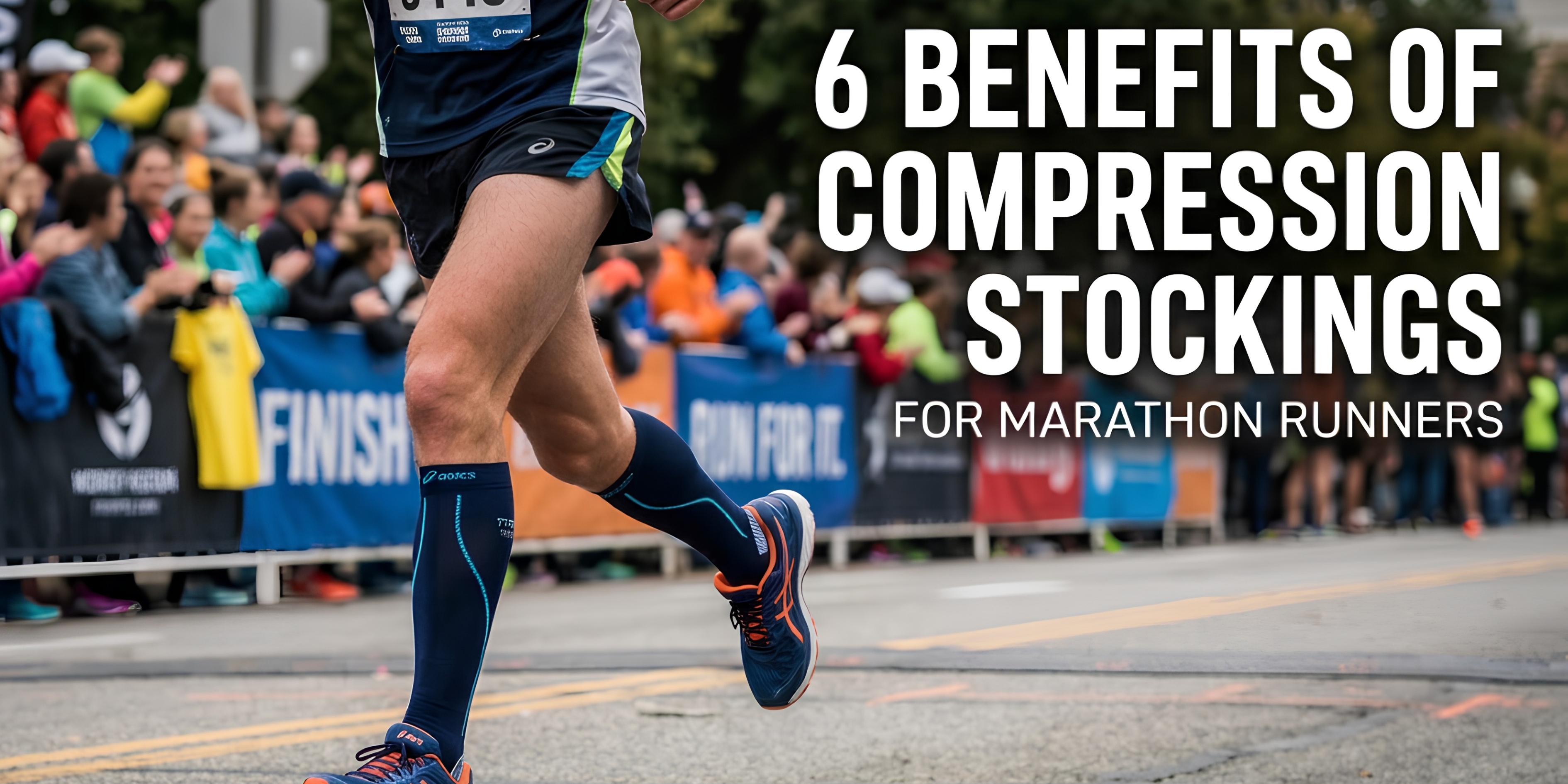
Running a marathon places repeated stress on the muscles, joints, and blood vessels in the legs. Whether you're preparing for your first 26.2-mile race or training for another endurance event, recovery and comfort become just as important as your training plan. This is one reason many marathon runners choose to wear compression stockings during training, after races, or while traveling to and from events.
Compression stockings are designed to apply graduated pressure, with the greatest compression at the ankle that gradually decreases toward the calf. It is designed to apply graduated pressure that may help support normal blood circulation and may help improve comfort during prolonged activity. While research continues to evaluate their effect on athletic performance, several studies suggest that compression garments may help reduce post-exercise muscle soreness and support recovery in some individuals rather than directly improving race results.
In this guide, you'll learn how compression stockings work, the potential benefits they may offer marathon runners, how to choose the right pair, and what to consider before adding them to your running routine.
Important Medical Disclaimer: This article is provided for educational purposes only. MedicalEshop is a U.S.-based dealer and supplier of medical and rehabilitation products and does not provide medical advice, diagnosis, treatment recommendations, or clinical services. Compression stockings should be selected and used according to the manufacturer's instructions and the guidance of a qualified healthcare professional.
Compression stockings are specially designed garments that apply graduated pressure to the legs. Unlike regular athletic socks, they provide firmer compression around the ankle that gradually decreases toward the calf. This pressure profile is designed to support normal venous blood flow and is commonly used in both medical and athletic settings.
Many runners choose compression stockings because they are easy to wear, and available in a variety of lengths and compression levels. Depending on the intended use, they may be worn during training, after a race, or while traveling for endurance events.
It is also helpful to understand the difference between compression stockings and compression socks. Although the terms are often used interchangeably, medical compression stockings are generally manufactured to deliver measured levels of graduated compression, whereas some athletic compression socks are designed primarily for sport and may not meet medical compression standards.
| Feature | Compression Stockings | Compression Socks |
| Compression | Graduated, measured pressure | May vary depending on the product |
| Common Use | Medical support and daily wear | Sports, fitness, and general comfort |
| Available Lengths | Knee-high, thigh-high pantyhose | Mostly ankle and knee-high |
| Selection | Often based on compression level and fit | Often selected for athletic preference |
Regardless of the type you choose, proper sizing is important. A poorly fitted compression garment may not provide the intended level of support or comfort.
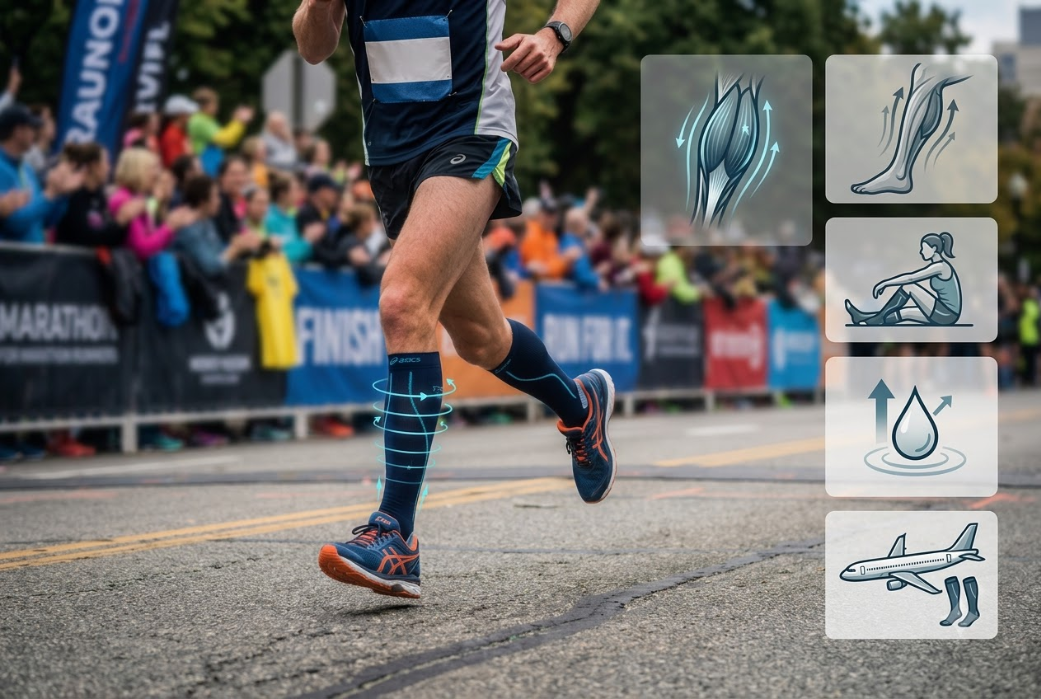
Marathon running involves thousands of repeated foot strikes over long distances. As mileage increases, runners may experience muscle fatigue, temporary swelling, and soreness that can affect comfort during and after training.
Many runners wear compression stockings because they are designed to provide graduated support to the lower legs. While individual experiences vary, they are commonly used to:
Current research suggests that while compression garments may improve perceived recovery and reduce delayed-onset muscle soreness (DOMS) for some athletes, evidence that they significantly improve endurance performance remains limited.
Common Running Challenges and How Compression Stockings May Help
| Running Challenge | How Compression Stockings May Help |
| Muscle fatigue | May provide supportive compression during prolonged activity |
| Post-run soreness | Some studies suggest they may assist recovery after exercise |
| Mild swelling | Provides graduated compression that may support comfort when temporary swelling occurs. |
| Long periods of standing | May improve overall leg comfort during recovery |
| Travel before or after races | Often worn during long flights or car rides for added leg support |
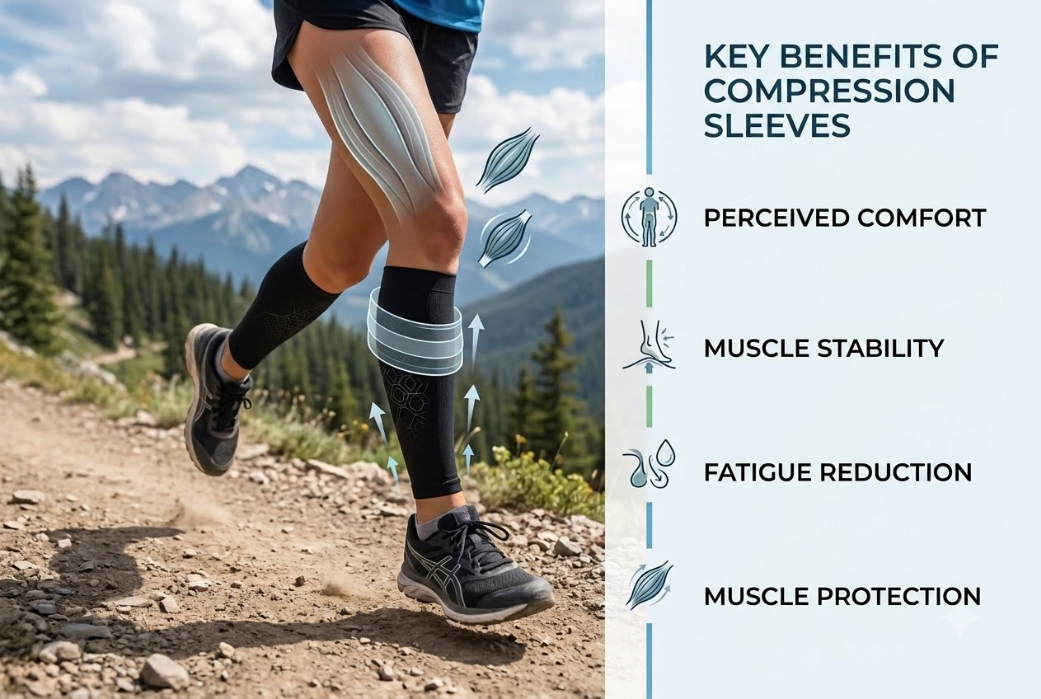
Running a marathon requires the leg muscles to absorb repeated impact over many miles. As muscles work continuously, muscle fatigue naturally develops, particularly during long training sessions and race day.
Compression stockings are designed to provide graduated pressure that may help reduce muscle movement during repetitive activity. Some researchers suggest that limiting excessive muscle oscillation could contribute to improved comfort and a reduced perception of fatigue, although results vary among individuals.
Many marathon runners choose compression stockings for training runs lasting more than an hour because they appreciate the supportive feel throughout prolonged activity.
Key Takeaway: Compression stockings may help support leg comfort and reduce the perception of muscle fatigue during long-distance running, although they should not be viewed as a substitute for proper training, hydration, and recovery.
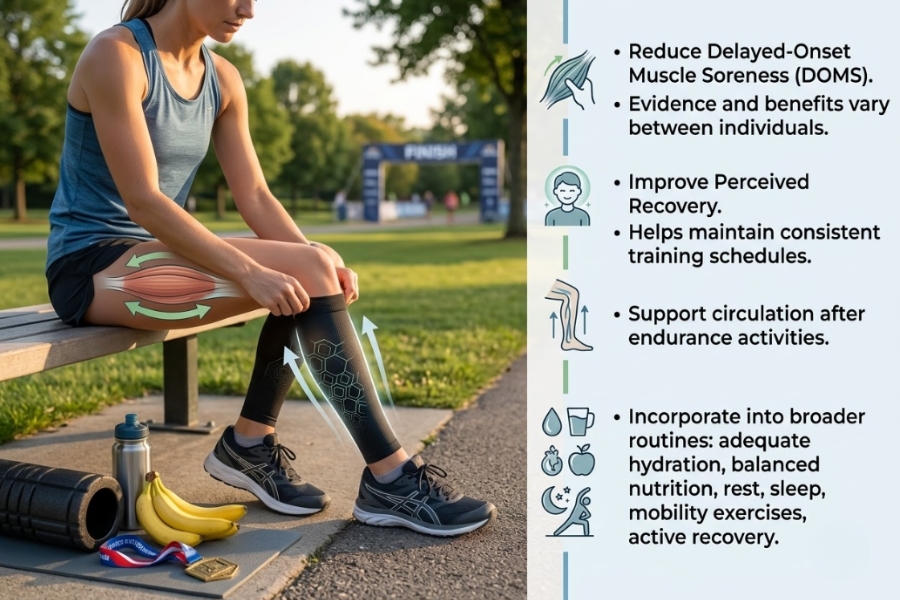
Recovery plays an essential role in every marathon training program. Without adequate recovery, runners may find it more difficult to maintain consistent training schedules.
Several systematic reviews have found that wearing compression garments after exercise may help reduce delayed-onset muscle soreness (DOMS) and improve perceived recovery following endurance activities. However, researchers also note that the quality of available evidence varies, and benefits may differ between individuals.
Compression stockings are often incorporated into broader recovery routines alongside stretching, proper nutrition, hydration, sleep, and active recovery.
Recovery strategies often include:
Key Takeaway: Compression stockings may be a useful addition to a marathon recovery routine, particularly when combined with other evidence-based recovery practices.
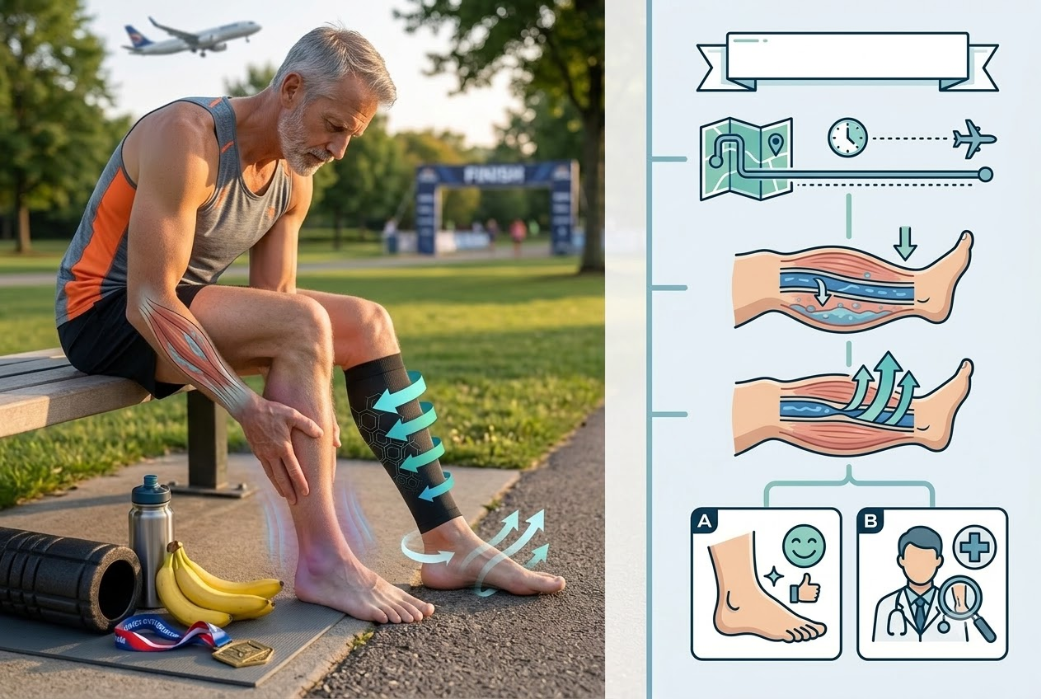
After extended periods of running or standing, some runners notice temporary swelling in the feet or lower legs. Environmental conditions, prolonged activity, and travel associated with marathon events may also contribute to temporary fluid accumulation.
Graduated compression stockings are designed to apply pressure that may help support normal fluid movement in the lower limbs. For this reason, some runners choose to wear them after races or during recovery periods.
It is important to note that persistent or severe swelling should always be evaluated by a qualified healthcare professional, as it may have causes unrelated to physical activity.
Key Takeaway: Compression stockings may help improve comfort associated with mild, temporary swelling following long-distance running, but ongoing swelling requires professional medical evaluation.
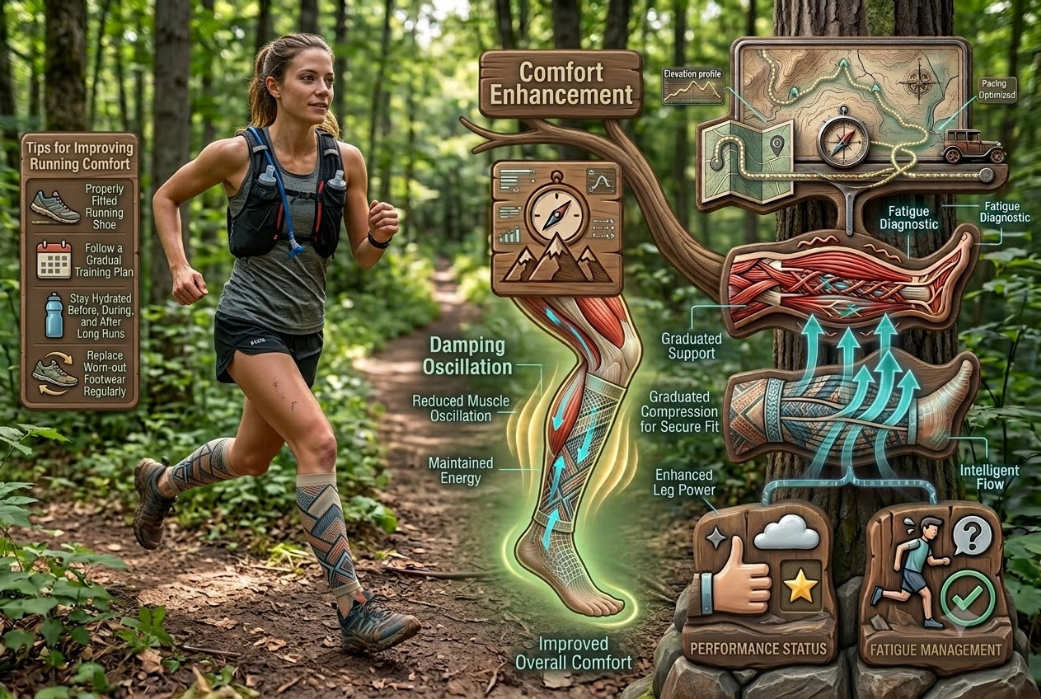
Comfort plays an important role in marathon training, especially as weekly mileage increases. Long runs, repetitive foot strikes, and extended time on your feet may contribute to muscle soreness and general leg discomfort.
Compression stockings are designed to provide graduated support to the lower legs, which many runners find comfortable during training, recovery, or travel. Some research suggests that compression garments may reduce muscle oscillation during exercise, which may contribute to improved comfort for certain individuals. However, experiences vary, and not every runner may notice the same effects.
Whether you're training for your first marathon or preparing for multiple races throughout the year, choosing apparel that fits properly and supports your overall training routine may help improve your running experience.
Key Takeaway: Compression stockings may help improve comfort during long-distance running, making them a popular choice among marathon runners and endurance athletes.
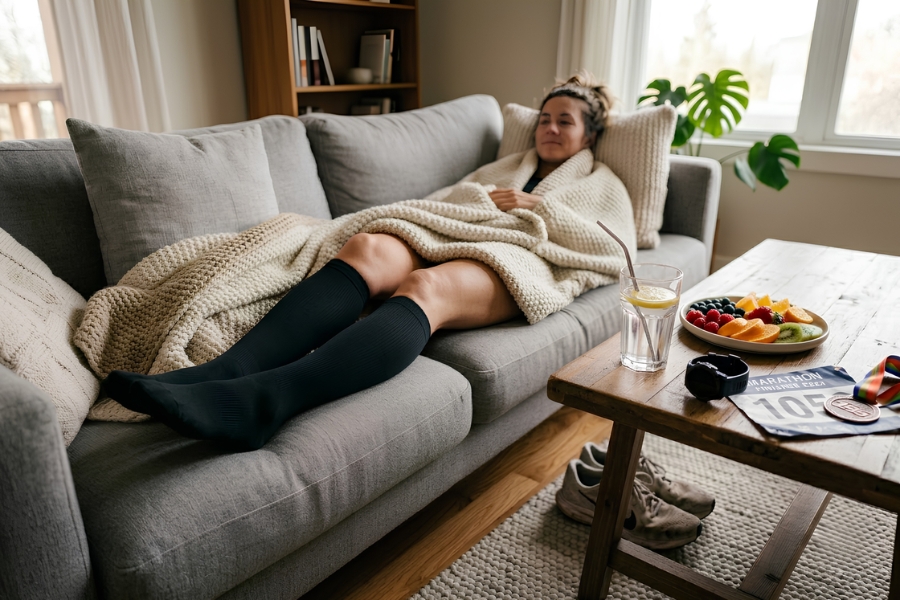
Marathon preparation involves much more than logging miles. Consistent recovery practices help runners return to training feeling prepared for their next workout.
Compression stockings are often used alongside other recovery strategies, including:
While compression garments are not a replacement for these evidence-based recovery practices, some runners include them as part of their overall recovery routine.
It is also worth noting that recovery needs vary depending on training intensity, race schedules, weather conditions, and individual fitness levels.
Key Takeaway: Compression stockings may be one component of a well-rounded recovery routine, but they work best when combined with healthy training and recovery habits.
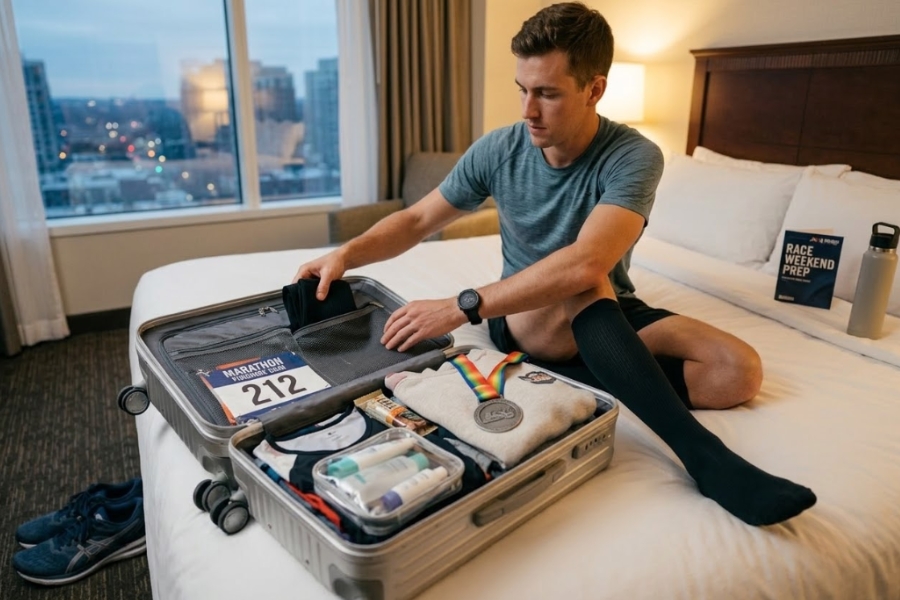
Marathon runners often spend hours traveling to training events and races. Long periods of sitting during flights or road trips may leave some people feeling stiff or uncomfortable before or after an event.
Because compression stockings are lightweight, reusable, and easy to pack, many runners choose to include them in their race-day gear.
They may be worn during:
As with any compression garment, proper sizing and manufacturer instructions are important to ensure comfort and intended use.
Key Takeaway: Compression stockings are a practical accessory that many marathon runners use throughout training, race weekends, and recovery periods.
Selecting the right compression stockings involves more than choosing a size or color. A properly fitted garment may provide better comfort and support during use.
| Factor | Why It Matters |
| Proper Size | Helps achieve a comfortable and secure fit. |
| Graduated Compression | Designed to apply more pressure at the ankle and less toward the calf. |
| Material | Moisture-wicking and breathable fabrics may improve comfort during extended wear. |
| Length | Knee-high styles are commonly chosen for running, while other lengths may be appropriate depending on individual needs. |
| Manufacturer Instructions | Following product guidance helps ensure appropriate use and care. |
Important: Compression levels and product selection should be based on manufacturer recommendations and, when appropriate, guidance from a qualified healthcare professional.
The timing of compression stocking use depends on personal preference, activity, and healthcare provider recommendations.
During Training - Some runners wear compression stockings during long training runs for added leg support and comfort.
After Running - Others prefer wearing them after exercise as part of their post-run recovery routine.
During Travel - Compression stockings are also commonly worn during long flights or road trips associated with marathon events.
Because every runner's needs are different, there is no single approach that works for everyone.
Proper care may help maintain the fit and performance of compression stockings over time.
Cleaning Tips
Storage Tips
Replacing worn compression stockings when recommended by the manufacturer may help maintain their intended level of compression.
MedicalEshop is a U.S.-based dealer and supplier of home medical equipment, rehabilitation products, mobility aids, and daily living solutions. We offer a wide selection of compression products from established healthcare brands to help meet a variety of individual needs.
Our compression category includes products such as the following:
In addition to compression products, MedicalEshop offers rehabilitation equipment, mobility aids, patient care products, and home healthcare solutions designed to support individuals, caregivers, healthcare organizations, and rehabilitation facilities across the United States.
Medical Compliance Notice: MedicalEshop is a dealer and supplier of medical and rehabilitation products. We do not manufacture compression garments, provide medical advice, diagnose conditions, or recommend treatment plans. Product selection should always be based on manufacturer guidance and recommendations from qualified healthcare professionals.
Compression stockings have become a popular option among marathon runners looking to support comfort during training, recovery, and travel. While current research suggests they may help reduce post-exercise muscle soreness, support recovery, and improve overall leg comfort for some individuals, evidence regarding improvements in race performance or injury prevention remains limited.
Choosing well-fitted compression stockings, following the manufacturer's instructions, and incorporating them into a balanced training and recovery plan may help runners feel more comfortable throughout marathon preparation.
If you're exploring compression products for running, recovery, or everyday support, MedicalEshop offers a wide range of compression stockings and rehabilitation products from trusted healthcare brands.
Explore MedicalEshop's collection of compression stockings, compression socks, and rehabilitation products to find solutions that may support your active lifestyle and recovery goals.
Frequently Asked Questions
Ans. Some studies suggest compression stockings may help reduce post-exercise muscle soreness, support recovery, and improve comfort during long-distance running. However, evidence for improving marathon performance remains limited.
Ans. Some runners wear compression stockings during long runs, while others prefer wearing them after races or during travel. The choice depends on individual preference and healthcare provider recommendations.
Ans. Current research does not provide strong evidence that compression stockings prevent running injuries. They should be considered one part of an overall training and recovery strategy rather than a method of injury prevention.
Ans. Look for the correct size, graduated compression design, breathable materials, and follow the manufacturer's sizing instructions. If you have an underlying medical condition, consult a qualified healthcare professional before choosing compression garments.
Ans. The terms are often used interchangeably, but medical compression stockings are generally designed to provide measured graduated compression, while athletic compression socks may vary depending on the manufacturer and intended use.
Ans. Many recreational runners and beginners choose compression stockings for comfort and recovery. If you have circulation concerns or other health conditions, seek guidance from a qualified healthcare professional before use.
Ans. The lifespan varies depending on the product, frequency of use, and care. Always follow the manufacturer's recommendations for cleaning, inspection, and replacement.
.avif&w=3840&q=75)
.avif&w=3840&q=75)