Proper cleaning and timely replacement of enteral feeding supplies are important parts of maintaining an organized home tube feeding routine. Supplies such as feeding bags, enteral syringes, extension sets, and feeding pumps require regular care according to manufacturer instructions and healthcare provider guidance. Understanding how these products are commonly cleaned, inspected, stored, and replaced may help support equipment performance and everyday home care. This guide explains the basics of caring for enteral feeding supplies, discusses factors that influence replacement schedules, and highlights products that may help patients, caregivers, and healthcare organizations manage enteral nutrition more efficiently.
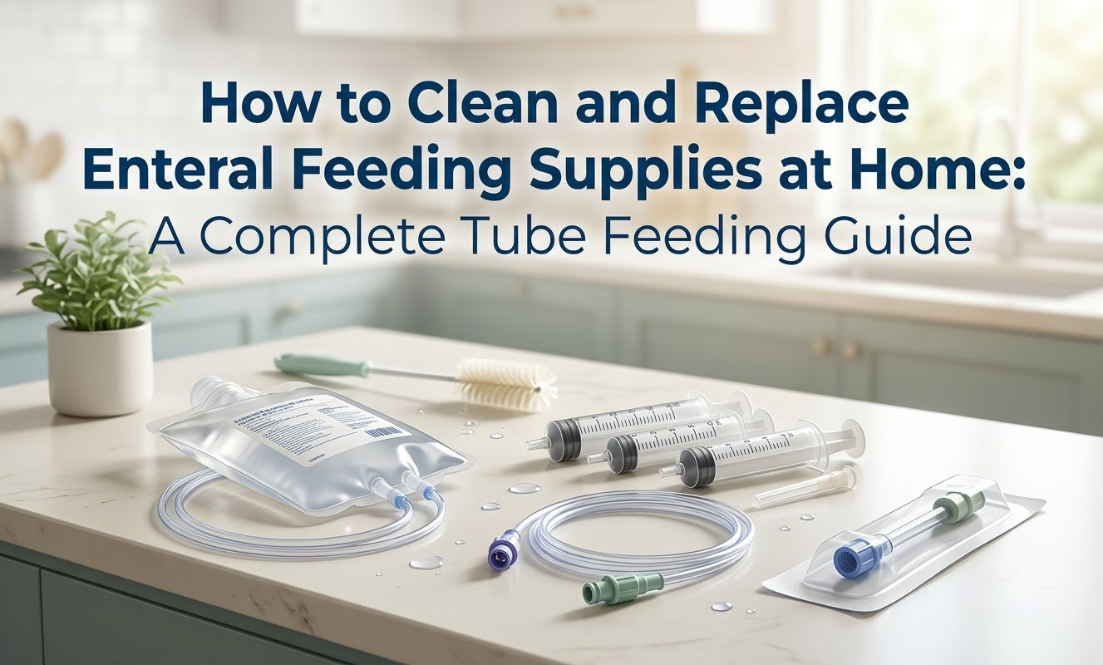
Home enteral nutrition allows many individuals to receive prescribed nutrition and certain medications outside of hospitals or long-term care facilities. According to the American Society for Parenteral and Enteral Nutrition (ASPEN), home enteral nutrition is widely used for people who cannot meet their nutritional needs by mouth but have a functioning gastrointestinal tract. As more patients receive care at home, proper handling of enteral feeding supplies becomes an important part of everyday routines.
Enteral feeding systems often include feeding bags, enteral syringes, feeding pumps, extension sets, connectors, and other accessories that work together to deliver nutrition as prescribed by qualified healthcare professionals. While each product serves a different purpose, they all require appropriate cleaning, routine inspection, proper storage, and replacement according to manufacturer instructions and individual care plans.
Understanding how to care for enteral feeding supplies may help patients and caregivers maintain organized home care environments, support equipment longevity, and prepare supplies for their intended use. Because different manufacturers provide specific Instructions for Use (IFUs), cleaning methods and replacement schedules may vary from one product to another.
In this guide, you'll learn what enteral feeding supplies are, why regular cleaning and replacement are important, general care practices commonly recommended for home use, and factors to consider when selecting enteral feeding products.
Important Medical Compliance Notice: This article is intended for informational and educational purposes only. MedicalEshop is a U.S.-based dealer and supplier of medical equipment, rehabilitation products, and enteral feeding supplies. MedicalEshop does not provide medical advice, diagnosis, treatment recommendations, or clinical services. Always consult your physician, registered dietitian, nurse, or other qualified healthcare professional regarding tube feeding, cleaning procedures, replacement schedules, equipment compatibility, and individual care decisions.
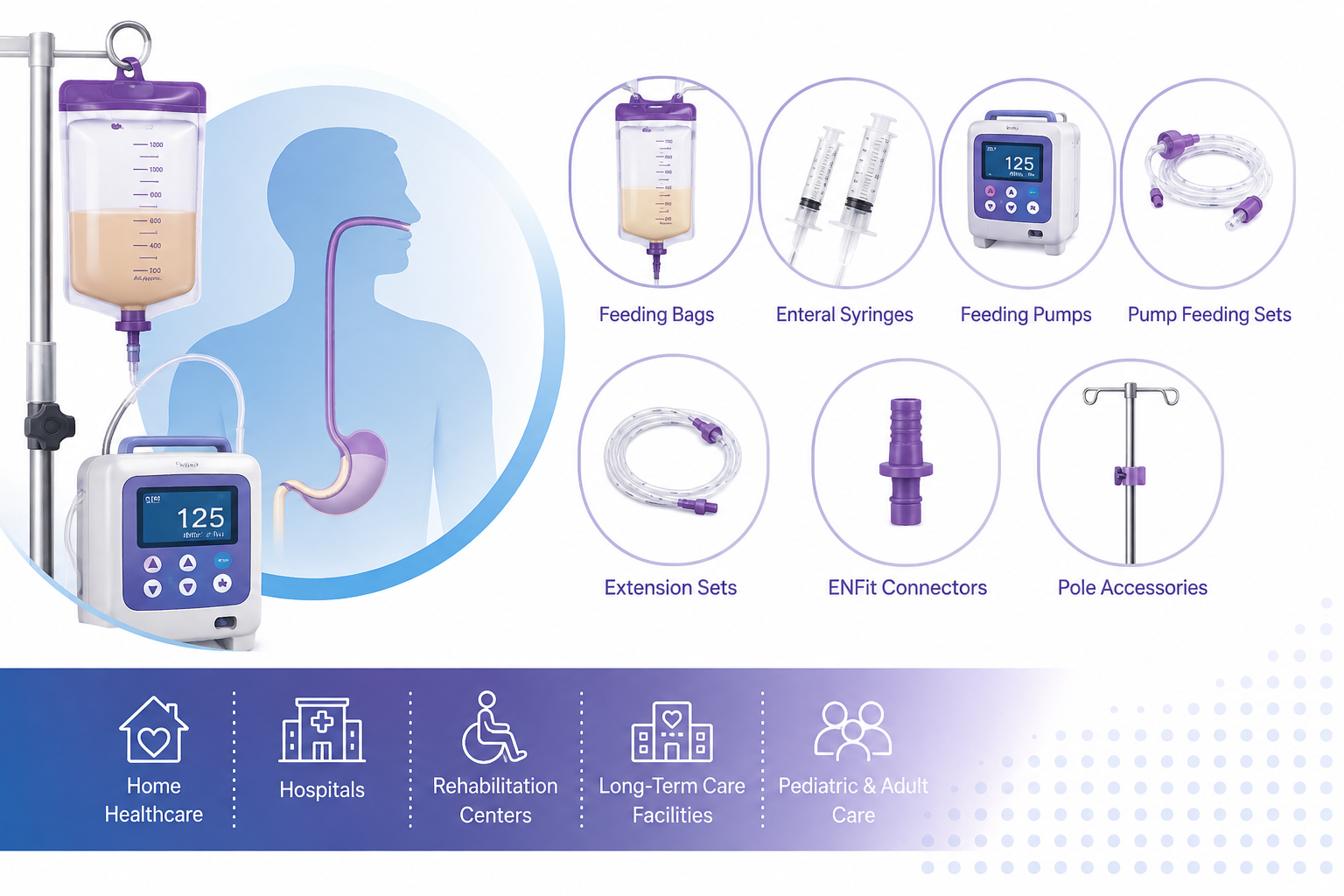
Enteral feeding supplies are products used to deliver liquid nutrition, water, and certain prescribed medications directly into the gastrointestinal (GI) tract through a feeding tube. These supplies are commonly used in home healthcare, rehabilitation centers, hospitals, and long-term care settings when oral nutrition is not possible or does not provide adequate nutritional support.
The exact supplies needed depend on an individual's prescribed feeding method, feeding tube type, nutritional formula, and healthcare provider recommendations. Some people may require only a few basic accessories, while others may use a combination of equipment for ongoing enteral nutrition.
Common Enteral Feeding Supplies
| Supply | Primary Purpose | Important consideration |
| Feeding Bags | Hold formula for gravity or pump feeding | Reuse depends on labeling/IFU |
| Enteral Syringes | Flushing/administering prescribed substances | Check connector and intended use |
| Feeding Pumps | Deliver formula at programmed rates | Follow pump-specific instructions |
| Extension sets | Connect feeding tube to administration equipment | Confirm compatibility |
| ENFit connectors | Enteral-specific connections | Verify compatibility |
Many of these products are designed for either single-patient use or limited reuse, depending on the manufacturer's instructions. Because cleaning requirements vary by product type, patients and caregivers should always refer to the product's Instructions for Use (IFU) before cleaning or reusing any enteral feeding supply.
Enteral feeding supplies are commonly used in a variety of care settings, including:
As home-based healthcare continues to grow in the United States, many caregivers are becoming more involved in the day-to-day management of feeding equipment. Learning the basic purpose of each supply can make daily routines easier to understand and may help improve overall organization within the home care environment.
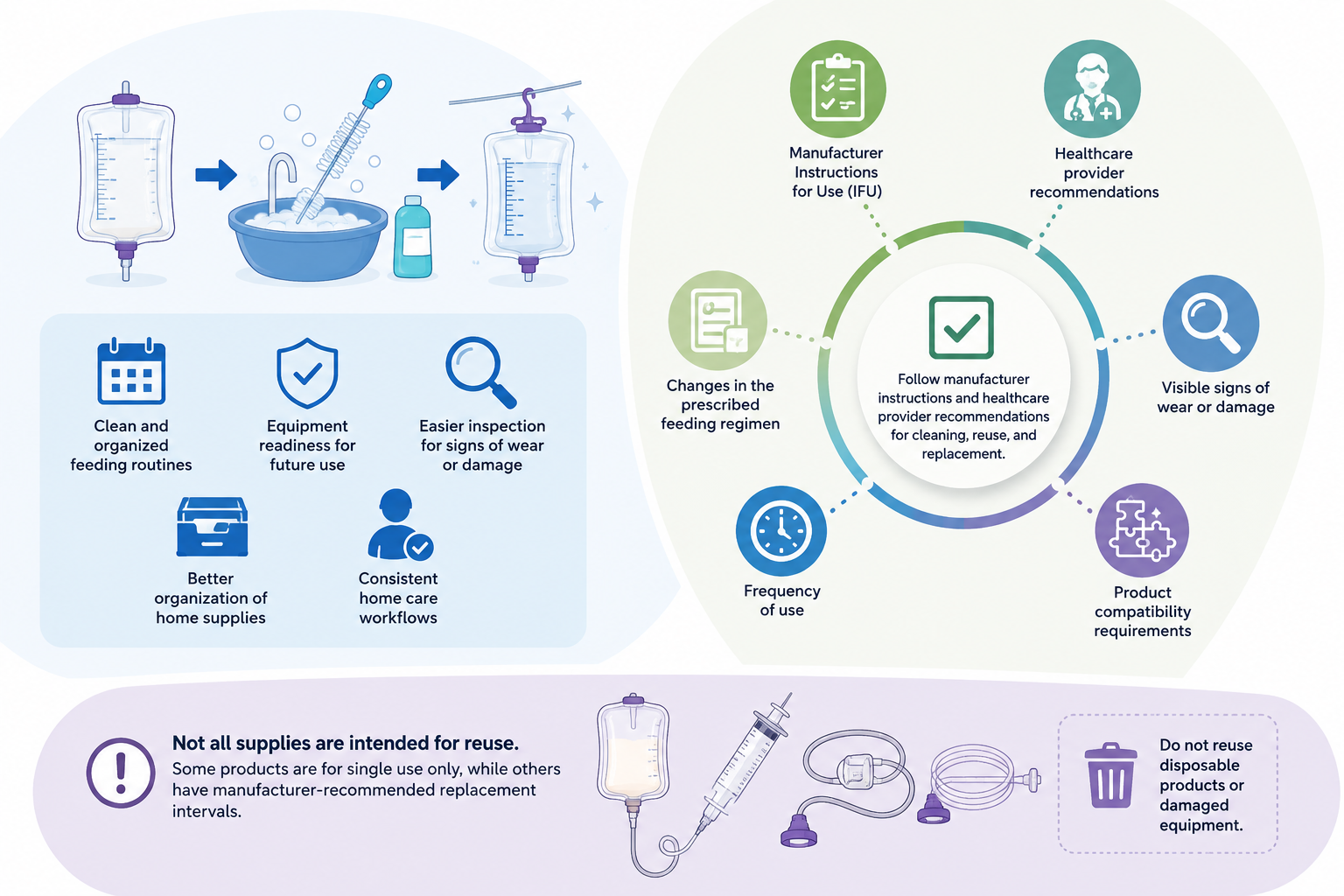
Keeping enteral feeding supplies clean and replacing them according to manufacturer instructions are important parts of routine equipment care. Over time, normal use may result in wear, discoloration, reduced flexibility, or changes in product performance. Regular inspection can help identify supplies that may need to be replaced based on visible condition or healthcare provider recommendations.
Proper cleaning also helps remove formula residue that can accumulate after feeding sessions. Allowing residue to remain on reusable equipment may make supplies more difficult to clean over time and could affect their intended performance. For this reason, many manufacturers recommend cleaning reusable components promptly after using the methods described in their product instructions.
Routine care of enteral feeding supplies may help support the following:
It is equally important to recognize that not all enteral feeding supplies are intended to be reused. Some products are designed for single use only, while others may have manufacturer-recommended replacement intervals. Reusing disposable products or continuing to use damaged equipment may not align with manufacturer guidance or prescribed care plans.
Several factors can affect when an enteral feeding supply should be replaced, including
Because every patient's nutritional needs and equipment setup are different, there is no universal replacement schedule that applies to all enteral feeding products. Healthcare professionals and manufacturers remain the most reliable sources for determining when a specific item should be cleaned, reused, or replaced.
Organizations such as ASPEN and The Oley Foundation emphasize the importance of following manufacturer instructions and individualized care plans when managing enteral nutrition at home. These recommendations help promote consistent care practices while recognizing that equipment requirements vary from one patient to another.
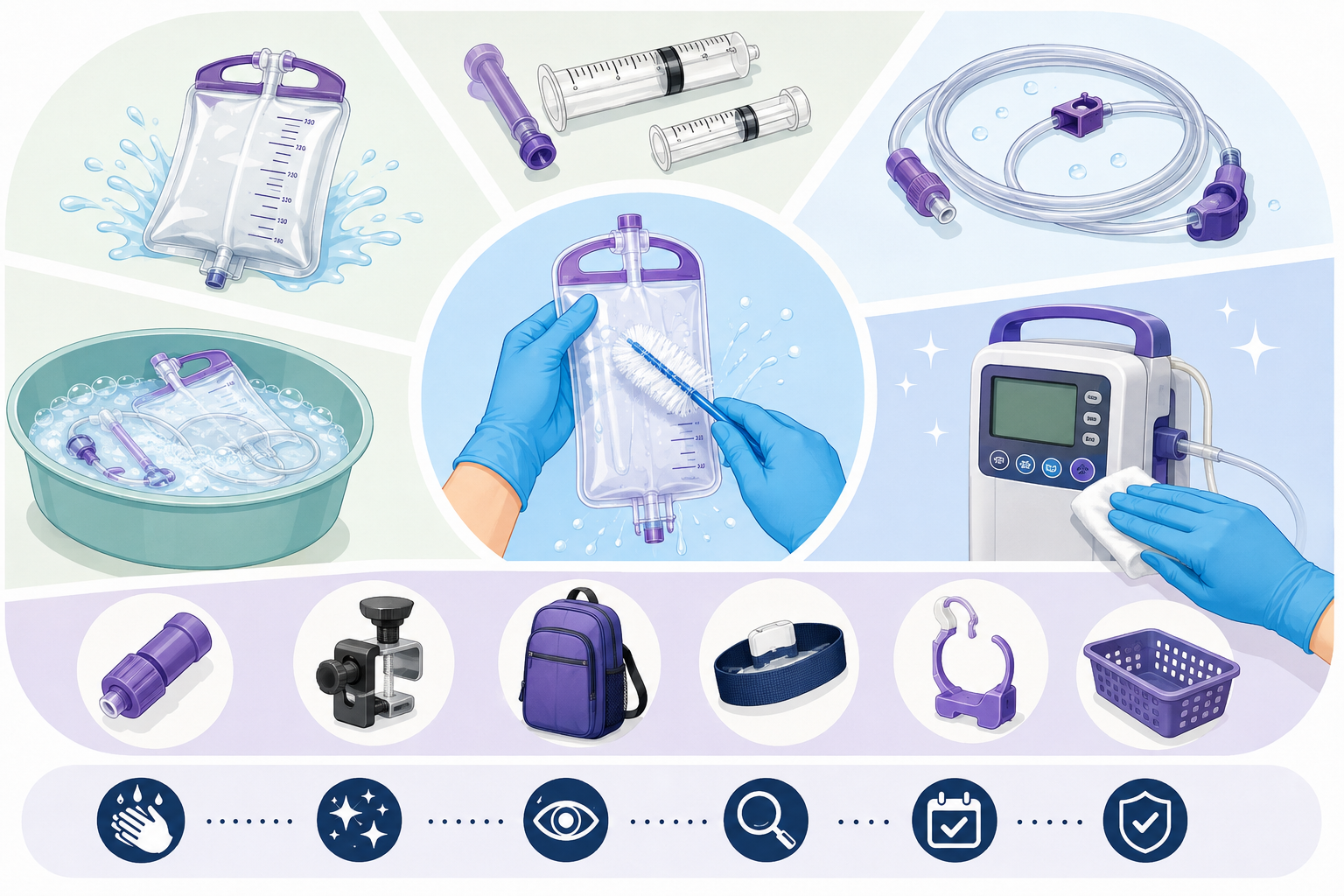
Regular cleaning is an important part of caring for enteral feeding supplies used in home healthcare settings. Proper maintenance may help remove feeding formula residue, keep equipment organized for future use, and make it easier to inspect supplies for visible signs of wear or damage.
Not every enteral feeding product is intended to be reused. Some feeding supplies are designed for single use, while others may be cleaned and reused for a period of time as described by the manufacturer. Before cleaning any enteral feeding product, confirm whether it is reusable by reviewing the product's Instructions for Use or consulting your healthcare provider.
The following recommendations provide a general overview of common care practices. Individual products may require different cleaning methods.
The steps below are general educational considerations, not universal cleaning instructions. Always follow the specific product labeling and IFU for the device being used.
Cleaning Feeding Bags
Feeding bags are commonly used to hold enteral nutrition formula during gravity or pump-assisted feedings. If the feeding bag is intended for reuse, it should only be cleaned according to the manufacturer's instructions.
General care practices may include:
If a feeding bag is labeled as single-use or disposable, it should not be reused.
Cleaning Enteral Syringes
Enteral syringes are commonly used for flushing feeding tubes and administering prescribed water or certain medications through the feeding tube.
Reusable enteral syringes should always be cleaned according to the manufacturer's recommendations. General practices may include:
Syringes that become damaged, difficult to operate, or no longer function as intended should be replaced according to manufacturer guidance.
Cleaning Extension Sets and Feeding Sets
Extension sets and feeding sets help connect feeding tubes to feeding bags or feeding pumps. Proper care depends on whether the product is intended for single use or limited reuse.
For reusable products:
Avoid modifying tubing or connectors, as doing so may affect product performance or compatibility.
Cleaning Enteral Feeding Pumps
Unlike feeding bags or syringes, enteral feeding pumps contain electronic components and require different care.
General maintenance practices often include:
Routine servicing, calibration, or preventive maintenance should only be performed according to manufacturer recommendations or by authorized service providers.
Caring for Additional Feeding Accessories
Many home enteral feeding setups also include accessories such as:
These feeding accessories generally require periodic inspection and cleaning according to their individual Instructions for Use. Keeping accessories clean and organized may help simplify everyday feeding routines.
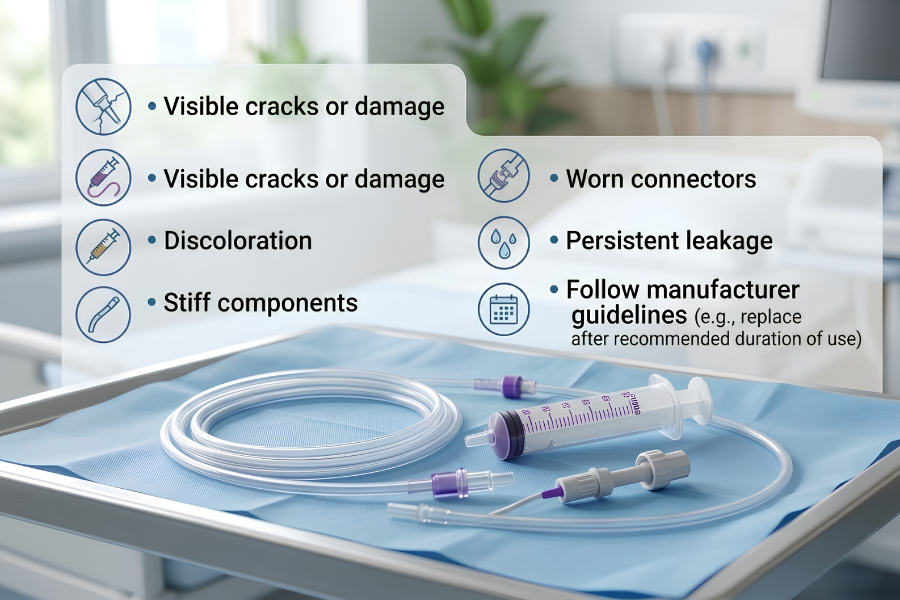
Enteral feeding supplies should be replaced according to the product's labeling, manufacturer instructions, and healthcare provider guidance, not according to a single universal schedule.
Some products are intended for one-time use, while others are designed for reuse over a specified period. Continuing to use equipment beyond its intended lifespan may not align with manufacturer guidance.
Common reasons an enteral feeding supply may need replacement include the following:
If there is any uncertainty about whether a product should be replaced, patients and caregivers should consult their healthcare provider before continued use.
The table below provides a general overview. Actual cleaning and replacement schedules should always follow the manufacturer's Instructions for Use and healthcare provider recommendations.
| Enteral Feeding Supply | Clean | Inspect | Replace |
| Feeding Bag | According to manufacturer instructions | Before each use | As recommended by manufacturer |
| Enteral Syringe | After use (if reusable) | Before each use | If worn, damaged, or recommended |
| Extension Set | According to product instructions | Regularly | Per manufacturer guidance |
| Feeding Set | Follow the IFU | Before use | As directed by manufacturer |
| Feeding Pump | Clean exterior only | Regularly | Service or replace per manufacturer |
| ENFit Connectors | As instructed | Frequently | If damaged or incompatible |
Important: This table is intended as a general educational guide and should not replace the specific Instructions for Use provided with individual products.
Even with routine care, certain practices may reduce the lifespan or intended performance of enteral feeding supplies. Avoiding common mistakes may help keep equipment in good condition.
Some examples include:
Routine inspection is often just as important as cleaning. A quick visual check before each feeding session may help identify supplies that need replacement.
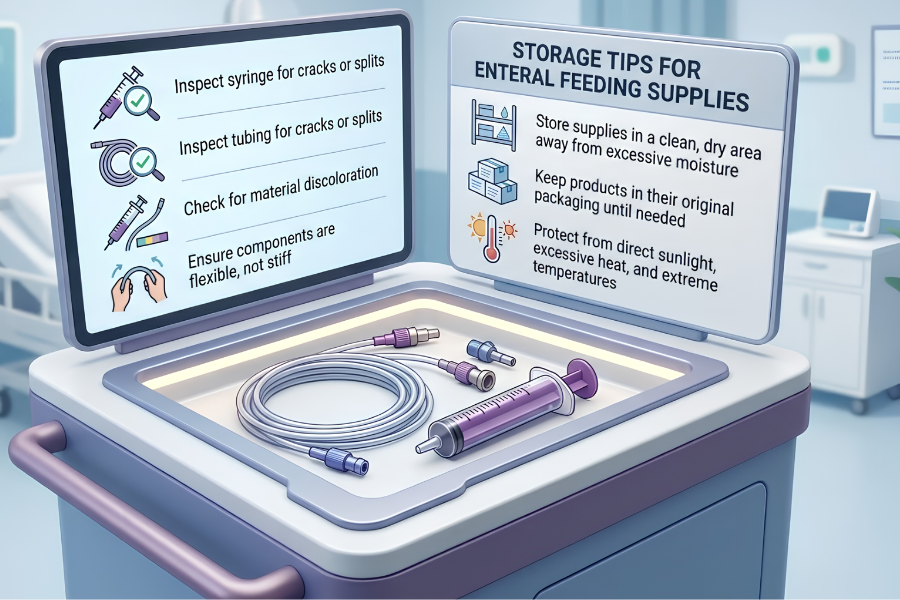
Proper storage is another important part of maintaining enteral feeding equipment. Once reusable supplies have been cleaned and thoroughly dried, storing them correctly may help keep them organized and ready for future use.
General storage recommendations include:
| Do | Avoid |
| Keep supplies clean and dry | Storing damp equipment |
| Follow manufacturer storage instructions | Storing products outside the manufacturer's recommended temperature, humidity, or light conditions. |
| Organize supplies by product type | Mixing used and unused supplies |
| Inspect stored supplies before use | Using expired or damaged products |
Medical Compliance Note: Cleaning methods, storage conditions, and replacement schedules vary among manufacturers and products. Always follow the Instructions for Use provided with your enteral feeding equipment and the recommendations of your qualified healthcare professional.
Selecting enteral feeding supplies involves more than choosing products that fit a feeding tube or pump. Since every enteral nutrition plan is different, the appropriate supplies should always be based on the recommendations of a qualified healthcare professional and the compatibility requirements of the prescribed feeding system.
Whether you're purchasing supplies for home care, a rehabilitation facility, or a long-term care setting, understanding a few key considerations may help you make informed decisions.
1. Confirm Product Compatibility
Enteral feeding systems often include multiple components that work together, such as feeding pumps, feeding bags, extension sets, syringes, and connectors. Before purchasing replacement supplies, verify that they are compatible with your existing equipment.
Using incompatible components may affect the intended performance of the feeding system. Product descriptions, manufacturer documentation, and healthcare providers can help confirm compatibility before purchase.
2. Consider the Intended Use
Some enteral feeding supplies are designed for single use, while others are intended for limited reuse when cleaned according to the manufacturer's instructions.
Before ordering supplies, review:
3. Look for User-Friendly Features
Many home caregivers assist with enteral feeding as part of their daily routine. Products that are easy to assemble, connect, clean, and inspect may help simplify everyday care.
Depending on the product category, helpful features may include:
4. Purchase from Established Medical Equipment Suppliers
Working with a trusted medical equipment supplier may help ensure access to products from recognized manufacturers, detailed product information, and customer support when selecting enteral feeding supplies.
A reliable supplier can also make it easier to find compatible accessories, replacement components, and additional home healthcare equipment when needed.
Managing enteral nutrition often requires more than a feeding tube alone. Depending on the prescribed care plan, patients and caregivers may need feeding supplies, accessories, mobility solutions, and other home healthcare products to help support everyday routines.
As a U.S.-based dealer and supplier of medical equipment, rehabilitation products, and home healthcare solutions, MedicalEshop offers a variety of products from established manufacturers that may be used in enteral feeding and supportive care environments.
MedicalEshop offers a wide range of products, including:
| Category | Examples |
| Enteral Feeding Pumps | Portable enteral feeding pumps designed for prescribed nutrition delivery |
| Feeding Bags & Pump Sets | Compatible feeding bags and administration sets from recognized manufacturers |
| Enteral Syringes | ENFit-compatible and catheter-tip enteral syringes for flushing and prescribed administration |
| Extension Sets & Accessories | Feeding tube extension sets and related accessories |
For individuals receiving long-term enteral nutrition, having access to compatible supplies from one source may help simplify routine equipment replacement and home care organization.
Compliance Notice: MedicalEshop is a dealer and supplier of medical equipment and rehabilitation products. We do not manufacture enteral feeding devices, prescribe treatments, or provide clinical services. Product selection should always be based on healthcare provider recommendations and manufacturer compatibility requirements.
Keeping enteral feeding supplies clean, well-maintained, and appropriately replaced is an important part of managing home enteral nutrition. While cleaning methods and replacement schedules vary depending on the product, following the manufacturer's Instructions for Use and the guidance of qualified healthcare professionals may help support the intended performance of enteral feeding equipment.
Regularly inspecting feeding bags, syringes, extension sets, feeding pumps, and accessories for signs of wear or damage can also help patients and caregivers determine when supplies may need attention or replacement. Proper storage, routine organization, and the use of compatible products further contribute to a more efficient home care environment.
Whether you're new to home tube feeding or helping care for a loved one, understanding the purpose and maintenance of enteral feeding supplies can make daily routines more manageable and help you prepare for ongoing equipment needs.
If you're looking for enteral feeding supplies, feeding pumps, enteral syringes, patient monitoring products, or other home healthcare equipment, MedicalEshop offers products from established manufacturers to help patients, caregivers, rehabilitation centers, and healthcare organizations find equipment that aligns with their prescribed care requirements.
The information in this article was developed using educational resources and guidance from recognized healthcare organizations and manufacturers.
Frequently Asked Questions
Ans. Cleaning methods vary depending on the product. Reusable supplies should be cleaned according to the manufacturer's instructions for use and the recommendations of your healthcare provider. Always allow reusable equipment to dry completely before storing it.
Ans. No. Some enteral feeding products are intended for single use only, while others may be reused for a limited period when cleaned according to manufacturer instructions. Always check the product labeling before reuse
Ans. Replacement schedules differ based on the product type, manufacturer guidance, frequency of use, and individual treatment plan. Follow the Instructions for Use and consult your healthcare provider if you are unsure when a product should be replaced.
Ans. Visible cracks, leaks, discoloration, worn connectors, stiffness, or reduced performance may indicate that a product should be inspected and, if appropriate, replaced according to manufacturer recommendations.
Ans. Only use cleaning methods and products recommended by the manufacturer. Some household cleaning agents may not be appropriate for certain enteral feeding products.
Ans. Allowing reusable supplies to dry thoroughly before storage may help keep equipment clean and ready for future use, while also making routine inspections easier.
Ans. Store supplies in a clean, dry location according to manufacturer recommendations. Keep products in their original packaging when appropriate and protect them from excessive heat, moisture, or direct sunlight if advised by the manufacturer.
Ans. Compatibility varies between products and manufacturers. Before combining components from different brands, confirm compatibility using the manufacturer's documentation or consult your healthcare provider.
Ans. Home enteral feeding may involve feeding pumps, feeding bags, administration sets, enteral syringes, extension sets, ENFit connectors, IV poles, and other accessories, depending on the prescribed feeding plan.
Ans. Enteral feeding supplies are available through medical equipment dealers and suppliers, including MedicalEshop. Product selection should be based on your prescribed feeding system, manufacturer compatibility requirements, and healthcare provider recommendations.
.avif&w=3840&q=75)
.avif&w=3840&q=75)