A folding patient lift may make patient transfers more manageable in home care and other care settings, but proper maintenance is essential for keeping the equipment in appropriate operating condition. Regular care may include pre-use inspections, sling checks, cleaning, battery care, wheel and caster inspection, and manufacturer-recommended servicing. Regular maintenance may help identify wear, damage, or equipment issues before the lift is needed. This guide covers practical folding patient lift care and maintenance tips, including when equipment should be removed from use and professionally inspected.

A folding patient lift is a type of mobile patient lift designed to assist with patient transfers while offering a frame that may be folded or configured for storage and transportation, depending on the model.
Many folding patient lifts are electric or battery-powered and may be used with compatible patient lift slings. These lifts may support transfers between surfaces such as beds, wheelchairs, and chairs.
Because patient lifts are transfer devices that may support substantial loads, they require more than routine household cleaning. The manufacturer's owner's manual should always be the primary source for model-specific inspection, cleaning, charging, storage, and service instructions.
Regular maintenance helps identify visible wear, loose components, damaged slings, battery issues, and other equipment concerns before equipment issues become apparent during a transfer.
Maintenance requirements vary by model. Manufacturer instructions may include checks of the base, casters, mast, boom, sling attachment points, controls, batteries, and other components. Some manufacturers also specify periodic professional inspections.
This is especially important for an electric patient lift, where safe operation depends on both mechanical and electrical components.
A simple maintenance routine can be divided into three levels:
| Maintenance Level | What to Check |
| Before each use | Sling condition, attachment points, wheels and casters, visible damage, controls, battery status, and basic operation |
| Routine maintenance | Cleaning, battery care, hardware inspection, caster condition, and other manufacturer-specified checks |
| Professional service | Periodic inspections, repairs, electrical or mechanical service, and manufacturer-required testing |
There is no single maintenance schedule that applies to every folding patient lift. Always follow the manufacturer's recommendations for the specific model.
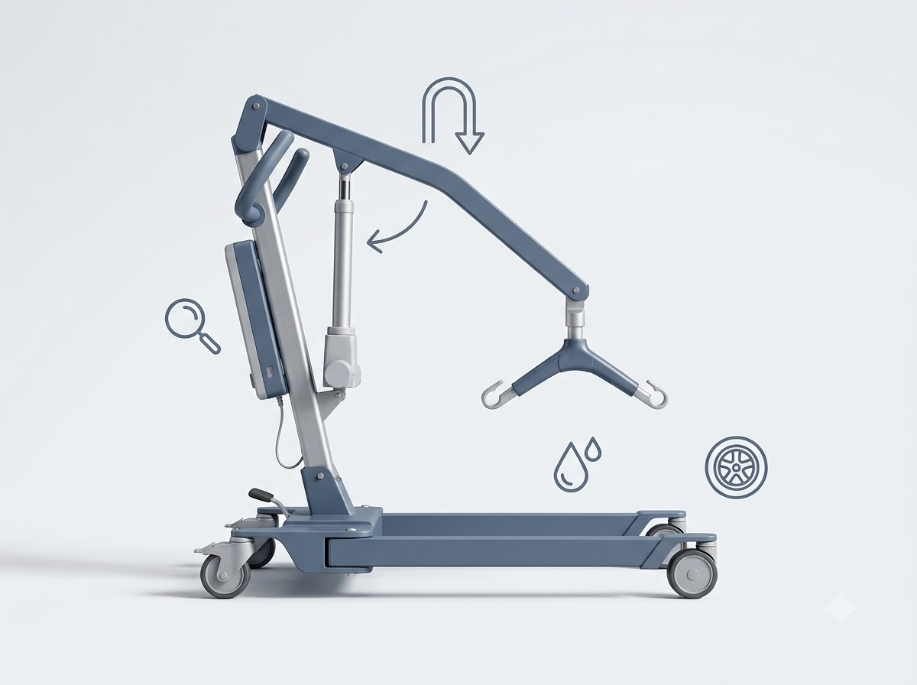
A quick inspection before each transfer is one of the most important maintenance habits.
Look over the lift for visible damage or changes in operation. Depending on the model, check the following:
Pay attention to anything that looks different from normal operation.
If an important component appears damaged or the lift does not operate as expected, stop using it and follow the manufacturer's instructions for evaluation or service.
One of the main conveniences of a folding patient lift is its ability to be folded for storage or transportation. The folding mechanism should therefore be included in routine checks.
When folding or unfolding the lift, confirm that the manufacturer's specified locking mechanisms engage correctly. Look for signs of bending, damage, obstruction, or unusual movement.
Never force a folding mechanism that feels stuck.
Instead:
Avoid drilling, welding, modifying, or otherwise altering the frame unless specifically authorized by the manufacturer.
Casters allow a floor-based patient lift to move between transfer locations. Dirt, hair, debris, loose hardware, or damaged wheels may affect movement.
During routine checks, look for:
Manufacturer instructions commonly include checking that casters roll and swivel freely and that relevant hardware remains secure.
Clean the casters according to the manufacturer's instructions. Do not automatically apply lubricant or other products unless the manufacturer recommends doing so.
The mast and boom are important structural components of a patient lift. Visible damage should be taken seriously.
Look for:
Do not attempt structural repairs unless the manufacturer specifically authorizes the procedure and identifies it as appropriate for qualified service personnel.
For a powered lift, unusual movement or mechanical noise should also be investigated rather than ignored.
Patient lifts may come into contact with hands, clothing, bedding, and other surfaces during transfers. Regular cleaning helps keep frequently handled equipment clean and may make visible contamination or damage easier to identify
Cleaning requirements vary by manufacturer. Follow the instructions supplied with your specific lift.
A general cleaning routine may include:
Do not use a household disinfectant or cleaning chemical simply because it is convenient. Check the equipment's instructions first.
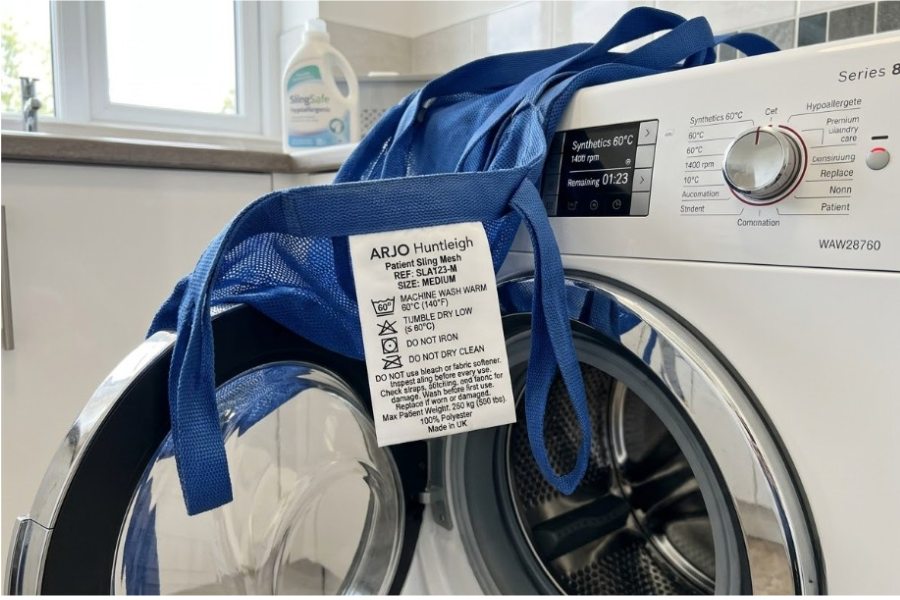
A patient lift is only one part of a transfer system. The sling also requires regular inspection and proper care.
Inspect the Sling Before Use
Before each use, check the sling for:
If the sling shows damage or deterioration, remove it from service according to the manufacturer's instructions.
Do not continue using a sling simply because the damage appears minor.
Follow the Sling's washing instructions
Sling materials and washing requirements differ. The care label and manufacturer's instructions should take priority.
Depending on the sling, instructions may specify requirements for
Never assume that every Hoyer lift sling or patient lift sling can be washed or disinfected in exactly the same way.
After washing, inspect the sling again for tears, fraying, loose stitching, or other changes.
Don't Alter a Sling
Do not sew, cut, modify, add material, or otherwise alter a patient lift sling unless the manufacturer specifically authorizes the modification.
Use only a sling and attachment configuration identified as compatible by the lift and sling manufacturers. Always check the manufacturer's compatibility and weight-capacity requirements before use.
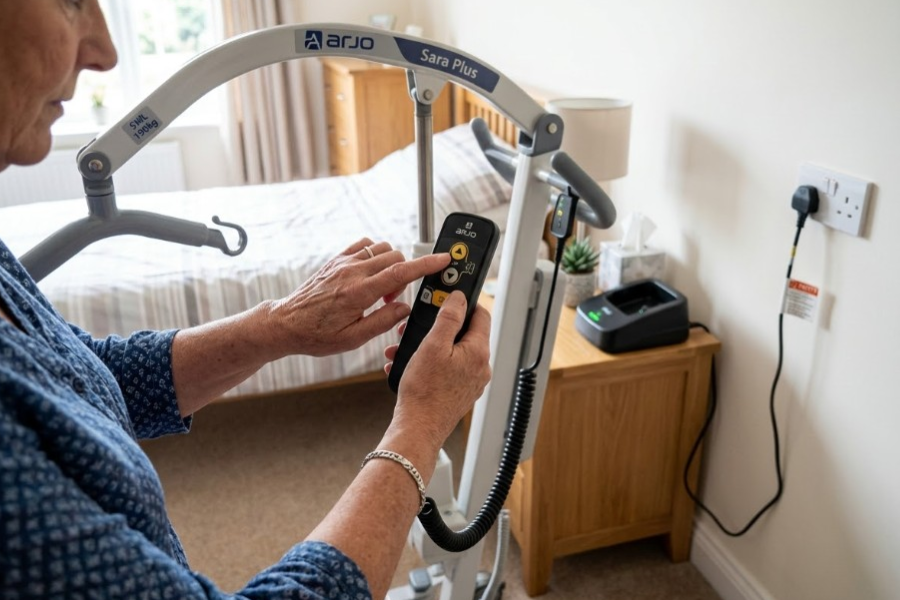
Battery care is particularly important for a portable electric patient lift.
Electric lifts may rely on rechargeable batteries to operate their actuators and controls. A depleted or poorly maintained battery may affect equipment availability when the lift is needed.
Charging requirements vary between models.
As a general rule:
Do not assume that every electric patient lift uses the same battery or charging routine.
Pay attention to changes such as the following:
If you notice unusual battery performance, consult the owner's manual and contact the manufacturer or a qualified service provider when necessary.
Do not open, modify, or attempt to repair a battery pack unless the manufacturer specifically provides instructions for doing so.
Depending on the model, inspect:
If a powered function behaves unexpectedly, stop using the lift and follow the manufacturer's troubleshooting and service instructions.
Maintaining appropriate hygiene is particularly important when equipment is used frequently or shared among users.
A practical cleaning routine may include:
After use or according to facility protocol
During routine maintenance
For healthcare and facility environments, cleaning and disinfection should follow the organization's infection-control procedures along with the equipment manufacturer's instructions.
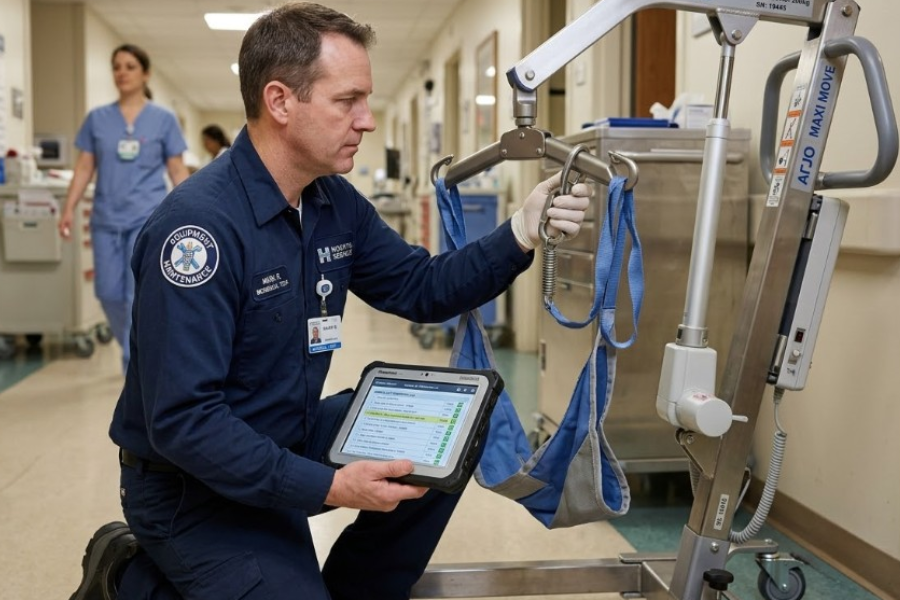
There is no single universal service interval for every folding patient lift. The appropriate schedule may depend on the manufacturer, model, frequency of use, environment, and facility requirements.
Some manufacturers recommend annual servicing, while others specify different inspection schedules. Always follow the requirements provided for your specific equipment.
Professional inspection may be appropriate when:
Stop using the lift and follow the manufacturer's service process when you identify damage or a malfunction that may affect safe operation.
This may include significant damage to the following:
Do not test it out with a patient if you already suspect a safety-related malfunction.
Instead, follow the manufacturer's service and troubleshooting instructions and have the equipment evaluated when required.
MedicalEshop offers a range of patient transfer equipment, including electric patient lifts, manual patient lifts, sit-to-stand lifts, floor lifts, patient lift slings, and accessories.
Our patient lift collection includes different equipment categories to accommodate various transfer requirements:
| Product Category | Examples Available Through MedicalEshop |
| Power patient lifts | Electric and battery-powered patient lift options |
| Manual patient lifts | Hydraulic patient lift options |
| Power sit-to-stand lifts | Powered stand-assist options |
| Patient lift slings | Full-body, toileting, and other sling configurations |
| Patient lift accessories | Batteries, spreader bars, and replacement components |
When comparing a folding patient lift with another electric lift, floor lift, or sit-to-stand lift, consider the intended environment, lift capacity, sling compatibility, storage requirements, transfer needs, and manufacturer specifications.
Proper care and routine maintenance may help keep your folding patient lift in appropriate operating condition and make it easier to identify potential equipment concerns early. Always follow the manufacturer's instructions for inspection, cleaning, charging, storage, and servicing.
MedicalEshop is a U.S.-based dealer and supplier of home medical equipment, rehabilitation products, mobility aids, and special-needs products. MedicalEshop is not a manufacturer, physician, hospital, or licensed medical provider.
This article is provided for general educational purposes only and is not intended to diagnose, treat, cure, or prevent any medical condition. Patient lifts and slings should be selected, used, cleaned, inspected, and maintained according to the applicable manufacturer's instructions and the requirements of the care environment.
If a patient lift, sling, battery, electrical component, or structural component appears damaged or does not function as expected, discontinue use as appropriate and consult the manufacturer's instructions or a qualified service professional.
Frequently Asked Questions
Ans. A folding patient lift should generally receive a pre-use inspection before each transfer, with additional routine maintenance and professional inspections performed according to the manufacturer's instructions. Service intervals vary by model and use.
Ans. Routine maintenance may include inspecting the sling, frame, boom, mast, casters, attachment points, controls, battery, and charger. Cleaning should follow manufacturer instructions, and professional service should be arranged at the specified intervals.
Ans. Clean the lift according to the manufacturer's instructions. Use only approved cleaning products and protect electrical components from excess moisture. Avoid acids, solvents, or other products that are not approved for the equipment.
Ans. A Hoyer lift sling should be inspected before use. Additional periodic inspection should follow the sling manufacturer's instructions and the requirements of the care environment. Check for tears, cuts, fraying, loose stitching, damaged straps, and other signs of deterioration.
Ans. Follow the care label and manufacturer's instructions for the specific sling. Washing temperature, detergent, bleach use, drying method, and other requirements may vary between sling materials and models.Inspect the sling after laundering for damage or deterioration.
Ans. Use the manufacturer's specified charger and charging procedure. Monitor battery indicators, follow storage instructions, and inspect the charger and connections for visible damage. Do not use an incompatible charger or attempt unauthorized battery repairs.
Ans. Do not assume that every electric patient lift can be operated while charging. Follow the specific model's owner's manual. Some models specifically state that the lift should not be operated during charging.
Ans. Battery life depends on factors such as battery type, lift model, charging practices, frequency of use, and storage conditions. Rather than relying on a universal lifespan, follow the manufacturer's battery specifications and replacement guidance.
Ans. Stop using the lift and consult the manufacturer's troubleshooting instructions. Check only basic user-serviceable items identified in the manual, such as battery status or an obvious connection issue.If the problem remains, contact the manufacturer, dealer, or qualified service professional. Do not attempt unauthorized electrical or mechanical repairs.
Ans. The appropriate interval depends on the manufacturer and model. Some manufacturers recommend annual service, while others specify different inspection schedules. Always follow the service requirements provided for your equipment.
Ans. A sling may need to be removed from service when it has tears, cuts, fraying, damaged stitching, deteriorated material, or damaged attachment hardware.Always follow the sling manufacturer's replacement criteria rather than relying only on the age of the sling.
.avif&w=3840&q=75)
.avif&w=3840&q=75)