Choosing the right wheelchair can make everyday mobility more comfortable and convenient. Whether you're considering a manual wheelchair or an electric wheelchair, each option offers unique benefits depending on your mobility needs, daily routine, lifestyle, and environment. This guide compares manual and electric wheelchairs, explains their key differences, and highlights important factors to consider before making a decision. You'll also learn about common wheelchair types, practical buying considerations, and mobility products available at MedicalEshop. The goal is to help you make an informed choice while understanding which mobility solution may best support your everyday activities.
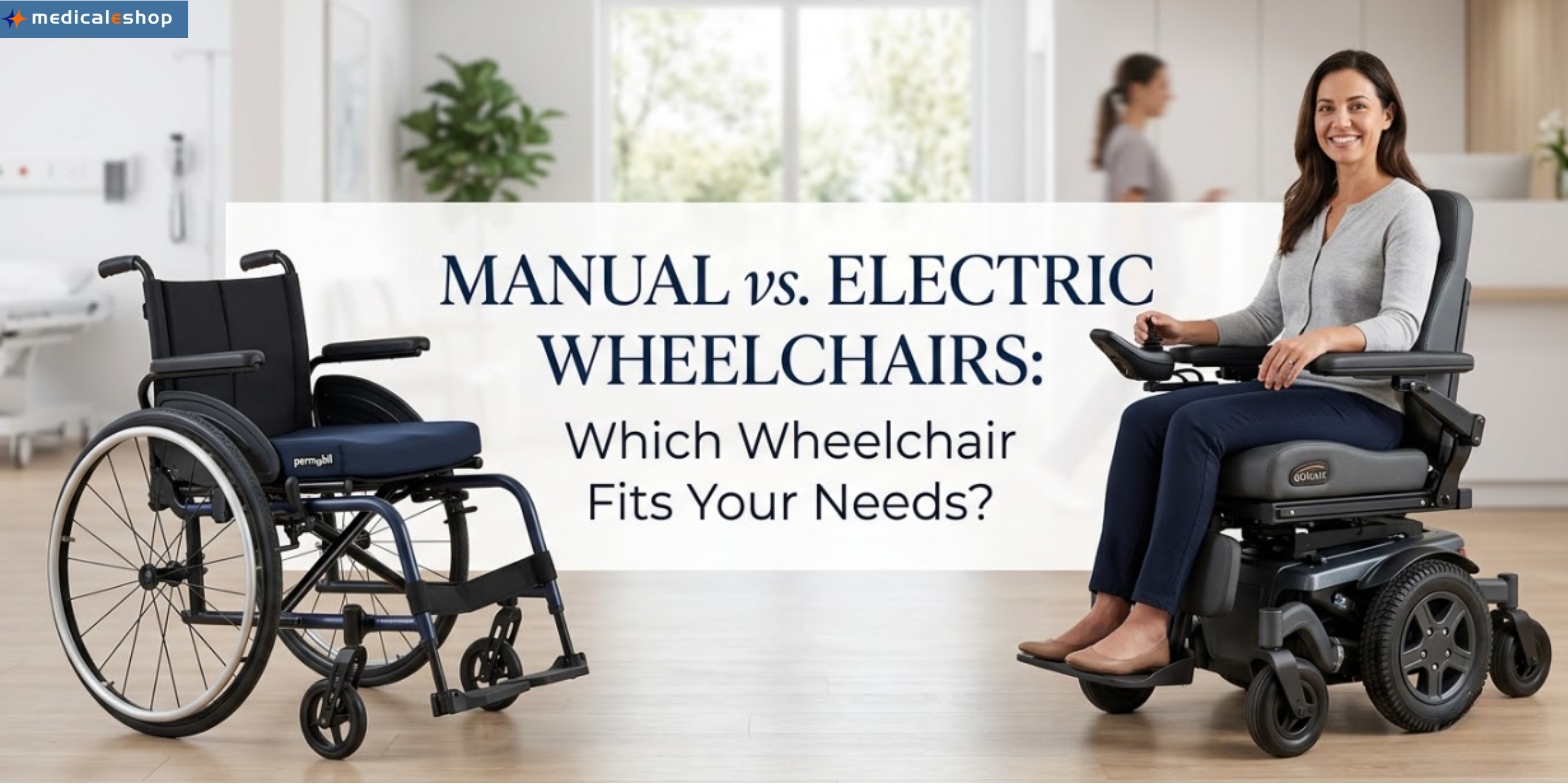
If you're deciding between a manual wheelchair and an electric wheelchair, the best choice depends on your physical abilities, daily activities, transportation needs, and budget. Manual wheelchairs are generally lighter, easier to transport, and require either self-propulsion or caregiver assistance. Electric wheelchairs, also called power wheelchairs or motorized wheelchairs, use a rechargeable battery and joystick controls to help users move with less physical effort. Understanding these differences can help you choose the option that best supports your independence and comfort.
Manual vs. Electric Wheelchairs: Understanding the Key Differences
Compare manual and electric wheelchairs to understand their features, portability, maintenance, costs, and which mobility solution may best fit your everyday needs.
| Feature | Manual Wheelchair | Electric Wheelchair |
| Movement | Self-propelled or caregiver-assisted | Battery-powered joystick control |
| Weight | Generally lighter | Generally heavier |
| Portability | Easier to transport and store | May require a lift, ramp, or accessible vehicle depending on model and weight |
| Physical Effort | Requires upper-body strength or caregiver assistance | Minimal physical effort for operation |
| Maintenance | Lower maintenance requirements | Requires battery care and routine maintenance |
| Indoor Use | Excellent | Excellent |
| Outdoor Use | Suitable for smooth surfaces and shorter distances | some are designed for outdoor use and uneven terrain (depending on the model) |
| Power Source | Manual propulsion | Rechargeable battery |
| Storage | Easier to fold and store | Requires more storage space |
| Typical Cost | Lower initial investment | Higher initial investment |
Quick Tip: There isn't a one-size-fits-all wheelchair. The right choice depends on your mobility goals, daily routine, home environment, transportation options, and recommendations from a qualified healthcare professional.
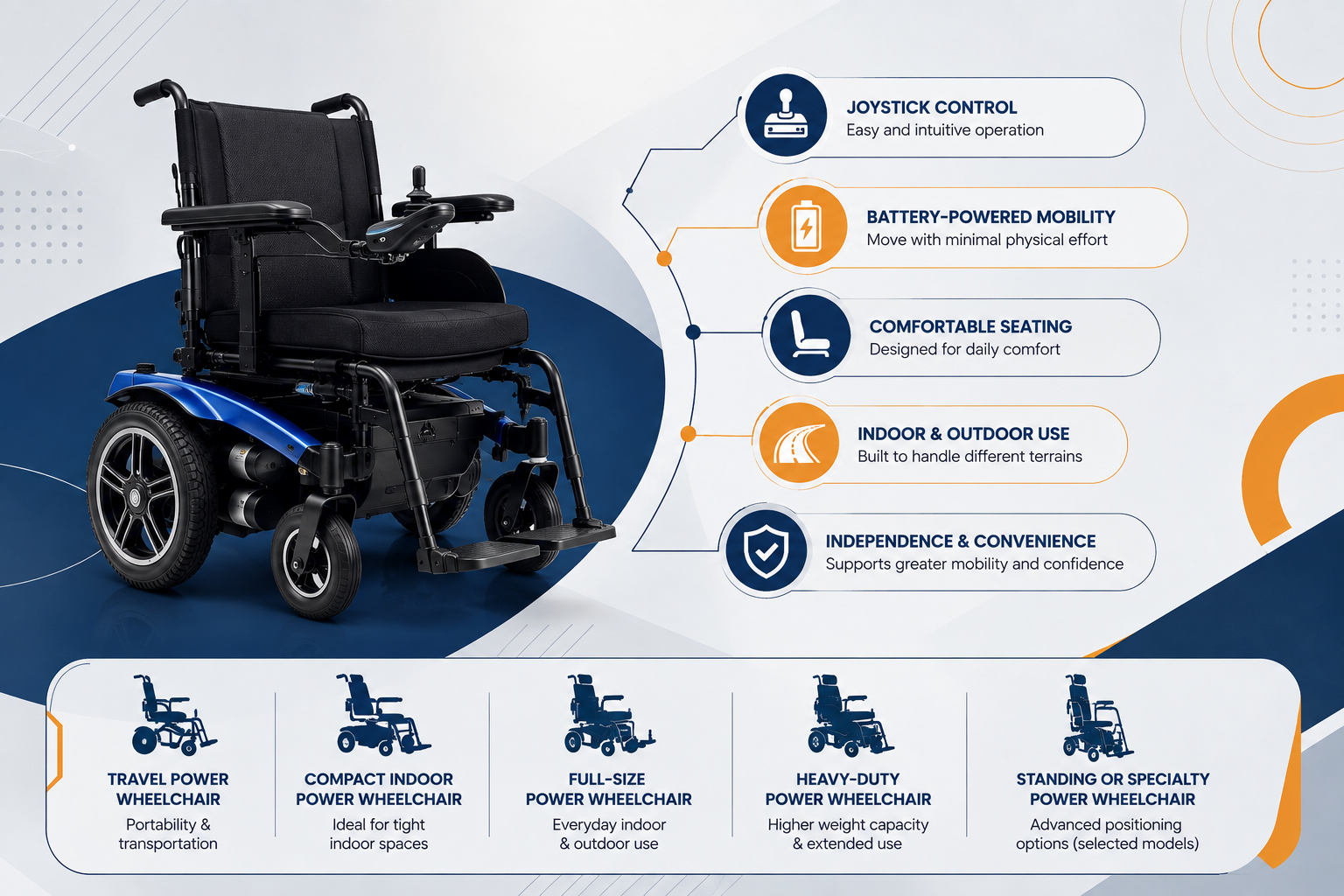
An electric wheelchair, also known as a power wheelchair or motorized wheelchair, is a battery-powered mobility device using joystick controls designed to help users move with minimal physical effort. Instead of pushing the wheels manually, users typically operate the chair using a joystick or another compatible control system.
Electric wheelchairs are often selected by individuals who have limited upper-body strength, reduced endurance, or mobility needs that make manual propulsion more difficult. Depending on the model, they may be designed for indoor use, outdoor travel, or a combination of both.
These wheelchairs are available in a variety of drive configurations, including front-wheel, mid-wheel, and rear-wheel drive, to support different maneuverability and terrain requirements.
Common Types of Electric Wheelchairs
| Type | Best For |
| Travel Power Wheelchair | Portability and transportation |
| Compact Indoor Power Wheelchair | Tight indoor spaces and home use |
| Full-Size Power Wheelchair | Everyday indoor and outdoor mobility |
| Heavy-Duty Power Wheelchair | Higher weight capacities and extended daily use |
| Standing or Specialty Power Wheelchair | Users requiring advanced positioning features (available on selected models) |
Electric wheelchairs are designed to reduce the physical effort needed for mobility and may provide greater independence for some users.
Key benefits include the following:
Because power wheelchairs are available in a wide range of configurations, users can often select features that best align with their daily routine and mobility preferences.
Potential Considerations
Electric wheelchairs also have important considerations before purchase.
These may include:
Understanding these considerations can help ensure that the selected wheelchair aligns with your lifestyle, transportation options, and home accessibility.
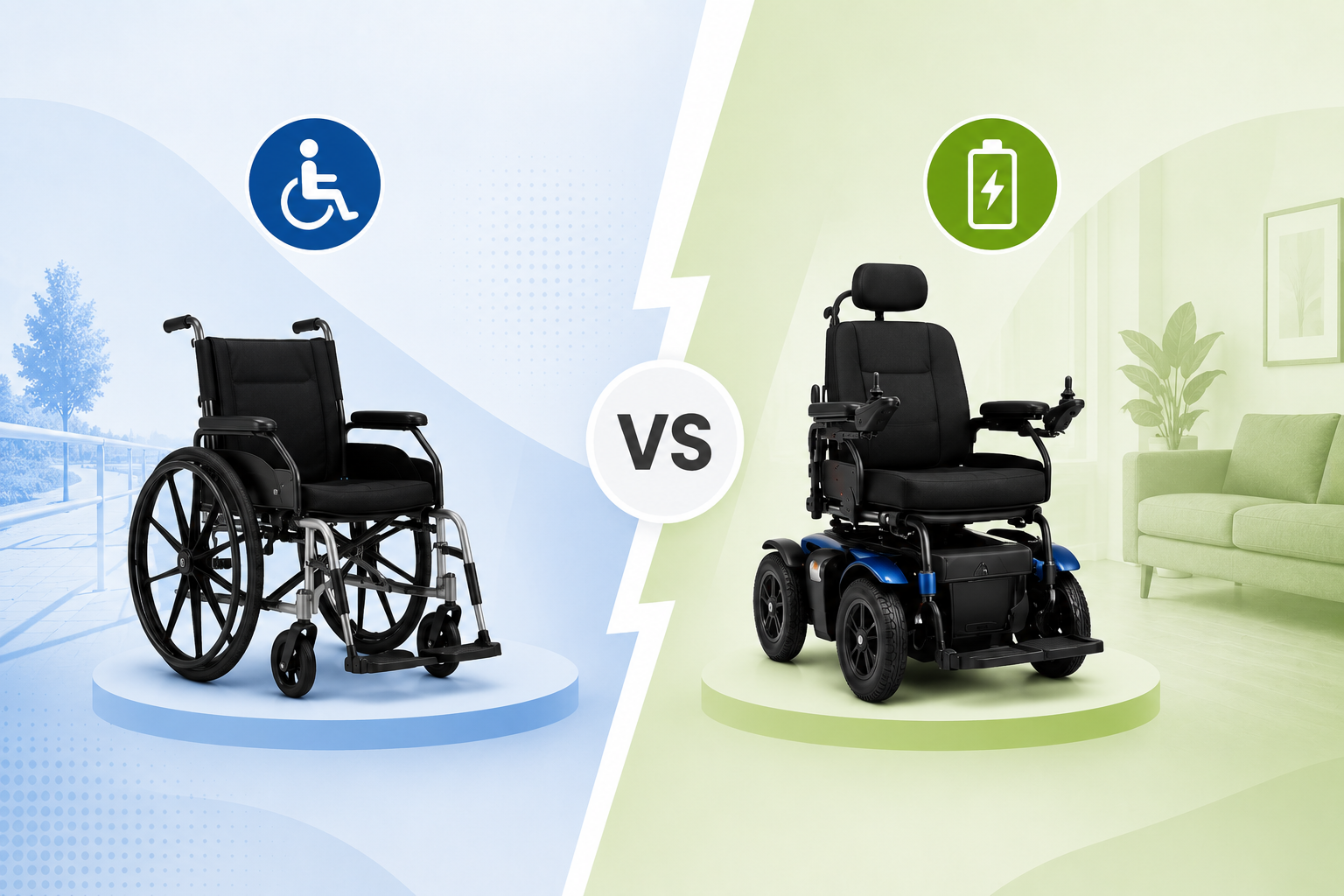
Both manual and electric wheelchairs are designed to support mobility, but they differ in how they operate, the level of physical effort required, and the situations where they may be most suitable. Understanding these differences can help you narrow your options based on your lifestyle, daily routine, and long-term mobility needs.
The table below highlights some of the key factors to compare before choosing a wheelchair.
| Feature | Manual Wheelchair | Electric Wheelchair |
| Mobility | User-propelled or caregiver-assisted | Battery-powered operation with joystick control |
| Physical Effort | Requires upper-body strength or caregiver assistance | Minimal physical effort to operate |
| Comfort | Basic to advanced seating options depending on the model | Often includes advanced seating and positioning features |
| Indoor Use | Excellent maneuverability in most indoor spaces | Excellent, especially mid-wheel drive models |
| Outdoor Use | Best on paved and smooth surfaces | Suitable for longer outdoor travel depending on the model |
| Transportation | Easier to fold and transport | May require a wheelchair-accessible vehicle, ramp, or lift |
| Maintenance | Lower maintenance | Battery charging and electrical system maintenance required |
| Initial Cost | Generally lower | Generally higher |
| Long-Term Convenience | Simple and lightweight | Greater independence for many users |
The level of independence you need is one of the most important factors when choosing a wheelchair.
A manual wheelchair is often a practical option for individuals who have the upper-body strength to propel themselves or have a caregiver available to assist. It offers flexibility for everyday activities and is commonly used for short trips, appointments, or temporary mobility needs.
An electric wheelchair may be a better choice for individuals who have limited arm strength, reduced endurance, or need to travel longer distances throughout the day. With joystick-controlled movement, many users can navigate independently without continuously pushing the wheels.
Consider this: If reducing physical effort is a priority, a power wheelchair may provide greater day-to-day convenience.
Comfort is another important consideration, particularly if the wheelchair will be used for several hours each day.
Manual wheelchairs are available with a variety of seating options, including cushions, adjustable armrests, elevating leg rests, and reclining models. Lightweight models may also improve maneuverability while maintaining everyday comfort.
Many electric wheelchairs offer additional seating and positioning features, such as:
The ideal seating configuration depends on the user's comfort preferences, daily usage, and recommendations from a qualified healthcare professional.
Transportation is often one of the biggest deciding factors.
Manual wheelchairs are generally lighter and easier to fold, making them a popular choice for people who frequently travel by car or need to store the wheelchair in smaller spaces. A light wheelchair may also be easier for caregivers to lift into a vehicle.
Electric wheelchairs, on the other hand, are significantly heavier because of their batteries and motors. Depending on the model, transporting a power wheelchair may require:
If portability is your top priority, a manual wheelchair may be the more practical option.
Think about where you'll use your wheelchair most often.
Manual Wheelchairs
Manual wheelchairs generally perform well in:
However, uneven terrain, steep inclines, or long outdoor distances may require more physical effort.
Electric Wheelchairs
Electric wheelchairs are often designed to handle the following:
Certain models also offer larger drive wheels and suspension systems designed for enhanced outdoor performance. Features vary by manufacturer and model.
Understanding maintenance requirements can help you plan for long-term ownership.
Manual Wheelchair Maintenance
Routine care may include the following:
Electric Wheelchair Maintenance
Power wheelchairs may require:
Following the manufacturer's maintenance instructions can help keep your wheelchair operating as intended.
While cost should not be the only deciding factor, it often plays an important role.
| Expense | Manual Wheelchair | Electric Wheelchair |
| Initial Purchase | Lower | Higher |
| Maintenance Costs | Generally lower | Maybe higher due to batteries and electronics |
| Battery Replacement | Not required | Required periodically depending on usage |
| Transportation Costs | Minimal | May require additional vehicle equipment |
It's also worth checking whether your insurance plan or healthcare benefits may provide coverage for certain mobility equipment. Coverage requirements vary by provider, policy, and individual eligibility.
Medicare, Medicaid, and private insurance coverage requirements differ. Contact your provider for eligibility and documentation requirements.
Every person's mobility needs are different. The best wheelchair is the one that aligns with your daily activities, physical abilities, and living environment.
| User or Situation | Manual Wheelchair | Electric Wheelchair |
| Temporary mobility needs | ✓ | - |
| Frequent caregiver assistance | ✓ | - |
| Easy transportation | ✓ | - |
| Budget-conscious buyers | ✓ | - |
| Limited upper-body strength | - | ✓ |
| Long daily travel distances | - | ✓ |
| Full-time wheelchair use | - | ✓ |
| Greater independent mobility | - | ✓ |
| Primarily indoor use | ✓ | ✓ |
| Mixed indoor and outdoor use | ✓(depending on terrain) | ✓ |
Rather than asking which wheelchair is better, it's more helpful to ask which one better supports your daily routine.
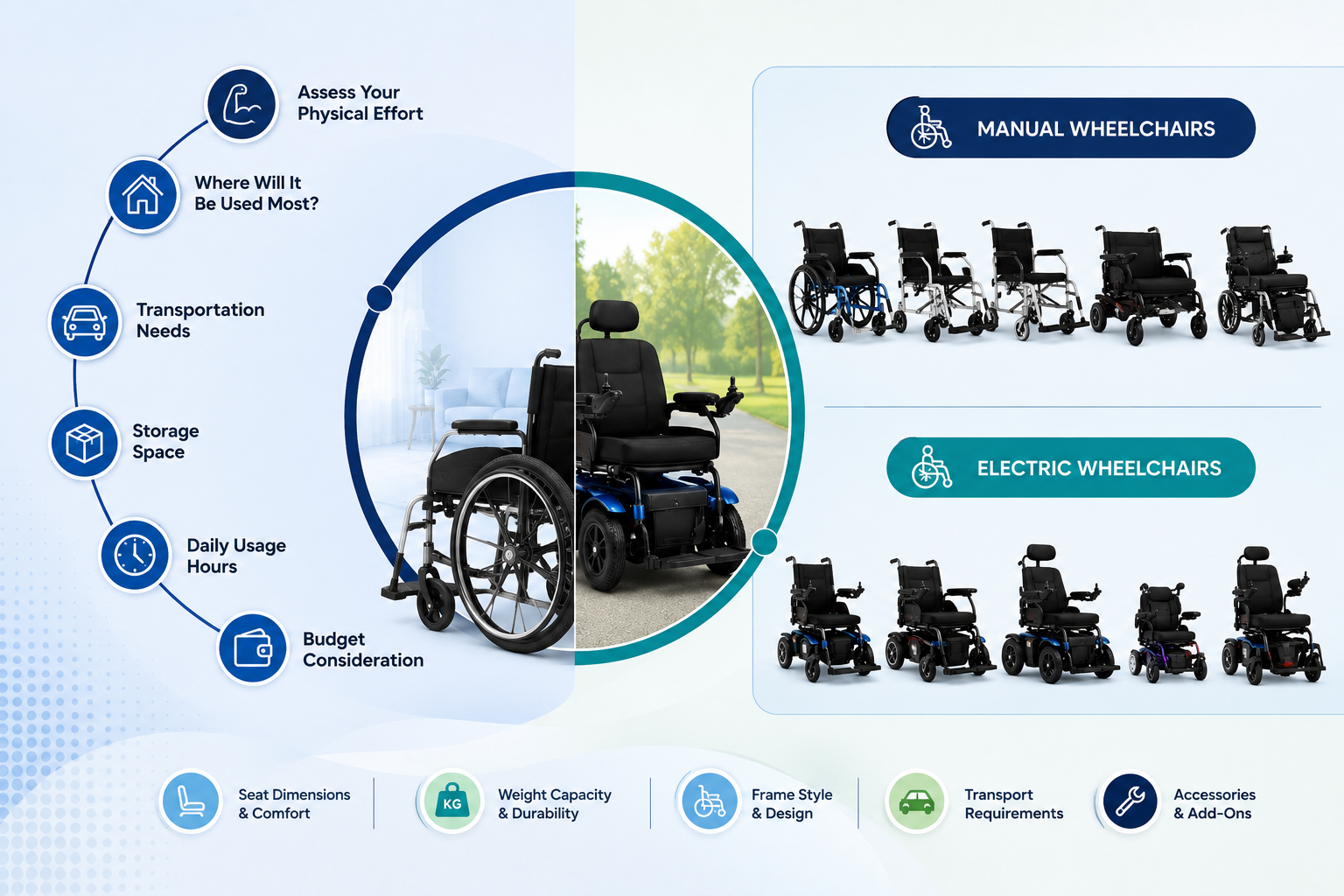
Before purchasing a wheelchair, consider the following questions:
How much physical effort can you comfortably use?
If self-propelling for extended periods may be difficult, an electric wheelchair could be worth considering.
Where will the wheelchair be used most often?
Indoor-only use may have different requirements than regular outdoor travel.
Will you frequently transport the wheelchair?
If you regularly travel by personal vehicle, a lightweight manual wheelchair may be easier to manage.
Do you have adequate storage space?
Electric wheelchairs typically require more storage room and charging access.
How many hours will the wheelchair be used each day?
Extended daily use may influence seating and positioning preferences.
What is your budget?
Consider both the initial purchase price and long-term maintenance costs.
MedicalEshop offers a wide selection of aids for mobility, including manual and electric wheelchairs from trusted manufacturers. Depending on your needs, you can explore categories such as the following:
Manual Wheelchairs
Electric Wheelchairs
When comparing products, consider factors such as seat dimensions, weight capacity, frame style, transport requirements, and available accessories to find a wheelchair that best matches your daily needs.
Choosing between a manual wheelchair and an electric wheelchair comes down to understanding your unique mobility needs rather than finding a one-size-fits-all solution. Manual wheelchairs are often valued for their lightweight design, portability, and lower maintenance, while electric wheelchairs may provide greater convenience and independence for users who require powered mobility.
Before making a decision, consider how and where the wheelchair will be used, the level of physical effort involved, transportation requirements, and long-term comfort. Exploring different wheelchair categories and comparing available features can help you identify a solution that supports your everyday routine with confidence.
This article is intended for informational purposes only and should not be considered medical advice, diagnosis, or treatment. Wheelchair selection should be based on individual mobility needs and, when appropriate, the recommendations of a qualified healthcare professional. Product features and specifications may vary by manufacturer and model.
To support the accuracy and reliability of this guide, information has been reviewed using publicly available resources from recognized organizations in mobility, rehabilitation, and healthy aging, including the following:
These sources provide general educational information and are referenced to strengthen the informational value of this article. Readers should always consult product documentation and qualified healthcare professionals for guidance specific to their individual needs.
Frequently Asked Questions
Ans. Neither option is universally better. A manual wheelchair may be suitable for users with sufficient upper-body strength or caregiver assistance, while an electric wheelchair may provide greater independence for users who have limited strength or need to travel longer distances.
Ans. Electric wheelchairs generally require routine battery charging and periodic maintenance of electrical components. Following the manufacturer's maintenance guidelines can help keep the wheelchair operating properly.
Ans. Yes. Lightweight wheelchairs are generally easier to lift, fold, and transport than heavier models, making them a practical choice for frequent travel.
Ans. Battery performance varies depending on the wheelchair model, battery type, terrain, user weight, and daily usage. Always refer to the manufacturer's specifications for expected battery range and charging recommendations.
Ans. Yes. Many electric wheelchairs are designed for indoor maneuverability, although turning radius and drive configuration may vary between models.
Ans. Some insurance plans may provide coverage for wheelchairs when specific eligibility requirements are met. Coverage varies by insurance provider, policy, and individual circumstances. Contact your insurance provider for details.
Ans. Some insurance plans may provide coverage for wheelchairs when specific eligibility requirements are met. Coverage varies by insurance provider, policy, and individual circumstances. Contact your insurance provider for details. Important considerations include your mobility needs, physical abilities, home accessibility, transportation options, comfort preferences, intended daily use, and budget. Consulting a qualified healthcare professional may also help you determine the most appropriate mobility equipment.
.avif&w=3840&q=75)
.avif&w=3840&q=75)