Spirometers are medical devices used for different breathing-related purposes. Some diagnostic spirometers measure aspects of lung function, while incentive spirometers encourage slow, deep breaths and may be used during recovery after surgery or certain lung illnesses. Choosing the right device starts with understanding these differences. In this guide, we compare three spirometers available from MedicalEshop, including incentive and digital models, explain common spirometry measurements such as FEV1 and FVC, and walk through the basic steps for using an incentive spirometer. We also cover important considerations for people managing asthma, COPD, or other chronic lung conditions.
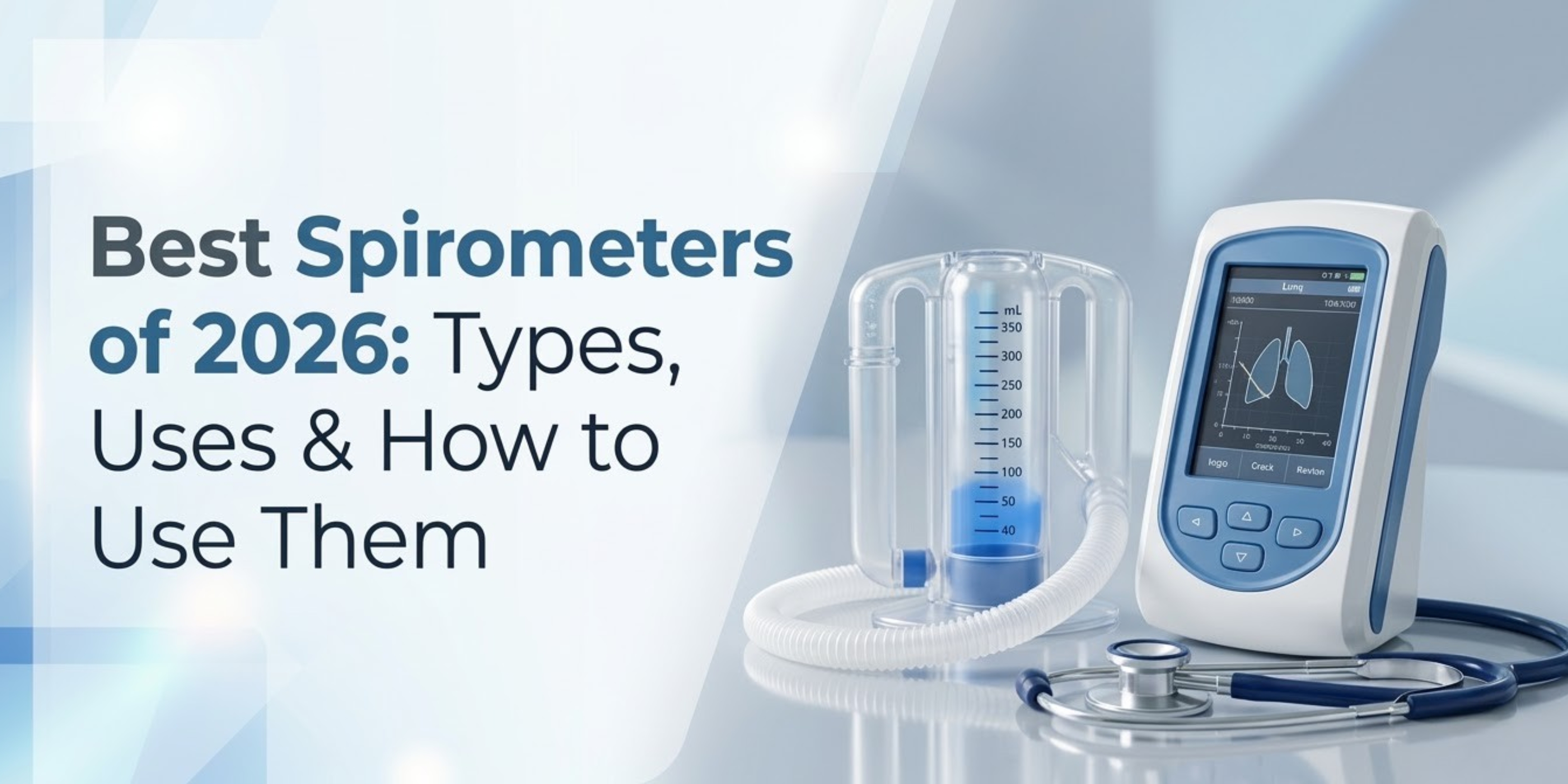
A spirometer is a medical device used to measure or support breathing-related activities, depending on the type of device.
The word spirometer can refer to different types of equipment, so it is important to understand the intended purpose before choosing one.
A diagnostic spirometer is used for spirometry, a pulmonary function test that measures how much air a person can breathe out and how quickly they can exhale. Healthcare professionals may use spirometry when evaluating symptoms such as coughing, wheezing, or shortness of breath and when assessing conditions such as asthma and COPD.
An incentive spirometer serves a different purpose. Rather than performing a diagnostic lung function test, it provides visual feedback that encourages a person to inhale slowly and deeply. Healthcare providers may recommend one after surgery or during recovery from certain lung illnesses.
| Feature | Diagnostic Spirometer | Incentive Spirometer |
| Primary purpose | Measures aspects of lung function | Encourages slow, deep inhalation |
| Common setting | Healthcare or pulmonary testing | Hospital, recovery, or home care when instructed |
| Typical information | FEV1, FVC and related measurements | Visual feedback during inhalation |
| Main user | Healthcare professional/patient during testing | Patient following provider instructions |
| Common applications | Lung function assessment | Breathing exercises during recovery |
| Diagnostic role | May contribute to clinical evaluation | Not a standalone diagnosis; results require clinical interpretation |
The key point is simple: a diagnostic spirometer measures lung function, while an incentive spirometer encourages deep breathing. They should not be treated as interchangeable devices.
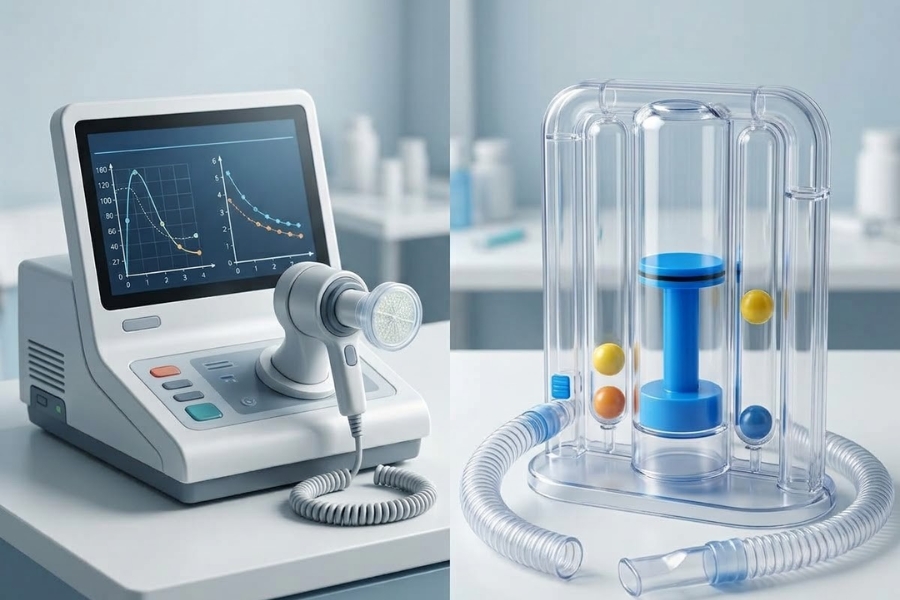
Although both devices relate to breathing, their purposes are different.
Diagnostic spirometers are designed to collect measurements during spirometry testing. The test commonly looks at measurements such as
These measurements can provide healthcare professionals with information about airflow and lung function.
Spirometry may be used as part of the evaluation of asthma, COPD, and other breathing-related conditions. A spirometer reading should be interpreted in the context of the person's symptoms, medical history, testing conditions, and other clinical information.
An incentive spirometer is designed to encourage a person to take slow, deep breaths.
Many models use a moving piston, ball, or other visual indicator. As the person inhales, the indicator provides feedback about the inhalation.
Healthcare providers may recommend an incentive spirometer following surgery or during recovery from certain lung illnesses. The exact instructions, including how frequently to use it, should come from the healthcare provider.
There is no single spirometer that is best for every person or every situation.
For this guide, the products were selected from MedicalEshop's spirometer offerings based on their different intended categories and the information available on their product pages.
We considered:
The products below are not ranked as medically superior to one another. Instead, each represents a different type or use case.
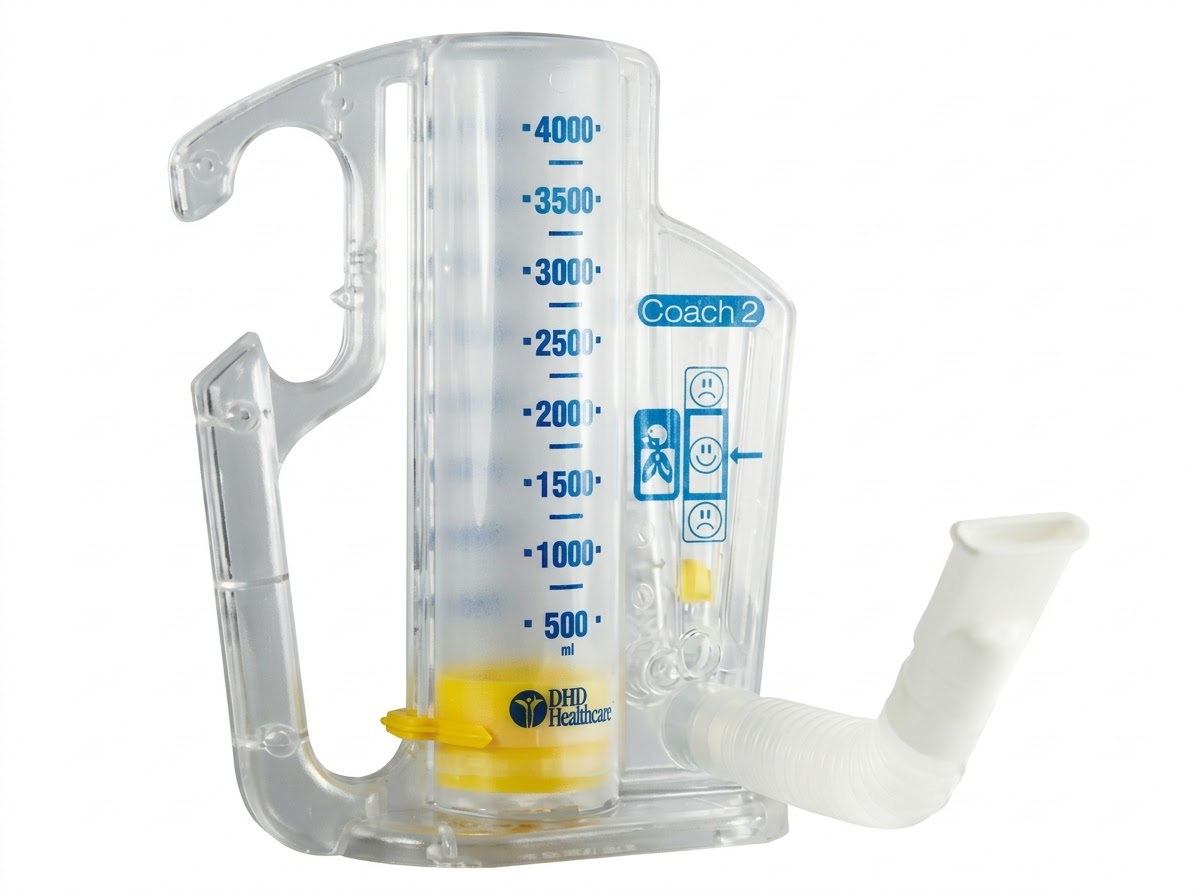
The Smiths ASD Coach 2 Incentive Spirometer is an incentive spirometer designed around slow, deep inhalation and visual feedback.The MedicalEshop listing identifies this model as a 4000 mL incentive spirometer with a one-way valve.
Best suited to: Users looking for a traditional volumetric incentive spirometer when an incentive spirometer has been recommended by a healthcare professional.
Product highlights:
This type of device may be useful when the goal is to practice slow, deep breathing rather than obtain a diagnostic lung function assessment.
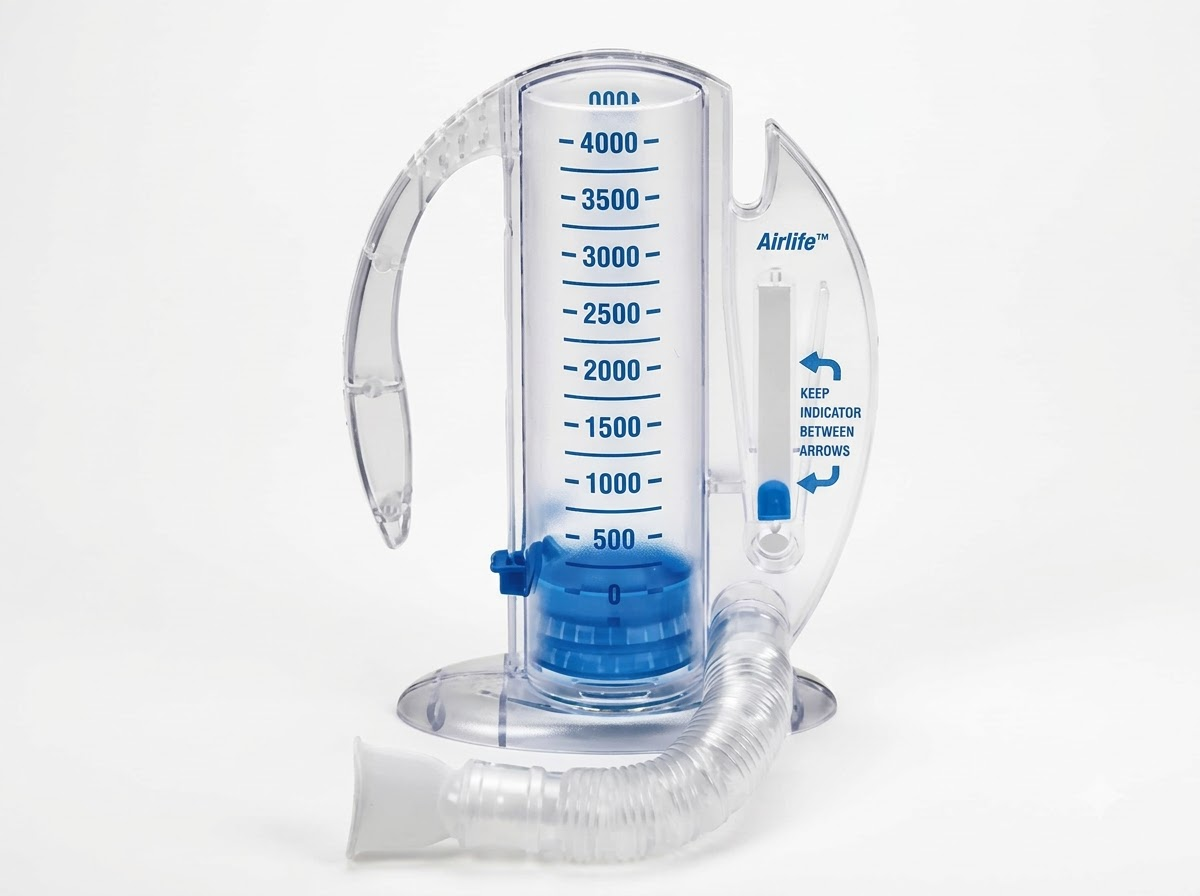
The CareFusion AirLife Volumetric Incentive Spirometer is another traditional incentive spirometer option.The available AirLife range includes different volume and valve configurations, so shoppers should verify the exact variant selected before ordering.
Best suited to: Users who need a volumetric incentive spirometer and want to select from available configurations.
Product considerations:
Because different variants are available, always review the selected configuration and product details before purchase.
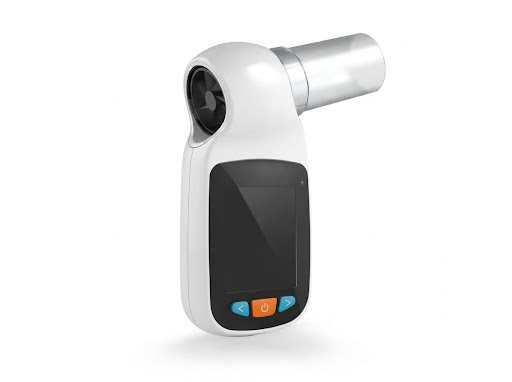
The Simpro Digital Spirometer is different from the two incentive spirometers above.
Best suited to: Users or healthcare settings looking for a digital spirometry device rather than a traditional visual incentive spirometer.
Unlike an incentive spirometer, a digital spirometer belongs to the measurement-focused side of spirometry. Its use and interpretation should follow the manufacturer's instructions and appropriate clinical guidance.
| Product | Type | Primary Purpose | Format | Key Consideration |
| Smiths ASD Coach 2 | Incentive spirometer | Encourage slow, deep inhalation. | Volumetric | 4000 mL, one-way valve |
| CareFusion AirLife | Volumetric incentive spirometer | Encourage deep breathing. | Volumetric | Multiple configurations available |
| Simpro Digital Spirometer | Digital spirometer | Spirometry measurement | Digital | Intended for measurement-focused use |
Important: These products should not be compared only by price or appearance. The appropriate device depends primarily on whether the intended purpose is incentive breathing practice or lung function measurement.
If your healthcare provider has recommended an incentive spirometer, follow their instructions and the manufacturer's directions.
The general process is
1. Sit Upright - Sit as upright as comfortably possible. Good positioning can make it easier to take a deep breath.
If you become dizzy or lightheaded, remove the mouthpiece and return to normal breathing.
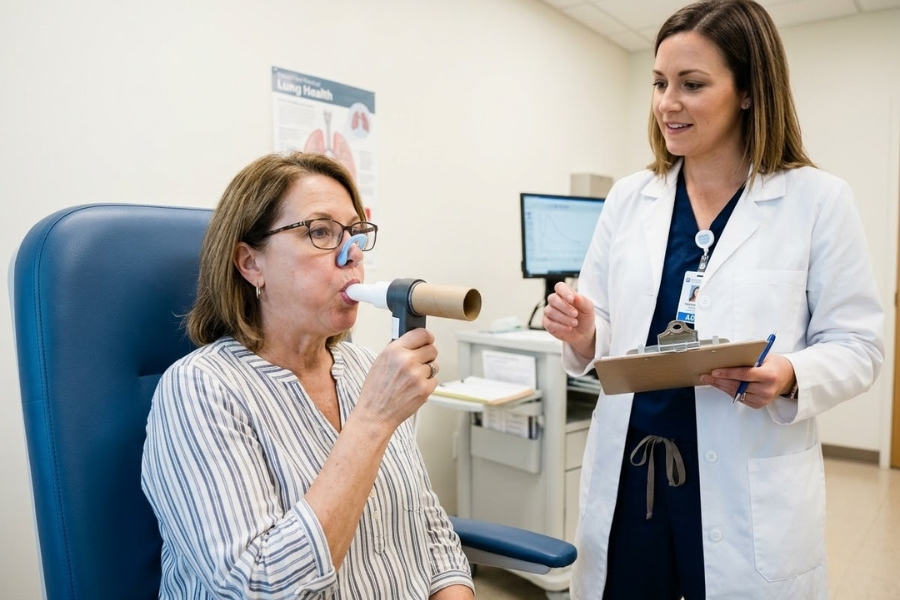
Diagnostic spirometry is different from using an incentive spirometer.
During a typical spirometry test, a person generally:
The healthcare professional may repeat the test several times to obtain acceptable and repeatable measurements.
Depending on the reason for testing, spirometry may also be performed before and after a medication such as a bronchodilator.
Because technique can affect the measurements, diagnostic spirometry is not simply a matter of taking one breath into a device and interpreting the number yourself.
Spirometry reports may contain several measurements. Understanding the basic terms can make a report easier to discuss with a healthcare professional.
| Measurement | What It Refers To |
| FVC | The amount of air forcefully exhaled after a deep breath |
| FEV1 | The amount of air forcefully exhaled during the first second |
| FEV1/FVC | The relationship between FEV1 and FVC |
| PEF | Peak expiratory flow, referring to the highest flow achieved during forced expiration |
Healthcare professionals use these measurements together with reference values and clinical information rather than interpreting a single number in isolation.
Spirometry can play an important role in evaluating and monitoring certain chronic lung conditions.
For example, the American Lung Association identifies spirometry as the most common type of pulmonary function or breathing test and notes that it may be used when evaluating symptoms such as wheezing, shortness of breath, and coughing. It may also be used when assessing conditions such as asthma and COPD.
However, a spirometer should not be viewed as a standalone diagnostic tool for self-diagnosis.
A person's symptoms, medical history, physical examination, and other testing may also be relevant.
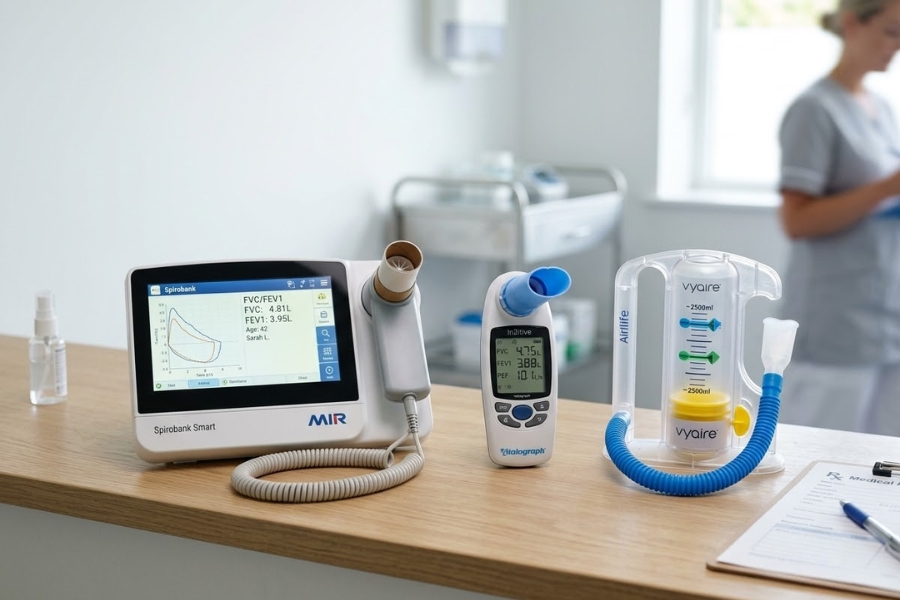
Before selecting a spirometer, start by identifying why you need the device.
Are you looking for:
This is the most important question because different spirometers serve different purposes.
Traditional incentive spirometers often use a visual indicator to provide feedback during inhalation.
Digital spirometers may provide numerical or electronic information depending on the model.
Check the manufacturer's and seller's information for:
If your healthcare provider has recommended a specific type of spirometer, use that recommendation as the starting point.
A device intended for clinical measurement may have different requirements from a simple incentive spirometer used during recovery.
Even a suitable device may not provide useful results or feedback if it is used incorrectly.
Avoid these common mistakes:
Talk to your healthcare professional if you have questions about which spirometer is appropriate for you or how to interpret your results.
Seek appropriate medical attention for concerning symptoms such as:
When using an incentive spirometer, MedlinePlus specifically advises contacting a healthcare provider for increased shortness of breath, chest pain, fever, or increased coughing.
Choosing a spirometer does not have to be complicated when you start with the right question: What is the device intended to do?
If the goal is to encourage slow, deep breathing during recovery, an incentive spirometer may be the appropriate category to discuss with your healthcare provider. If the goal is to measure lung function, a diagnostic or digital spirometer may be more appropriate depending on the testing requirements.
MedicalEshop offers a selection of spirometers, including the Smiths ASD Coach 2 Incentive Spirometer, CareFusion AirLife Volumetric Incentive Spirometer, and Simpro Digital Spirometer.
Review the product specifications carefully and choose a device that matches its intended use. If you are unsure which type is appropriate, consult a qualified healthcare professional before making a selection.
For medically responsible information about spirometry and incentive spirometers, this article draws on guidance and educational material from MedlinePlus, the American Lung Association, the National Heart, Lung, and Blood Institute (NHLBI/NIH), and the U.S. Food and Drug Administration (FDA). Product information is based on the MedicalEshop product listings and should be checked against the current product page before purchase.
Medical Disclaimer: MedicalEshop is a U.S.-based dealer and supplier of medical equipment, rehabilitation products, respiratory care products, and related supplies. MedicalEshop is not a physician, hospital, or licensed medical provider. The information in this article is provided for general educational purposes only and is not intended to diagnose, treat, cure, or prevent any medical condition. Spirometry results should be interpreted by an appropriately qualified healthcare professional. Always follow the manufacturer's instructions and your healthcare provider's recommendations when using a spirometer or incentive spirometer. Individual needs may vary. If you experience significant or worsening breathing difficulty, chest pain, or other concerning symptoms, seek appropriate medical attention.
Frequently Asked Questions
Ans. A spirometer is a medical device used for breathing-related measurement or exercise, depending on the type. Diagnostic spirometers measure aspects of lung function, while incentive spirometers provide visual feedback to encourage slow, deep inhalation.
Ans. A diagnostic spirometer may measure values such as FEV1 and FVC during spirometry. An incentive spirometer generally provides visual feedback related to inhalation rather than performing a diagnostic lung function test.
Ans. A diagnostic spirometer is used to measure lung function during spirometry testing. An incentive spirometer encourages slow, deep breaths and is often used during recovery when recommended by a healthcare professional.
Ans. Spirometry may be used as part of the evaluation of asthma, but a spirometer reading should not be treated as a standalone diagnosis. A healthcare professional interprets the results alongside symptoms, medical history, and other relevant information.
Ans. Spirometry is commonly used in the clinical assessment of COPD. However, diagnosis and interpretation should be performed by an appropriately qualified healthcare professional.
Ans. FEV1 stands for forced expiratory volume in one second. It represents the amount of air a person can forcefully exhale during the first second of a spirometry maneuver.
Ans. FVC stands for forced vital capacity. It refers to the amount of air forcefully exhaled after taking a deep breath during a spirometry maneuver.
Ans. The recommended frequency depends on the person's situation and the healthcare provider's instructions. MedlinePlus describes 10 to 15 breaths every 1 to 2 hours for some patients, but individuals should follow the instructions provided by their healthcare professional.
Ans. Yes, an incentive spirometer may be used in home care when recommended and instructed by a healthcare professional. Follow the device's instructions and your provider's recommendations.
Ans. No. An incentive spirometer is designed to encourage slow, deep inhalation with visual feedback. A digital spirometer is generally designed around measurement and may be used for spirometry testing. They serve different purposes.
.avif&w=3840&q=75)
.avif&w=3840&q=75)