Weeping edema is a condition in which excess fluid accumulates in the body's tissues and may leak through the skin, often affecting the legs, feet, and ankles. This educational guide explains common symptoms of weeping edema, including swelling in feet, weeping legs, skin irritation, and discomfort. It also explores possible causes such as poor circulation, lymphedema, venous insufficiency, and other underlying health conditions. Readers will learn about supportive care options, edema therapy approaches, skin care practices, compression products, and home caregiving considerations. Always consult a qualified healthcare professional for diagnosis, treatment recommendations, and personalized medical guidance.
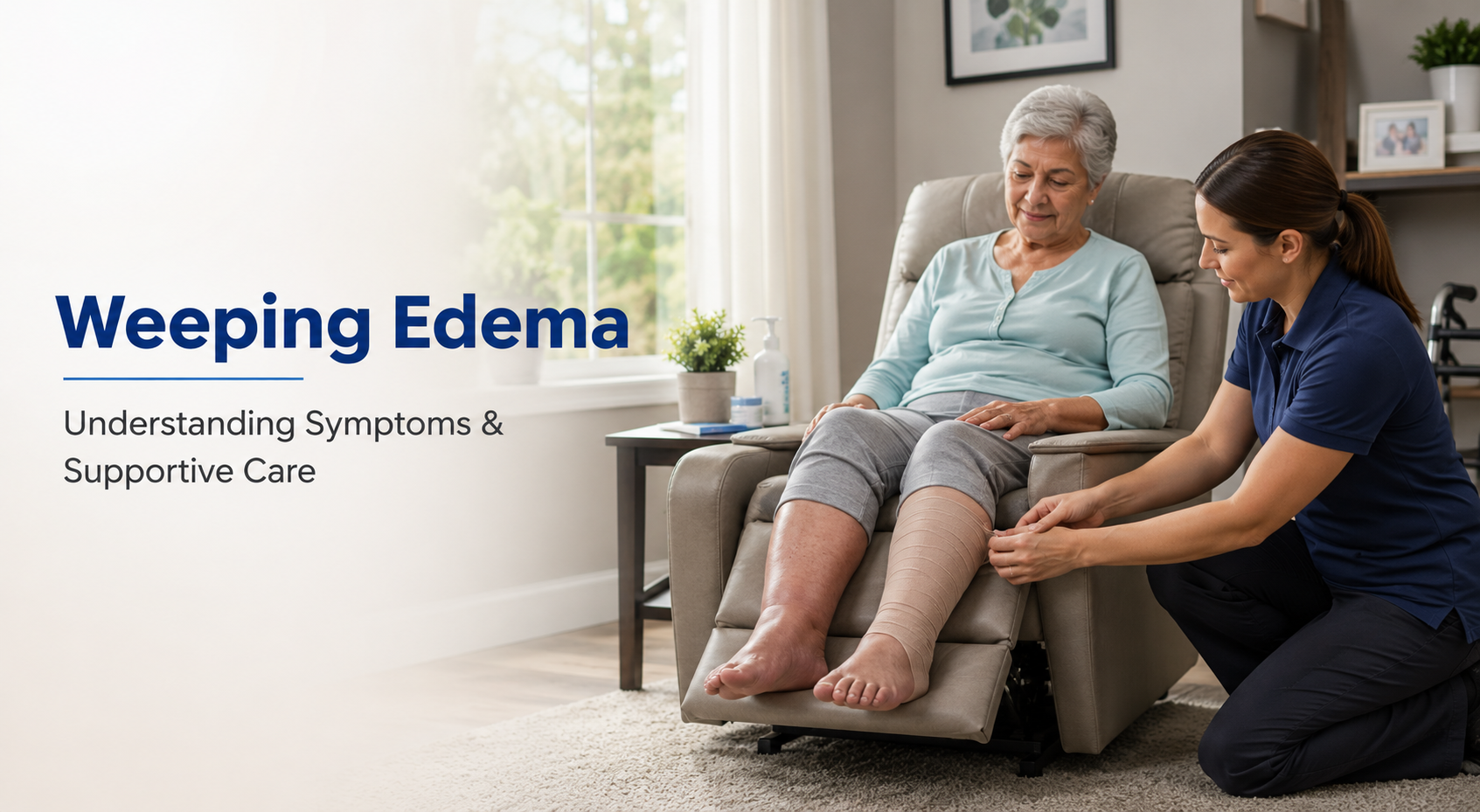
Weeping edema is when there is too much fluid in the tissues of the body and it comes out through the skin. It often affects the legs, feet, ankles, or lower extremities. The affected skin may appear swollen, stretched, or fluid-filled. Many people with edema and weeping legs may also notice discomfort, heaviness or swelling in the feet and legs when doing activities of daily living.
Weeping from edema can occur when swelling becomes severe enough that fluid begins leaking through fragile or overstretched skin.
Edema can sometimes be a sign of underlying medical conditions, so persistent swelling or leakage of fluid should always be evaluated by a licensed healthcare professional.
Medical Disclaimer: This article is for educational purposes only and should not be considered medical advice, diagnosis, or treatment. Medicaleshop is a supplier of home medical and rehabilitation products and is not a manufacturer, hospital, or healthcare provider. Always consult a qualified healthcare professional regarding swelling, skin leakage, or edema-related symptoms.
Edema is a swelling caused by excess fluid trapped in the body’s tissues. It can affect different parts of the body, but edema swelling commonly occurs in the feet, legs, ankles, or lower limbs.
Common Areas Affected by Edema
| Area | Possible Symptoms |
| Feet | Swelling in feet, tightness, discomfort |
| Legs | Heavy feeling, skin stretching, weeping legs |
| Ankles | Puffiness and reduced mobility |
| Lower limbs | Fluid retention and skin irritation |
Mild edema may improve with supportive care, while severe edema and weeping legs may require medical evaluation and ongoing management.
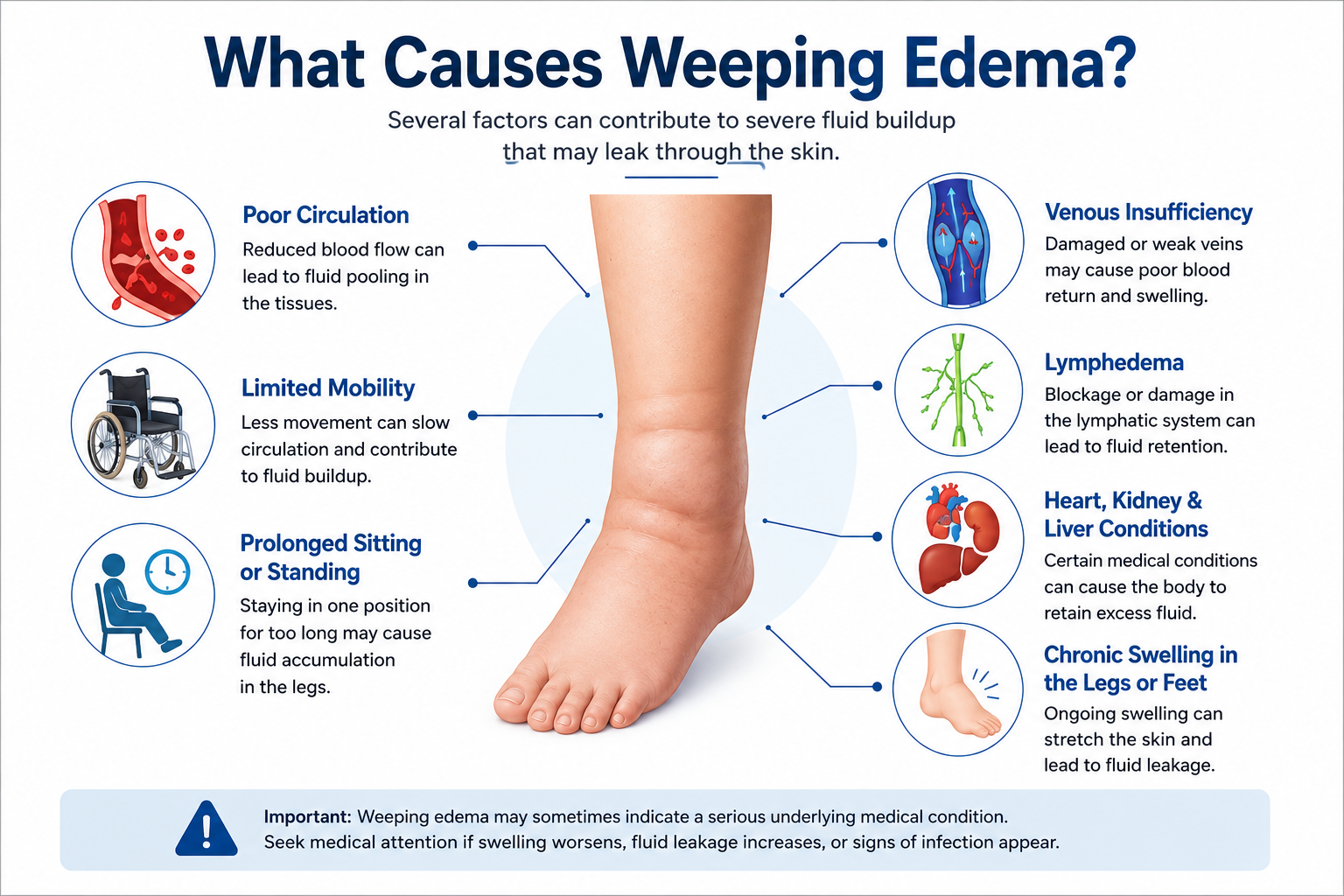
Weeping edema may occur when fluid buildup becomes severe enough that it leaks through the skin. This condition is often associated with poor circulation, prolonged swelling, or limited mobility.
Possible Causes of Weeping Edema May Include
Important: Weeping edema may sometimes indicate a serious underlying medical condition. Seek medical attention if swelling worsens, fluid leakage increases, or signs of infection appear.
Individuals experiencing edema and weeping legs may notice a range of symptoms affecting mobility, skin condition, and comfort.
Common Symptoms May Include
In some cases, the skin may become fragile or more prone to breakdown due to prolonged swelling and moisture exposure.
Swelling and fluid leakage should not be ignored, especially if symptoms become severe or sudden.
Contact a Healthcare Provider If You Notice
Early medical evaluation may help identify the underlying cause of edema swelling and appropriate treatment options.
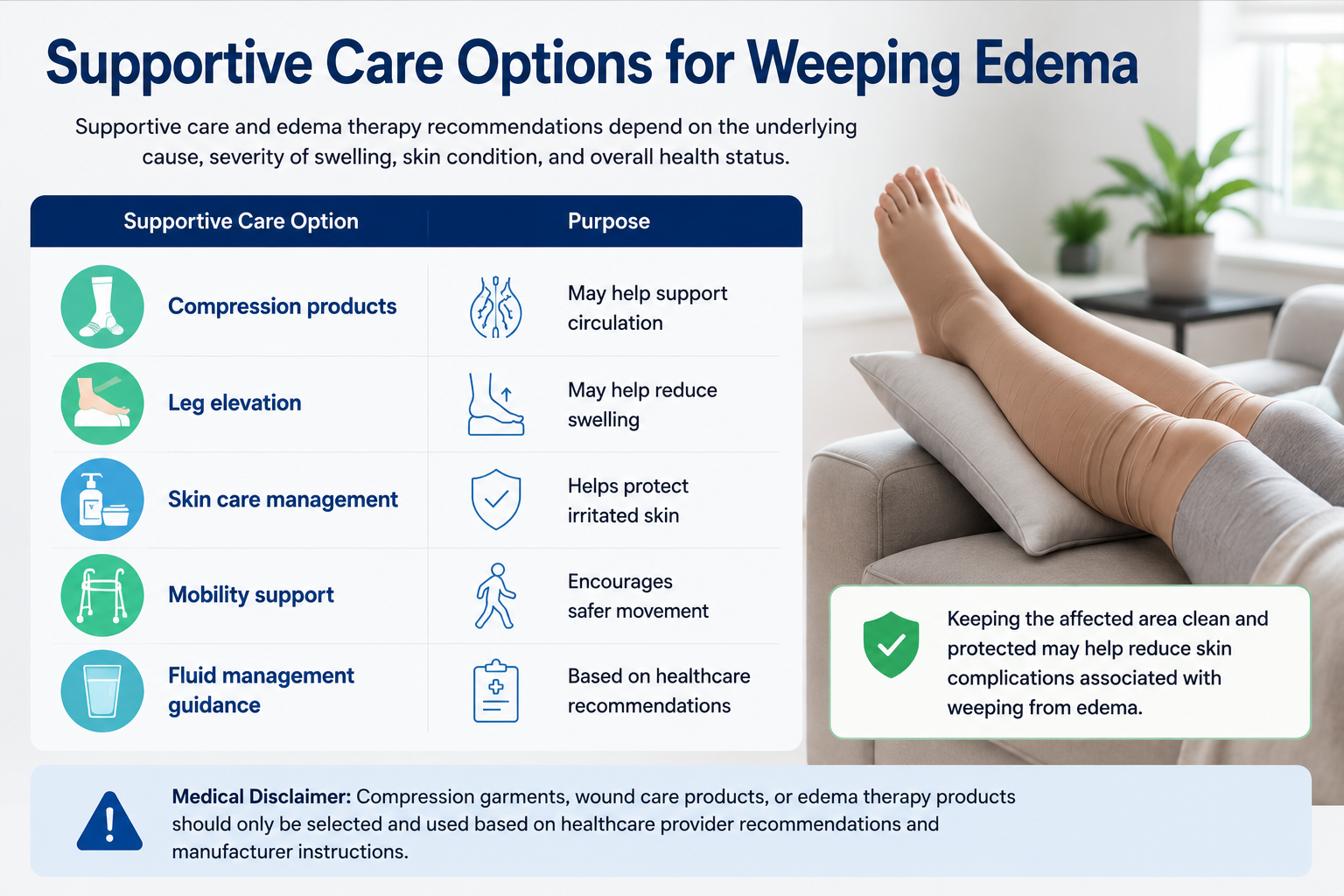
Supportive care and edema therapy recommendations depend on the underlying cause, severity of swelling, skin condition, and overall health status.
Supportive Care Measures May Include
| Supportive Care Option | Purpose |
| Compression products | May help support circulation |
| Leg elevation | May help reduce swelling |
| Skin care management | Helps protect irritated skin |
| Mobility support | Encourages safer movement |
| Fluid management guidance | Based on healthcare recommendations |
Keeping the affected area clean and protected may help reduce skin complications associated with weeping from edema.
Medical Disclaimer: Compression garments, wound care products, or edema therapy products should only be selected and used based on healthcare provider recommendations and manufacturer instructions.
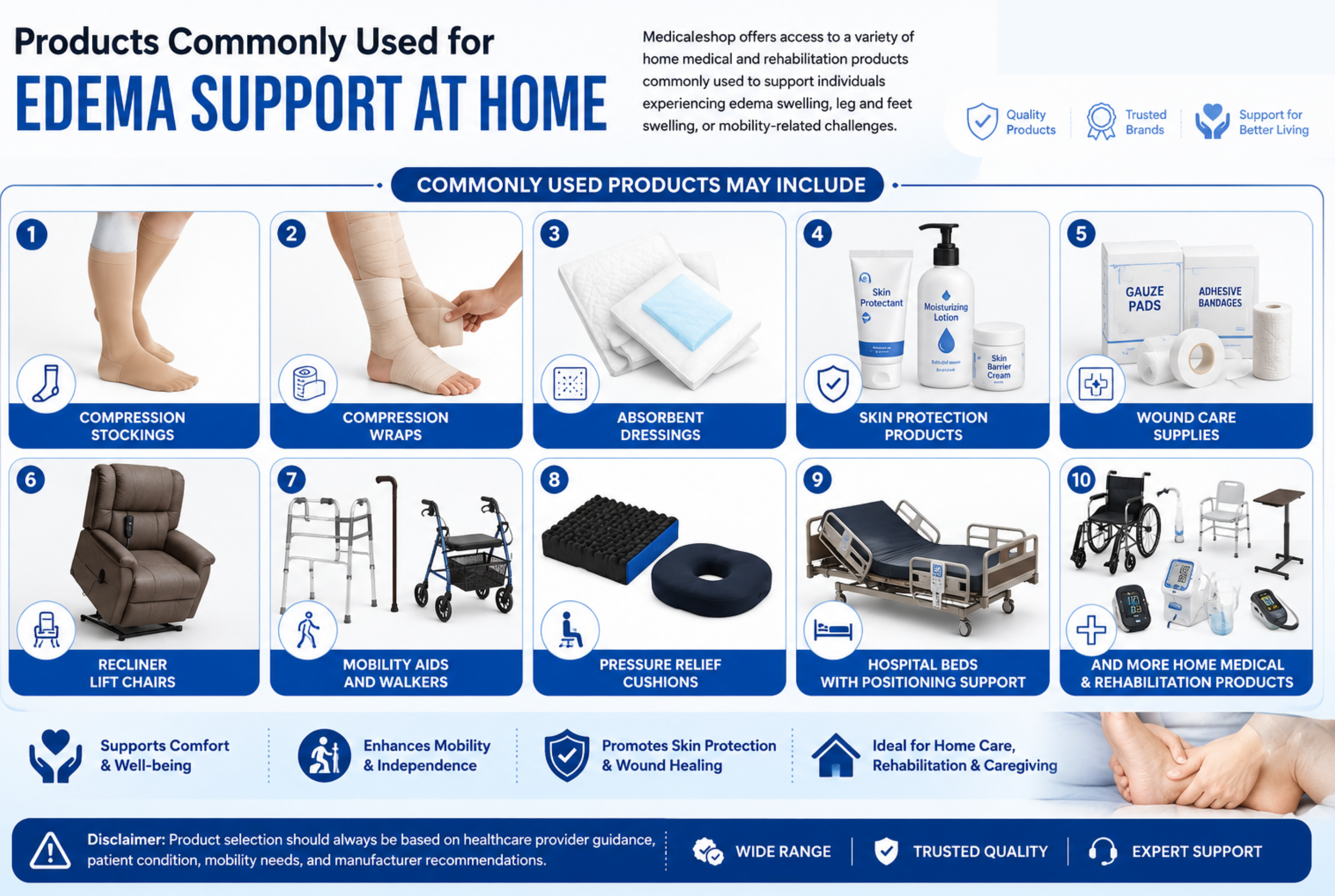
Individuals managing edema at home may commonly use products such as.
Medicaleshop offers access to a variety of home medical and rehabilitation products commonly used to support individuals experiencing edema swelling, leg and feet swelling, or mobility-related challenges. These products are commonly used to help support comfort, positioning, mobility, and skin protection.
Disclaimer: Product selection should always be based on healthcare provider guidance, patient condition, mobility needs, and manufacturer recommendations.
Skin protection is an important part of managing edema and weeping legs because prolonged moisture exposure may increase the risk of irritation or skin breakdown.
Persistent skin irritation, odor, or worsening drainage should be evaluated by a healthcare professional.
Compression products are often used in the therapy of edema, helping to manage circulation and fluid in the lower extremities. Healthcare providers may recommend compression stockings, wraps or bandaging systems depending on the individual’s condition.
However, compression products are not for everyone, and should only be used under medical guidance, especially for people with circulation disorders or certain heart conditions.
Managing swelling in the legs and feet and weeping edema often involves a combination of medical care, supportive products, skin protection, mobility assistance, and lifestyle adjustments.
Individuals may benefit from:
Supportive home care products may help improve comfort and daily mobility while assisting caregivers with ongoing care routines.
Weeping edema refers to a state of fluid retention, which causes swelling, stretched skin, and fluid drainage from the legs and feet. The occurrence of symptoms such as swelling caused by edema, weeping legs, and swelling of feet can only be professionally examined and assessed to determine the best course of treatment. Equipment such as compression equipment, skin care, mobility devices, and positioning equipment can be provided for individuals as supportive products.
At Medicaleshop, we provide access to home medical and rehabilitation products commonly used to support individuals experiencing edema and mobility-related challenges. Explore products such as compression supplies, skin protection products, mobility aids, hospital beds, and positioning solutions designed to support home caregiving and daily comfort needs.
Medical Disclaimer: Always consult a licensed healthcare provider before selecting compression products, wound care supplies, or edema therapy products for home use.
National Library of Medicine (NIH)
Cleveland Clinic – Edema Overview
Frequently Asked Questions
Ans. Weeping legs may be associated with severe swelling, poor circulation, lymphedema, venous insufficiency, or prolonged fluid retention.
Ans. Compression stockings may help support circulation and swelling management when recommended by a healthcare provider.
Ans. You should seek medical attention if swelling becomes severe, painful, sudden, or is accompanied by redness, wounds, fever, or difficulty breathing.
Ans. Yes. Edema commonly causes swelling in feet, ankles, and legs due to fluid buildup in the tissues.
.avif&w=3840&q=75)
.avif&w=3840&q=75)