Learn what a stoma is, how it works, and the role it plays after ostomy surgery. This comprehensive guide explains the differences between colostomy, ileostomy, and urostomy, common reasons a stoma may be created, and what daily life with an ostomy may involve. Discover how waste is managed through a stoma, explore essential ostomy supplies such as pouches, skin barriers, and accessories, and gain practical insights into routine ostomy care. Whether you're a patient, caregiver, or simply seeking reliable information, this resource offers educational guidance to help you better understand stomas and everyday ostomy management with greater confidence.
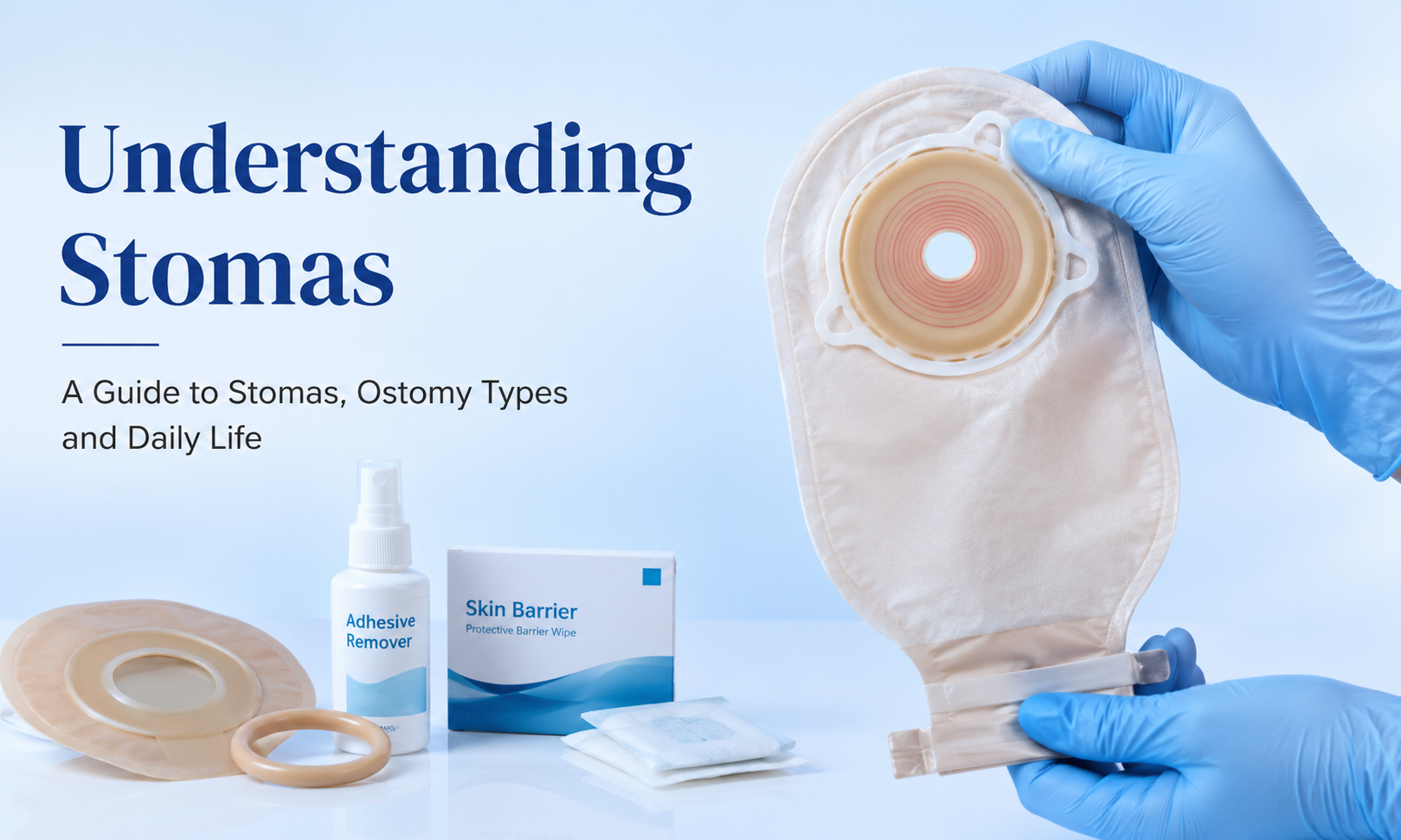
Table of Content
2. Understanding the Difference Between a Stoma and an Ostomy
4. Step-by-Step: How Waste Leaves the Body Through a Stoma
6. The Three Main Types of Stomas
7. What Educational Resources Commonly Say About Stoma Appearance
8. Living With a Stoma: What Daily Life May Look Like
9. Ostomy Products Available at Medicaleshop
10. Understanding Your Stoma Is the First Step Toward Greater Confidence
Each year, thousands of Americans undergo ostomy surgery for conditions ranging from colorectal cancer to inflammatory bowel disease. For many patients and caregivers, understanding what a stoma is becomes one of the first steps in adapting to life after surgery.
A stoma is a surgically created opening on the abdomen that allows waste to leave the body when part of the digestive or urinary system can no longer function through its normal pathway. Depending on the type of surgery performed, stool or urine passes through the stoma and is collected in a specialized pouching system worn outside the body.
While the concept may seem unfamiliar at first, stomas help millions of people worldwide continue living active and fulfilling lives after surgery.
A stoma is an opening surgically created on the abdominal wall that allows stool or urine to leave the body through an alternate route. Waste exits through the stoma into an external ostomy pouch designed to collect output safely and discreetly.
Stoma at a Glance
| Feature | Description |
| Definition | Surgically created opening on the abdomen |
| Purpose | Allows waste to exit the body |
| Common Types | Colostomy, Ileostomy, Urostomy |
| Temporary or Permanent | Can be either |
| Output Control | Continuous, collected using a pouch |
| Appearance | Usually pink, red, and moist |
Information adapted from educational resources published by NIDDK and UOAA.
Note: This article is intended solely for educational purposes and should not be considered medical advice, diagnosis, treatment guidance, or individualized healthcare recommendations. Readers should consult qualified healthcare professionals regarding any medical concerns.
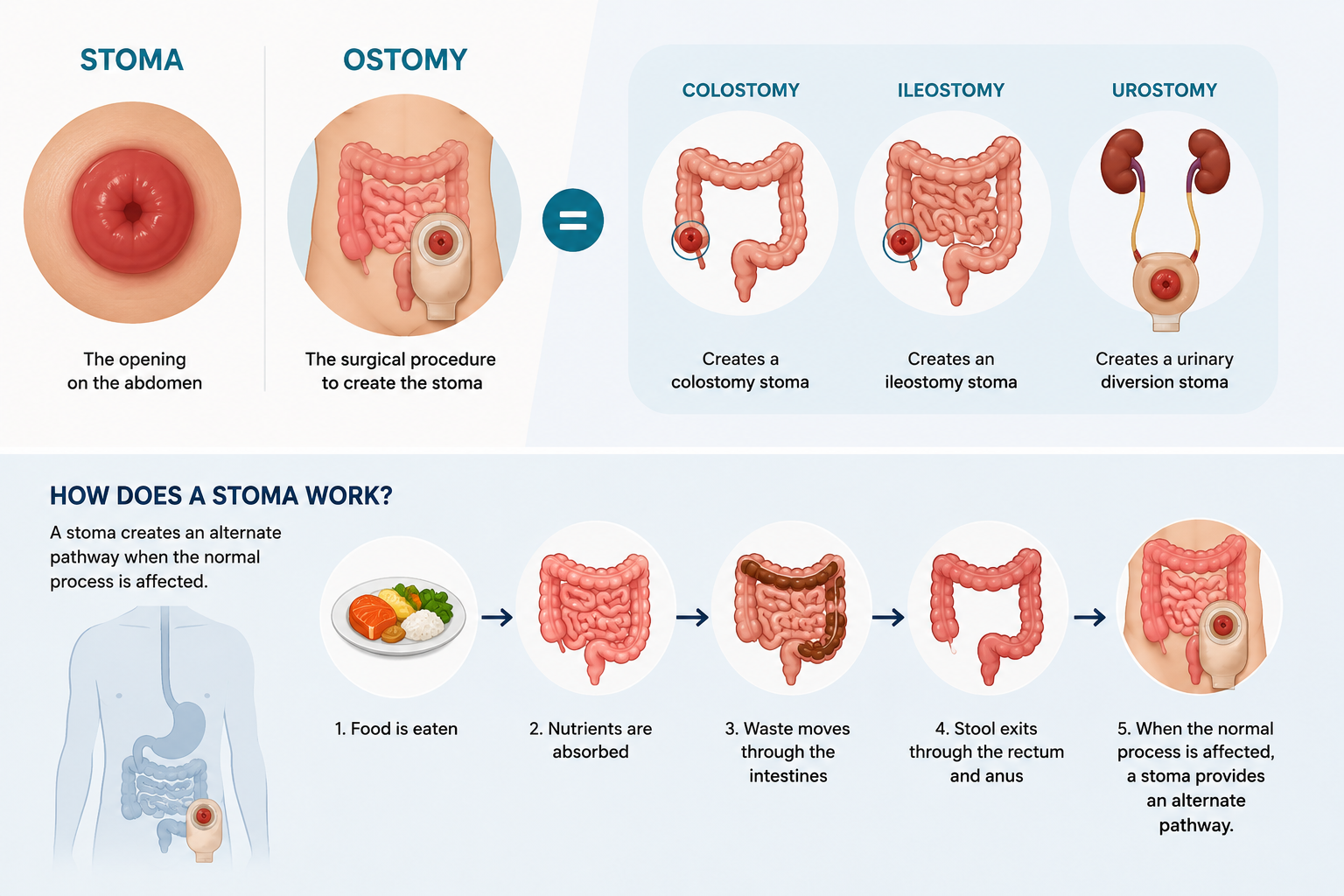
Many people use the terms "stoma" and "ostomy" interchangeably, but they have different meanings.
For example:
Understanding this distinction can make it easier to navigate educational resources, product information, and healthcare discussions.
To understand how a stoma functions, it helps to first understand how the body normally eliminates waste.
Under normal circumstances:
When disease, injury, or surgery affects this process, healthcare providers may create a stoma to establish an alternate pathway.
Unlike the anus, a stoma does not contain sphincter muscles. As a result, individuals typically rely on pouching systems to manage output.
Healthcare professionals may recommend ostomy surgery for a variety of medical conditions.
Common reasons include:
Some stomas are temporary and may later be reversed, while others are intended to be permanent.
Medical Compliance Notice: Surgical decisions depend on an individual's medical condition, treatment goals, and physician recommendations. This content is not intended to replace professional medical consultation.
A colostomy involves bringing part of the colon through the abdominal wall.
Common characteristics:
An ileostomy is created using the ileum, the final section of the small intestine.
Common characteristics:
A urostomy diverts urine away from the bladder.
Common characteristics:
| Type | Organ Used | Output | Typical Location |
| Colostomy | Colon | Stool | Left abdomen |
| Ileostomy | Small intestine | Liquid stool | Right abdomen |
| Urostomy | Urinary diversion | Urine | Lower abdomen |
Although every person is unique, characteristics often described in educational resources for a healthy stoma are as follows:
Because a stoma is made from intestinal tissue, it is different from surrounding skin tissue.
Medical Disclaimer: Appearance can vary significantly between individuals. Any changes in stoma appearance should be discussed with qualified healthcare professionals. This article is educational and should not be used to assess medical conditions.
One of the biggest misconceptions about ostomy surgery is that it prevents people from living active lives.
In reality, many individuals with ostomies continue to:
While adjustment periods vary, access to proper supplies, education, and support can make daily management more convenient.
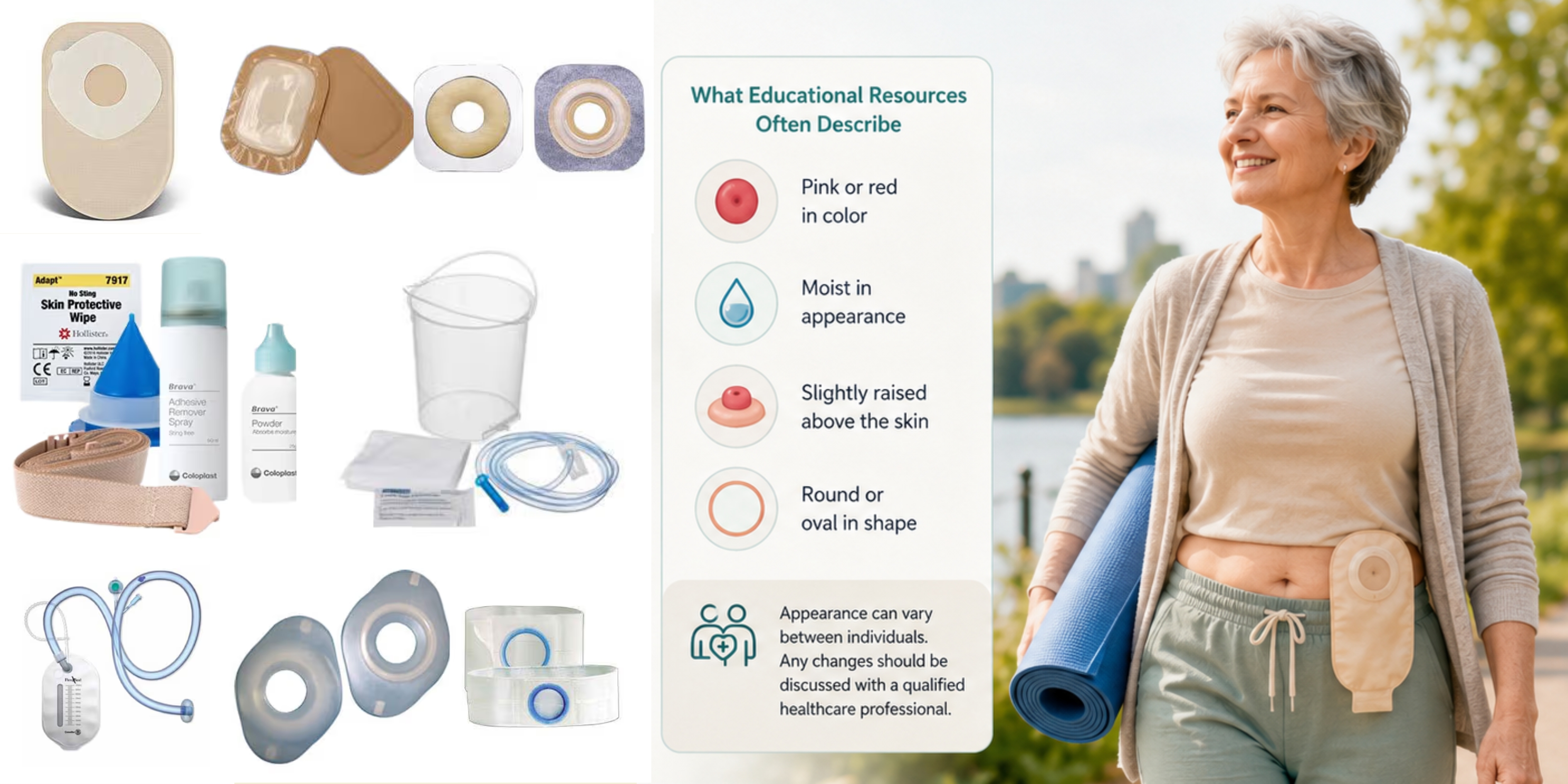
Many individuals rely on these supplies for in comfort, confidence, and convenience.
Common ostomy products include:
Ostomy Pouches - Designed to collect output from the stoma.
Skin Barriers - Help create a protective seal between the skin and the pouching system.
Barrier Rings - Designed to help improve fit and reduce leakage concerns.
Adhesive Removers - Assist with pouch changes.
Skin Protection Products - Help support healthy peristomal skin.
Ostomy Belts and Accessories - Provide additional support for certain pouching systems
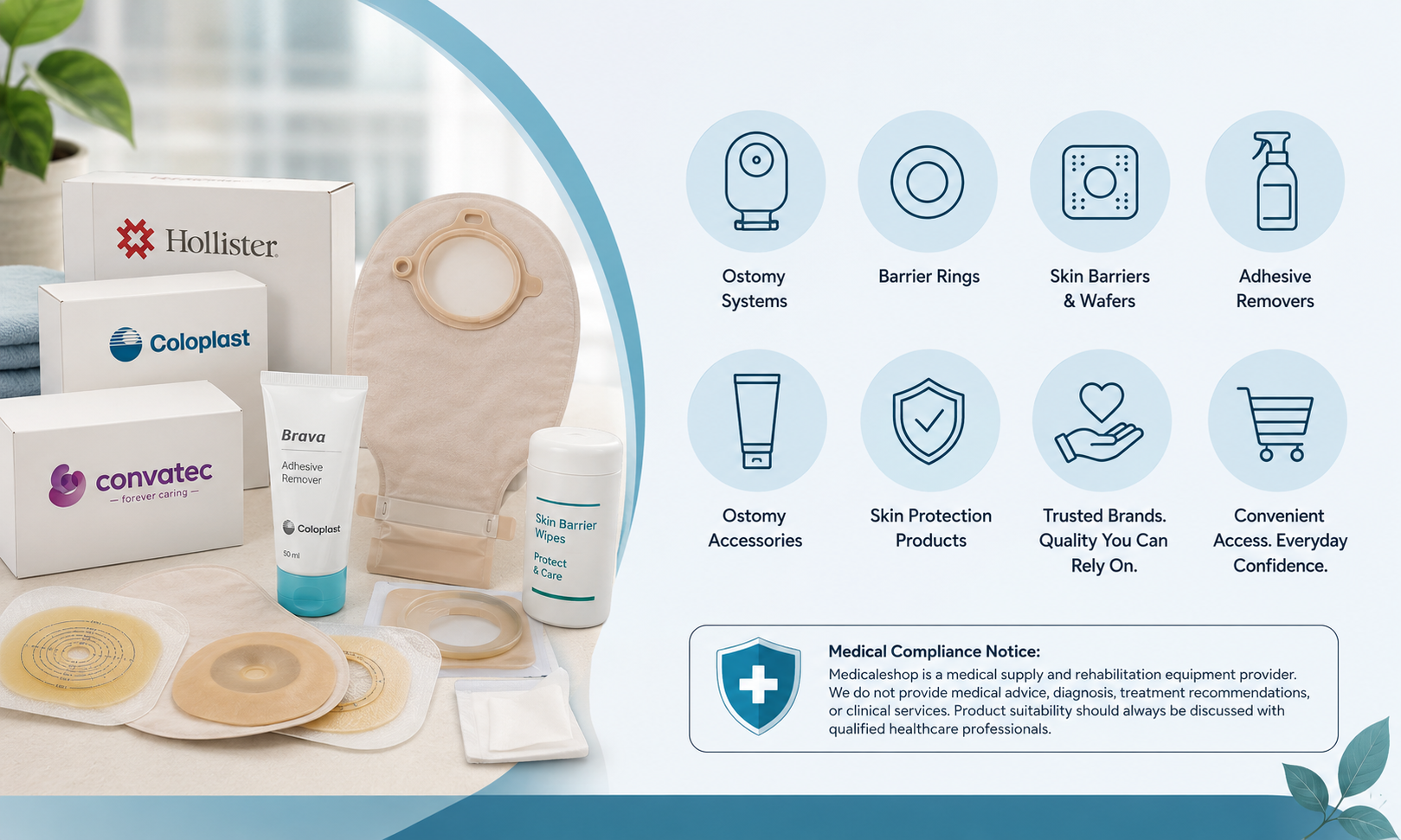
As individuals learn to manage life with an ostomy, access to appropriate supplies becomes an important part of daily routines. Reliable ostomy supplies can help support day-to-day ostomy care and routine management.
Our ostomy product selection includes products from leading manufacturers, such as:
Whether you're purchasing supplies for yourself, a family member, or a caregiver-supported individual, Medicaleshop offers convenient access to a broad range of ostomy-related products from trusted brands.
Medical Compliance Notice: Medicaleshop is a medical supply and rehabilitation equipment provider. We do not provide medical advice, diagnosis, treatment recommendations, or clinical services. Product suitability should always be discussed with qualified healthcare professionals.
Learning about stomas is often the first step toward feeling more comfortable and informed after ostomy surgery. While every individual's experience is unique, understanding how a stoma works, why it is created, and the products available to support daily care can help reduce uncertainty and build confidence.
Today, millions of people worldwide live active lives with colostomies, ileostomies, and urostomies. With the right information, appropriate supplies, and guidance from qualified healthcare professionals, many individuals continue working, traveling, exercising, and participating in the activities they enjoy.
At Medicaleshop, we are committed to helping customers access quality ostomy supplies from trusted manufacturers. From ostomy pouches and skin barriers to adhesive removers and accessory products, we offer a wide selection of products designed to support everyday ostomy management needs.
Important Note: Medicaleshop does not provide medical care, diagnosis, treatment, or individualized healthcare recommendations. Always consult qualified healthcare professionals regarding medical decisions and product suitability.
Frequently Asked Questions
Ans. A stoma is a surgically created opening on the abdomen that allows stool or urine to leave the body through an alternate pathway.
Ans. A stoma connects part of the digestive or urinary system to the skin surface, allowing waste to exit into a collection pouch.
Ans. The three most common types are colostomy, ileostomy, and urostomy.
Ans. Some stomas are temporary, while others are permanent depending on the underlying condition and surgical plan.
Ans. Many people with ostomies continue working, traveling, exercising, and participating in everyday activities.
.avif&w=3840&q=75)
.avif&w=3840&q=75)