Wheelchair accessories can do more than add convenience to a mobility device. The right accessories may help address everyday needs related to comfort, seating, positioning, transfers, storage, and mobility. From wheelchair cushions and back supports to transfer boards, positioning products, push gloves, and wheelchair bags, different accessories serve different purposes. However, not every accessory is compatible with every wheelchair. This guide explains common wheelchair accessories, what to consider before selecting them, and how products such as cushions, positioning supports, transfer boards, gloves, and storage bags may fit into different daily routines. Product selection should always consider compatibility, intended use, and individual needs.
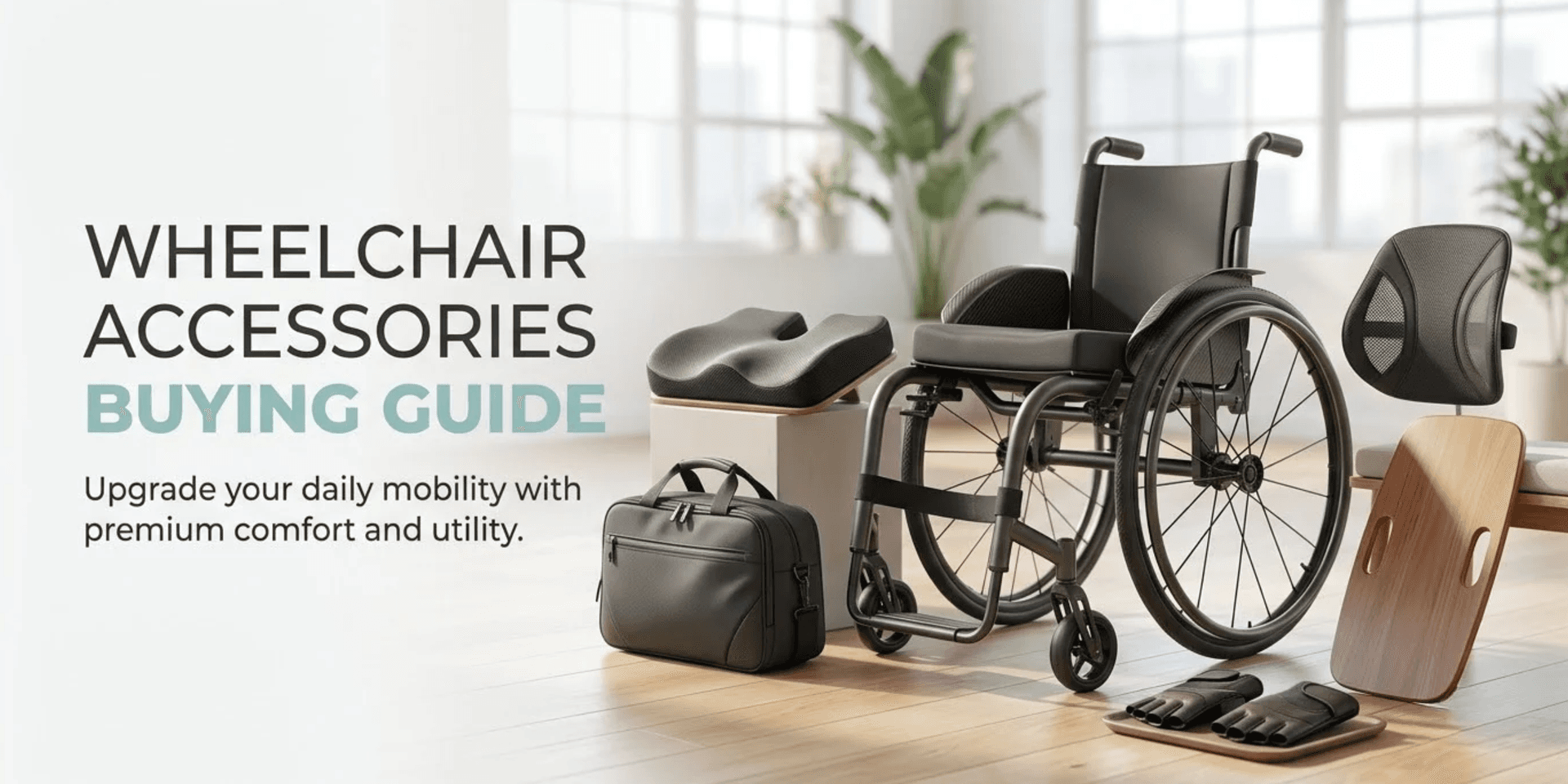
A wheelchair accessory is a product added to or used with a wheelchair to support a particular function or user need. Depending on the wheelchair and the individual, accessories may relate to comfort, positioning, transfers, mobility, storage, or everyday convenience.
Some accessories are relatively simple additions, while others are part of a more specialized seating or positioning system. For example, a wheelchair cushion may affect how a person sits, while a positioning support may be selected as part of an individualized seating setup.
This is why wheelchair accessories should not be viewed as a one-size-fits-all category. The most useful accessory is usually the one that addresses a specific need while remaining compatible with the wheelchair and its existing configuration.
Wheelchair accessories can include:
MedicalEshop offers wheelchair accessories across several of these categories, including wheelchair cushions, wheelchair backs, upper- and lower-body positioning products, seat belts, transfer boards, and wheelchair storage solutions.
The best place to start is not with a product. Start with the problem you want the accessory to address.
A person who spends long periods seated may have different priorities from someone who primarily needs easier transfers. Likewise, someone who wants convenient storage may not need a clinical positioning accessory.
Before selecting an accessory, consider:
| What to consider | Questions to ask |
| Wheelchair compatibility | Is the accessory designed to work with the wheelchair? |
| Dimensions | Do the measurements match the chair and intended setup? |
| User needs | Is the goal comfort, positioning, transfer, storage, or convenience? |
| Weight capacity | Does the product meet its stated specifications? |
| Accessibility | Can the user or caregiver reach and operate it appropriately? |
| Installation | Does it require specific brackets, mounting points, or hardware? |
| Intended environment | Will it be used primarily at home, outdoors, during travel, or in a care setting? |
| Manufacturer instructions | Are installation, use, and maintenance instructions available? |
Not every wheelchair accessory is universal. Competitor guides also emphasize checking compatibility, mounting systems, user capabilities, environment, and frequency of use before selecting an accessory.
Adding several accessories can also change the overall configuration of a wheelchair. Consider the combined effect of accessories on weight, access to controls, folding or storage, and maneuverability before making multiple changes.
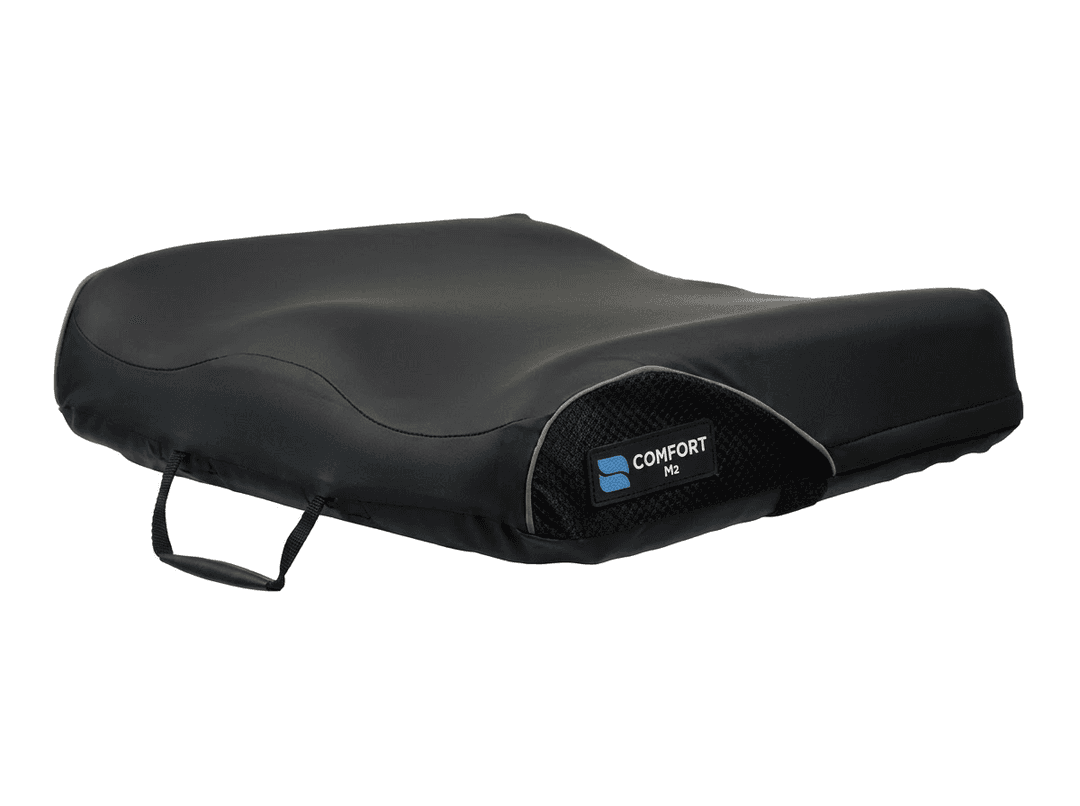
Comfort is one of the most common reasons people consider wheelchair accessories.
For someone who spends considerable time in a wheelchair, the seat is an important part of the overall setup. A cushion is not simply a soft surface; its dimensions, materials, shape, and positioning can influence the way a person sits.
Research has shown that different wheelchair cushions can produce different pressure distributions and seating characteristics. Because individual seating patterns vary, cushion selection may require consideration of the user's body characteristics, wheelchair configuration, and intended use.
The Comfort Company M2 Cushion is one of the wheelchair seating products available through MedicalEshop. Its product documentation identifies it as a seating and positioning cushion and provides different size and configuration options.
When considering a wheelchair cushion such as the M2, pay attention to:
A cushion should not be selected solely because it feels soft or comfortable initially. A suitable seating surface needs to work with the user's wheelchair and overall seating arrangement.
For individuals with complex seating requirements or concerns related to pressure, skin integrity, or positioning, professional seating assessment may be appropriate. Research on wheelchair seating supports the importance of individualized evaluation when selecting cushions and positioning systems.
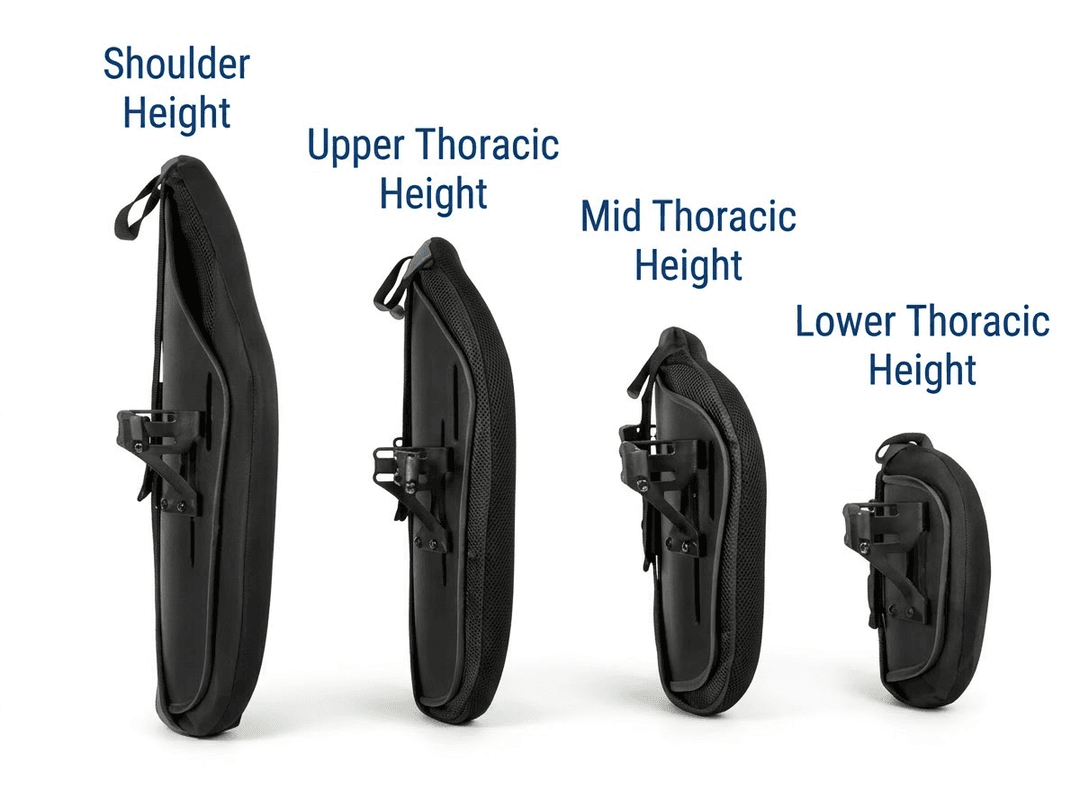
A wheelchair's back support is another important component of the seating system.
Some users may require more specialized back support than the standard back upholstery supplied with a wheelchair. Depending on the product and individual requirements, a wheelchair back support may be considered when additional trunk support, stability, or positioning is needed.
The JAY J3 Posterior Back is one of the wheelchair back-support products supplied through MedicalEshop.
When considering a wheelchair back support, look beyond the product name and consider:
A back support should not be described as universally “correcting posture.” Positioning needs differ between individuals, and a more specialized seating setup may require assessment by an appropriately qualified professional.
Positioning accessories are designed for more specific seating needs than many everyday convenience accessories.
MedicalEshop's Upper Body Positioning category includes products such as chest belts, trunk and chest supports, shoulder harnesses, and arm supports.
These products may be considered when a wheelchair user requires additional support as part of an individualized seating and positioning setup.
Bodypoint is one of the brands available through MedicalEshop for wheelchair positioning accessories. Its range includes hip belts, upper-body positioning products, calf straps and ankle huggers, and other seating accessories.
Examples of Bodypoint positioning categories include:
For example, MedicalEshop's Bodypoint upper-body positioning collection includes chest supports, shoulder harnesses, and trunk-support products.
Positioning products should be selected based on the user's needs, wheelchair configuration, and manufacturer instructions rather than simply being added as general-purpose accessories.
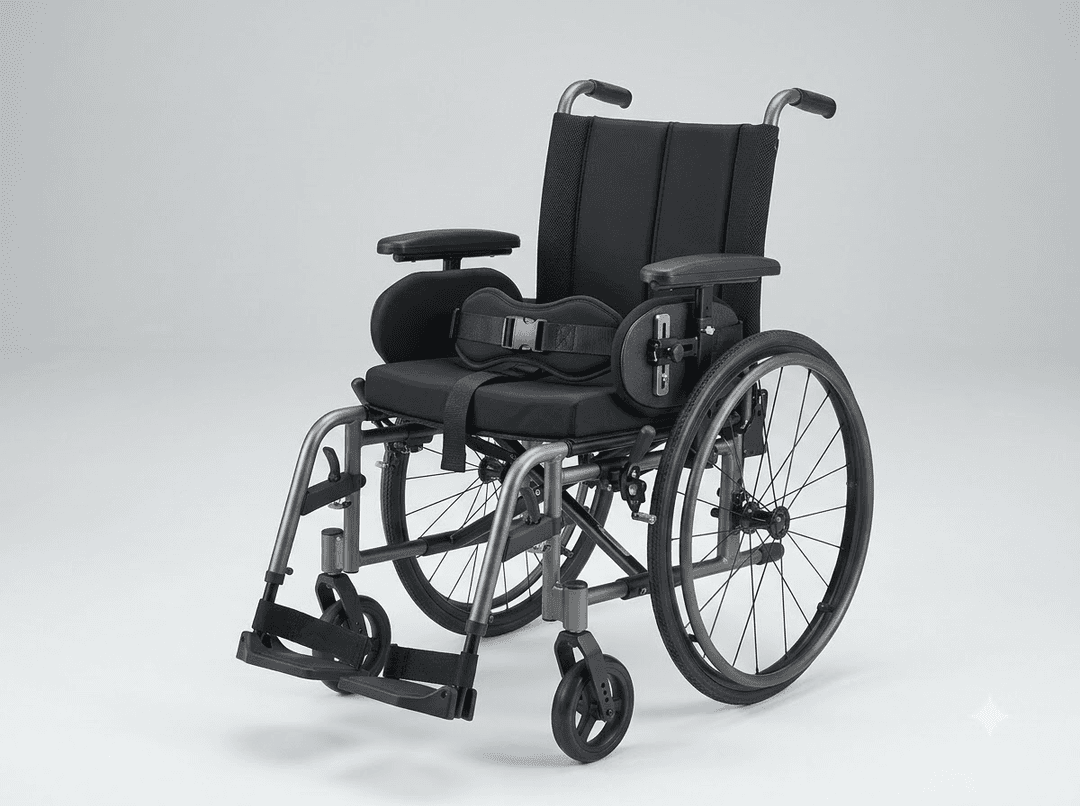
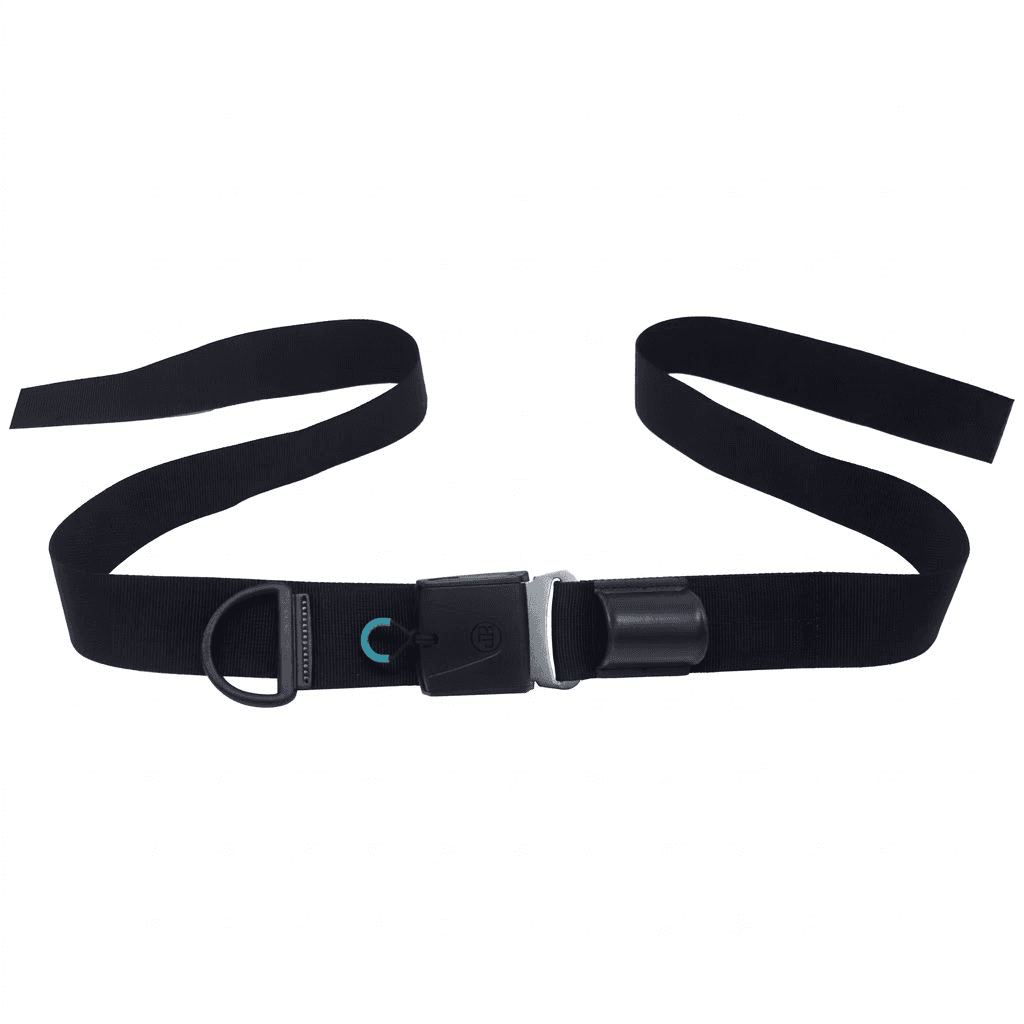
Wheelchair seat belts and hip belts can form part of a seating and positioning setup.
MedicalEshop's wheelchair seat-belt category includes 2-point padded seat belts, 4-point padded seat belts, and non-padded seat belts.
These products may be used to support pelvic positioning or stability in certain seating situations. However, a positioning belt should not automatically be treated as a transportation restraint or described as a universal safety device.
When selecting a seat or hip belt, consider:
If the belt is being considered because of significant positioning needs, consultation with an appropriately qualified seating or rehabilitation professional may be useful.
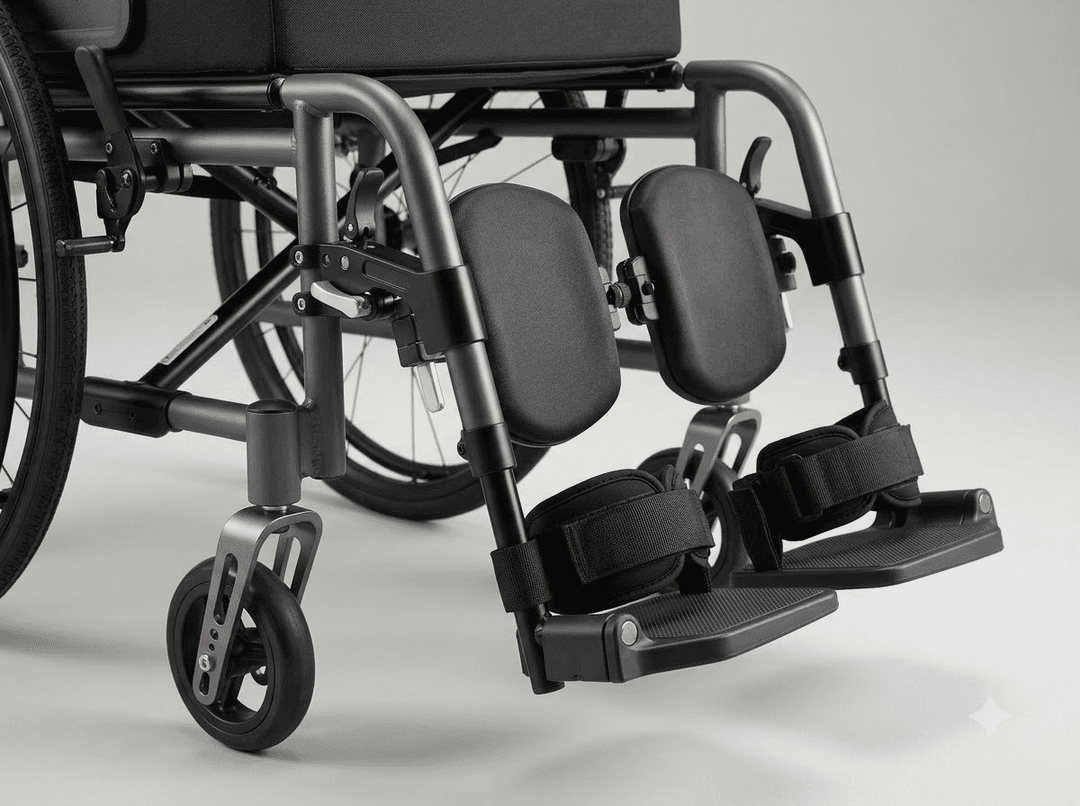
Lower-body accessories can help accommodate the positioning of the legs and feet within a wheelchair.
Footrests and footplates are common wheelchair parts that support the lower extremities. MedicalEshop's wheelchair foot-positioning category includes footplates that may be removable or adjustable depending on the design.
Other lower-body positioning products may address specific positioning requirements involving the ankles, calves, or legs.
MedicalEshop's Lower Body Positioning selection includes categories such as ankle positioning.
When considering lower-body accessories, check:
Changes to lower-body positioning can affect the overall seating arrangement, so major modifications should be approached carefully.
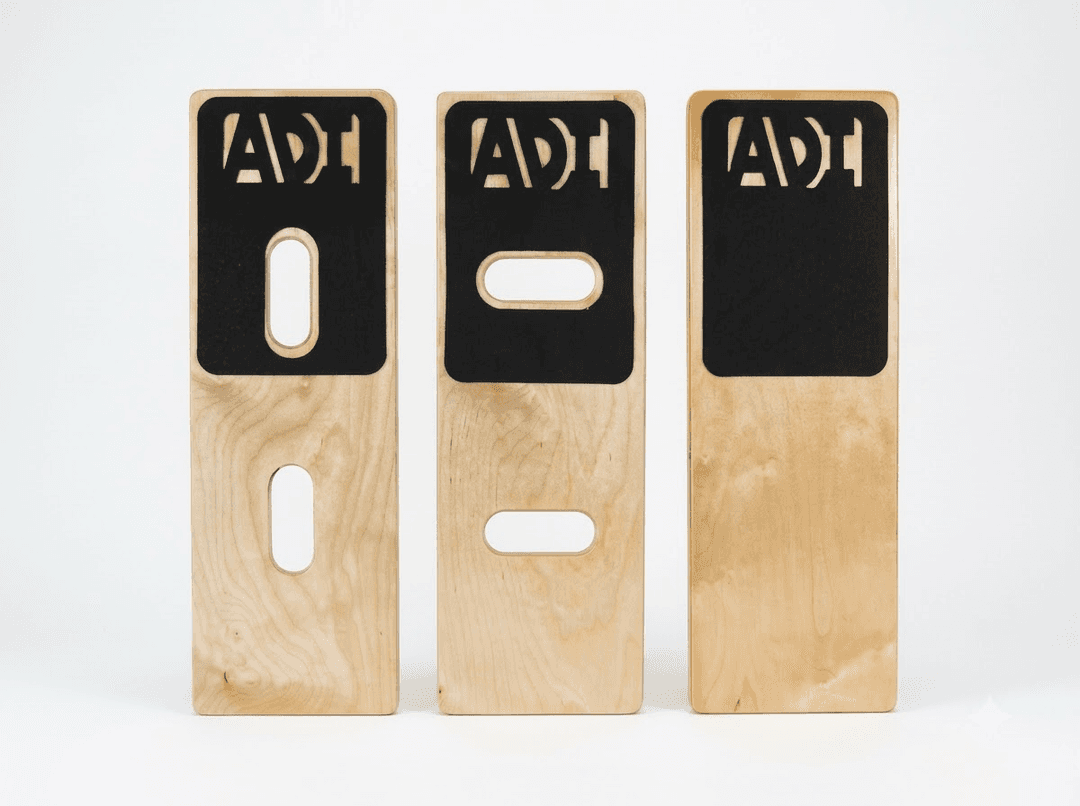
Transfers are an important part of daily wheelchair use. Depending on the individual's abilities and established transfer method, a transfer board may be one accessory to consider.
A transfer board is generally used to bridge the gap between two surfaces, such as a wheelchair and another seated surface. MedicalEshop's transfer-board category includes products from several manufacturers and includes different designs and configurations.
The ADI Anti-Slip Transfer Board is available through MedicalEshop as a wheelchair transfer board.
When considering a transfer board, factors may include:
A transfer board should be used according to the manufacturer's instructions and the user's appropriate transfer technique.
If a person has not previously used a transfer board or is uncertain about safe transfer techniques, an appropriately qualified healthcare or rehabilitation professional can provide individualized instruction.
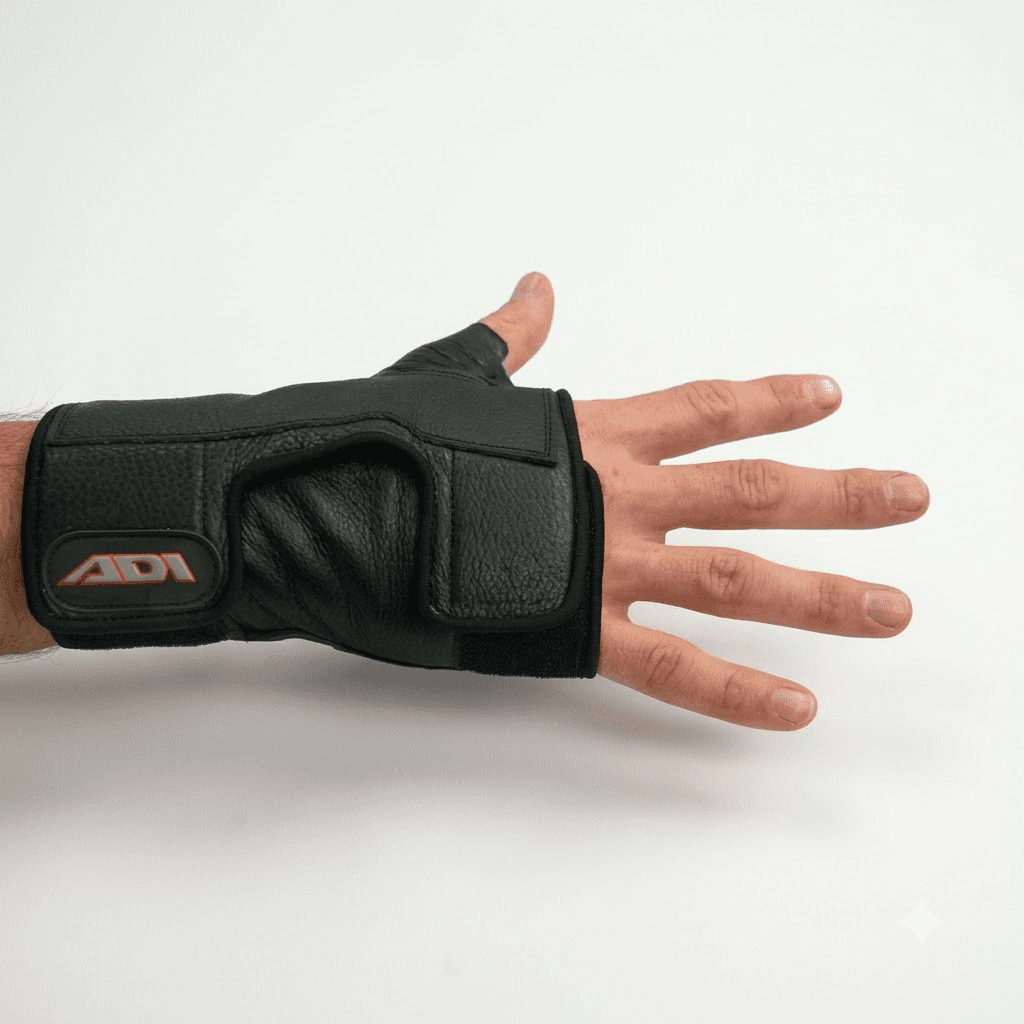
For manual wheelchair users, repeated contact with handrims can make hand protection and grip an important consideration.
The ADI Push and Transfer Wheelchair Gloves are available through MedicalEshop. The product is designed for push and transfer use and is listed as a wheelchair glove product.
Push gloves may be considered by users who want additional hand coverage or grip while propelling a wheelchair or performing transfers.
When considering wheelchair push gloves, look at:
As with other wheelchair accessories, personal preference matters. A glove that feels comfortable and provides the desired level of hand coverage may be more practical for everyday use than a product selected solely based on its appearance.
Not every wheelchair accessory needs to address a clinical or positioning need.
For many users, one of the most practical additions is simply a convenient way to carry personal belongings.
A wheelchair bag can provide accessible storage for items that a user may need during the day, such as a phone, wallet, headphones, or other small personal items.
Quokka Bags are available through MedicalEshop in several configurations intended for wheelchairs and other mobility devices. The current MedicalEshop collection includes:
Storage accessories can be especially useful when a person wants frequently used belongings to remain within reach instead of carrying them in a pocket or on their lap.
When choosing a wheelchair bag, consider:
The goal should be practical storage without interfering with normal wheelchair operation.
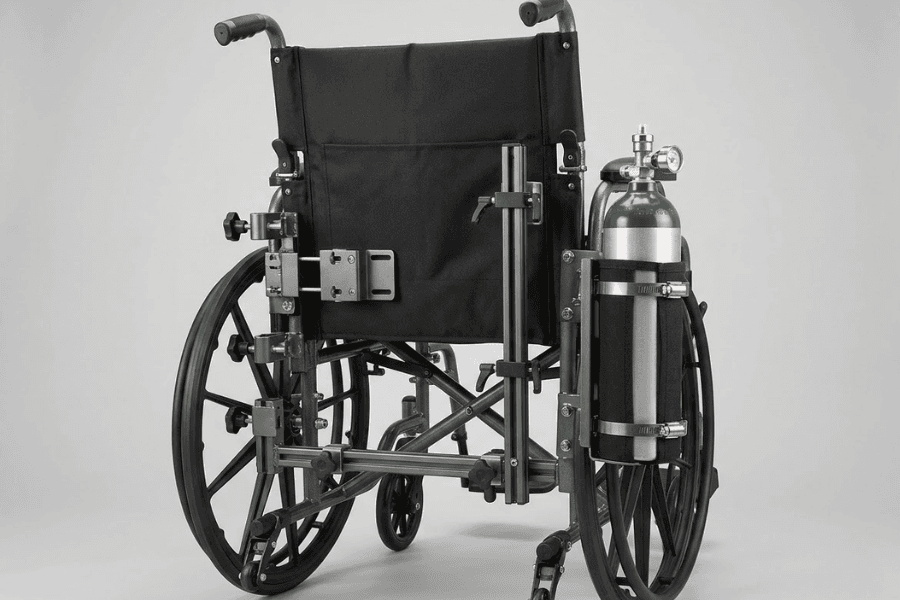
Some wheelchair users may need to carry medical equipment while moving through their home or community.
An oxygen cylinder holder is one example of an equipment-support accessory that may be considered for an appropriate wheelchair configuration.
However, equipment holders require more careful consideration than simple storage bags because the additional equipment can affect the wheelchair's configuration and overall weight.
Before selecting an equipment holder, check:
Because you should not select an oxygen holder solely based on appearance or general compatibility claims, verify the specific product and wheelchair requirements before use.
The most useful accessory depends on what the person needs the wheelchair to do.
| Daily need | Accessories to consider |
| Seating comfort | Wheelchair cushion |
| Back support | Wheelchair back support |
| Upper-body positioning | Bodypoint and other upper-body positioning products |
| Pelvic positioning | Wheelchair seat or hip belts |
| Lower-body support | Foot positioning and lower-body positioning products |
| Transfers | Transfer board |
| Hand coverage | Push and transfer gloves |
| Carrying personal items | Quokka wheelchair bags |
| Medical equipment support | Appropriate equipment holder |
This approach can make accessory selection more practical. Instead of asking, “Which wheelchair accessories should I buy?”, consider asking, “What specific part of my daily routine could be easier, more comfortable, or better supported?”
That question can help narrow down the most relevant accessory category.
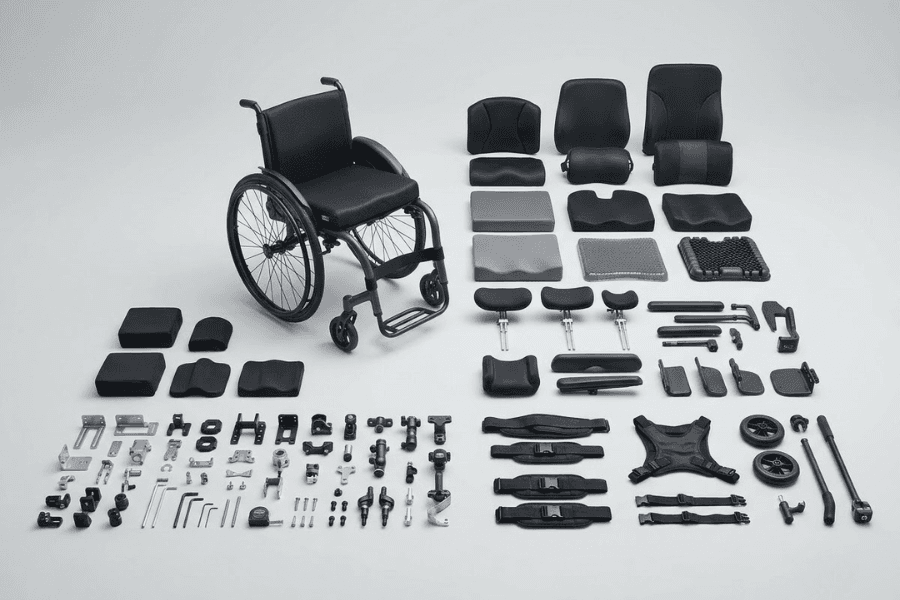
One of the most important steps when selecting wheelchair accessories is checking whether the accessory is compatible with the wheelchair.
A product may be useful in one wheelchair setup but unsuitable for another because of differences in frame design, dimensions, mounting points, or seating configuration.
Before ordering, check:
This is particularly important when adding products that affect seating, positioning, transfers, or wheelchair configuration.
MedicalEshop's wheelchair catalog separates products into categories including wheelchairs, wheelchair cushions, wheelchair backs, headrests and neck supports, wheelchair accessories, ramps, and wheelchair-accessible products.
If product compatibility is unclear, review the manufacturer's specifications or contact the supplier for product information before ordering.
Many everyday accessories can be selected based on practical needs and manufacturer specifications. However, some situations are more complex.
Professional guidance may be appropriate when:
Wheelchair seating research emphasizes that cushion and positioning effects can vary between individuals, supporting the importance of individualized assessment when more complex seating needs are involved.
An occupational therapist, physical therapist, seating specialist, or other appropriately qualified professional may be able to evaluate the user's needs and wheelchair setup when specialized guidance is required.
The right wheelchair accessories should serve a clear purpose. For one person, that may mean improving seating comfort. For another, it may mean making transfers more manageable, supporting positioning, carrying everyday essentials, or providing additional hand coverage during wheelchair propulsion.
There is no single combination of wheelchair accessories that works for every user. The most appropriate choices depend on the wheelchair, user measurements, intended environment, daily activities, and individual needs.
MedicalEshop offers a selection of wheelchair cushions, back supports, positioning products, seat belts, transfer boards, push gloves, and Quokka wheelchair bags to help users and caregivers compare options for different needs.
Before selecting an accessory, review the product specifications and compatibility requirements. For specialized seating, positioning, or transfer needs, consider guidance from an appropriately qualified healthcare or rehabilitation professional.
Explore MedicalEshop's wheelchair accessories and related categories to compare products based on your wheelchair setup and intended use.
This guide was informed by wheelchair accessory and seating information from Rehabmart, current MedicalEshop product and category information, the U.S. Access Board, and peer-reviewed research indexed through PubMed/NCBI. The U.S. Access Board provides accessibility guidance related to clear floor and maneuvering spaces, while peer-reviewed wheelchair-seating research highlights the importance of considering individual seating characteristics when evaluating cushions and positioning systems.
For product descriptions and available categories, MedicalEshop's current wheelchair, positioning, transfer-board, wheelchair-glove, and Quokka collections were reviewed.
Medical Disclaimer: MedicalEshop is a U.S.-based dealer and supplier of home medical equipment, rehabilitation products, mobility aids, and special-needs products. MedicalEshop is not a physician, hospital, or licensed medical provider. The information in this article is provided for general educational purposes only and is not intended to diagnose, treat, cure, or prevent any medical condition.
Product selection should be based on the manufacturer's specifications, wheelchair compatibility, intended use, and individual needs. Specialized seating, positioning, transfer, or mobility requirements may warrant guidance from an appropriately qualified healthcare or rehabilitation professional. Always follow the manufacturer's instructions for product installation, adjustment, use, cleaning, and maintenance.
Frequently Asked Questions
Ans. The most useful wheelchair accessories depend on the user's daily needs. Common categories include cushions, back supports, positioning products, transfer boards, push gloves, seat belts, and wheelchair bags. The appropriate choice depends on wheelchair compatibility, user requirements, and intended use.
Ans. Wheelchair cushions and back supports are commonly considered when comfort and seating support are priorities. Cushion selection should account for dimensions, wheelchair compatibility, seating requirements, and individual needs rather than softness alone.
Ans. No. Some wheelchair accessories are designed for particular wheelchair models, dimensions, mounting systems, or configurations. Always check the manufacturer's specifications and compatibility information before selecting an accessory.
Ans. Consider the wheelchair's seat dimensions, the user's measurements, seating position, cushion characteristics, intended use, and manufacturer specifications. For complex seating or pressure-management needs, a qualified seating professional may be able to help evaluate the appropriate setup. Research indicates that cushion effects can vary according to the individual and seating configuration.
Ans. A transfer board is generally used to help bridge the space between two surfaces during a seated transfer, such as between a wheelchair and another seat. The specific product and transfer technique should be appropriate for the user and used according to manufacturer instructions.
Ans. Wheelchair push gloves are designed for users who want additional hand coverage or grip while propelling a manual wheelchair or performing certain transfers. The ADI Push and Transfer Wheelchair Gloves are one example available through MedicalEshop.
Ans. Some wheelchair bags are designed to attach to mobility devices and provide storage for personal items. Quokka Bags, for example, are available through MedicalEshop in several configurations for wheelchair and mobility-device storage.
Ans. A wheelchair positioning belt or hip belt is an accessory that may be used as part of a seating and positioning setup. Different designs are available, including padded and non-padded options. Selection and use should be based on the individual's needs, wheelchair configuration, and manufacturer instructions.
Ans. An oxygen cylinder holder may be appropriate for some wheelchair configurations, but compatibility, equipment dimensions, attachment method, and weight requirements must be checked. Do not assume that an oxygen holder is compatible with every wheelchair.
Ans. Not necessarily. Simple storage or convenience accessories may be selected by reviewing product specifications and compatibility. However, professional guidance may be appropriate for complex seating, positioning, pressure-management, or transfer needs.

